
Organizing a travel to Morocco is far more than just planning a vacation; it is a total sensory experience, an immersion into a world where ancestral traditions seamlessly coexist with modernity. Situated at the very crossroads of Europe and Africa, this fascinating kingdom offers an incredible diversity of landscapes, cultures, and experiences that make it one of the most captivating destinations in the world.
From the vibrant, bohemian streets of Tangier in the north to the southernmost, windswept reaches of La Güera, this comprehensive guide is designed to accompany you in planning an unforgettable itinerary. We will explore the entire territory, diving deep into the imperial cities, the dramatic Atlas Mountains, the silent Sahara Desert, and the stunning Atlantic coastline, ensuring you experience the true essence of travel to Morocco.
- Why Travel to Morocco?
- 1. The North: Mediterranean Charm & Rif Mountains
- 2. The Imperial Cities: Guardians of History
- 3. The Middle Atlas: Cedar Forests & Alpine Vistas
- 4. The South: Hollywood Studios & Desert Dunes
- 5. The Saharan Provinces: Desert Dunes & Ocean Breezes
- 6. Moroccan Culture, Traditions, and Hospitality
- 7. A Cuisine Rich in Spices and Flavors
- 8. Practical Advice for Your Travel to Morocco
Why Travel to Morocco?
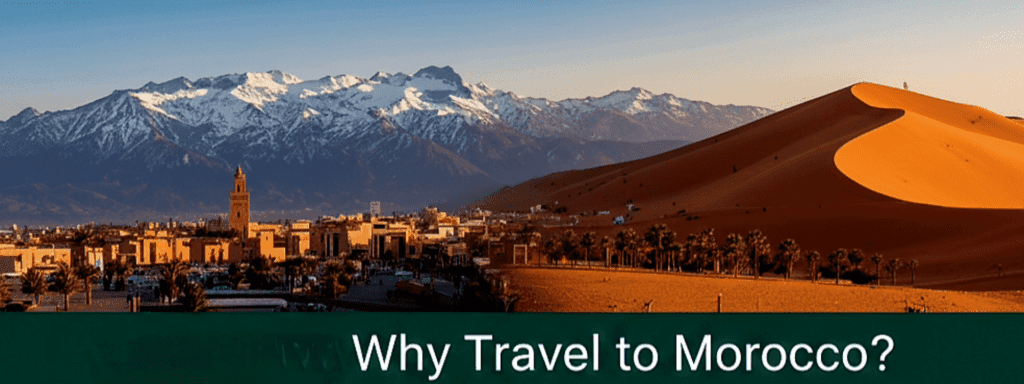
Morocco is a country that defies easy categorization. It is a land of vivid contrasts where you can spend your morning hiking in snow-capped mountains, your afternoon exploring Roman ruins, and your evening watching the sunset over the Sahara Desert while sipping traditional mint tea. The magnetic pull of travel to Morocco lies in its ability to surprise even the most seasoned travelers.
A Crossroads of Civilizations
The Kingdom of Morocco has been shaped by Berber (Amazigh), Arab, Andalusian, French, and Spanish influences. This unique blend is reflected in the architecture, the food, the languages spoken (Darija, Berber, French, Spanish, English), and the way of life.
Diversity of Landscapes
- The Atlas Mountains: For trekkers and nature lovers, offering dramatic gorges and traditional Berber villages.
- The Sahara Desert: Featuring the towering golden dunes of Erg Chebbi and Erg Chigaga.
- The Atlantic & Mediterranean Coasts: Offering everything from busy fishing ports to tranquil surf spots.
1. The North: Mediterranean Charm & Rif Mountains
The journey often begins in the north, where the Mediterranean meets the Atlantic, a region marked by strong European influence and lush green landscapes. This is an essential stop on your travel to Morocco.
Tangier: The Gateway to Africa
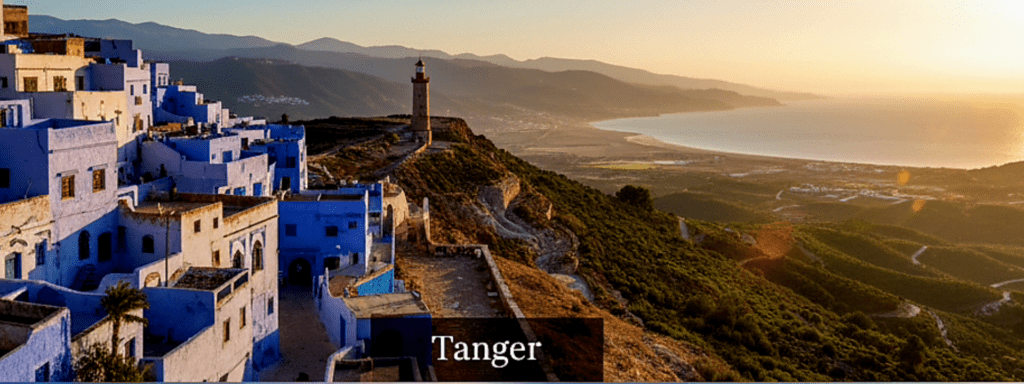
Tangier, a mythical and cosmopolitan city, offers a fascinating blend of Spanish, French, and Arab influences. Once an international zone, it has attracted numerous artists, writers, and musicians for centuries, from Matisse to the Rolling Stones.
- The Medina: Get lost in its white and blue alleys, which are less crowded than those in Fez or Marrakech.
- Grand Socco: A lively square connecting the modern city to the old medina.
- The Caves of Hercules: Located a few kilometers away, these caves offer a spectacular view of the
Chefchaouen: The Blue Pearl
Nestled deep in the Rif Mountains, Chefchaouen is famous for its striking, blue-painted alleys and buildings. It is a true haven of peace, ideal for hiking in the surrounding Talassemtane National Park and for photographing unique architecture. The atmosphere here is relaxed, and the local cuisine is exceptional.
Tetouan: The White Dove
A quintessential Andalusian city, Tetouan is a UNESCO World Heritage site for its remarkably preserved medina. It reflects the strong influence of Spanish architecture, as it was the capital of the Spanish protectorate in Morocco.
2. The Imperial Cities: Guardians of History
The historical heart of Morocco beats in its four imperial cities, each having been, at different times, the capital of the kingdom. Visiting these cities is essential to understanding the culture during your travel to Morocco.
Fez: The Spiritual and Artisanal Heart
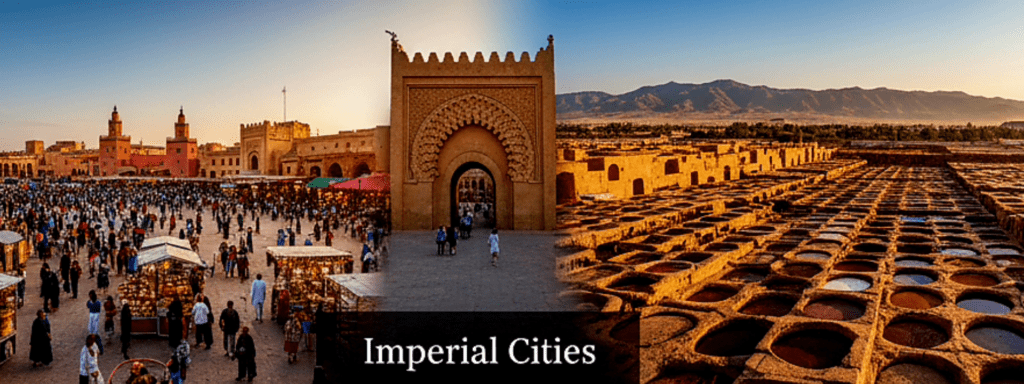
Fez is home to the world’s oldest medina, Fez el-Bali, a medieval maze of over 9,000 alleys where cars cannot enter. It is the spiritual and artisanal center of the country.
- Chouara Tanneries: A colorful and fragrant (or rather, intensely smelling!) spectacle where leather is treated using centuries-old methods.
- Al Quaraouiyine Mosque: Founded in 859, it is recognized by Guinness World Records as the oldest university in the world still in operation.
Marrakech: The Red City
Marrakech is a vibrant city that blends tradition and modernity, often considered the tourism capital of Morocco.
- Jemaa el-Fna Square: The beating heart of the city, it transforms every evening into an open-air theater with storytellers, musicians, dancers, and food stalls.
- Majorelle Garden: A green oasis famous for its intense blue colors, formerly owned by Yves Saint Laurent, offering a peaceful escape from the bustling medina.
Meknes: The Moroccan Versailles
Built by Sultan Moulay Ismaïl in the 17th century, Meknes is famous for its monumental gates, such as Bab Mansour, and its grand architecture inspired by that of Louis XIV. It is generally more relaxed than Fez or Marrakech.
Rabat: The Administrative Capital
Rabat is an elegant city that blends ancient history and modernity. It is a UNESCO World Heritage site known for its green spaces and historical monuments.
- Hassan Tower: An unfinished minaret of a 12th-century mosque.
- Mausoleum of Mohammed V: A masterpiece of modern Moroccan architecture.
- Kasbah of the Udayas: A peaceful, fortified neighborhood with blue and white painted houses overlooking the Bou Regreg river.
3. The Middle Atlas: Cedar Forests & Alpine Vistas
As you travel south from Fez towards the desert, you will pass through the scenic Middle Atlas Mountains, a region starkly different from the arid south.
Ifrane: The Switzerland of Morocco
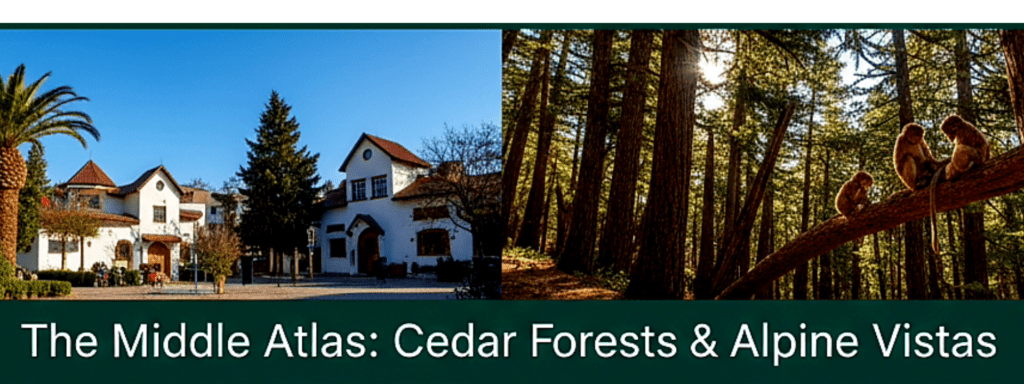
Ifrane is a surprising stop on your travel to Morocco. Built by the French in the 1930s as a hill station, the town features Alpine-style architecture with pitched roofs, manicured gardens, and a cool climate that attracts locals in the summer and skiers in the winter.
- The Lion Stone Statue: An iconic landmark, perfect for photos, representing the last Atlas lion that historically lived in the region.
- Ifrane National Park: Renowned for its magnificent Atlas Cedar forests, where you can spot the native Barbary Macaques (monkeys) playing in the trees.
- Michlifen Ski Resort: Offering winter sports facilities for enthusiasts.
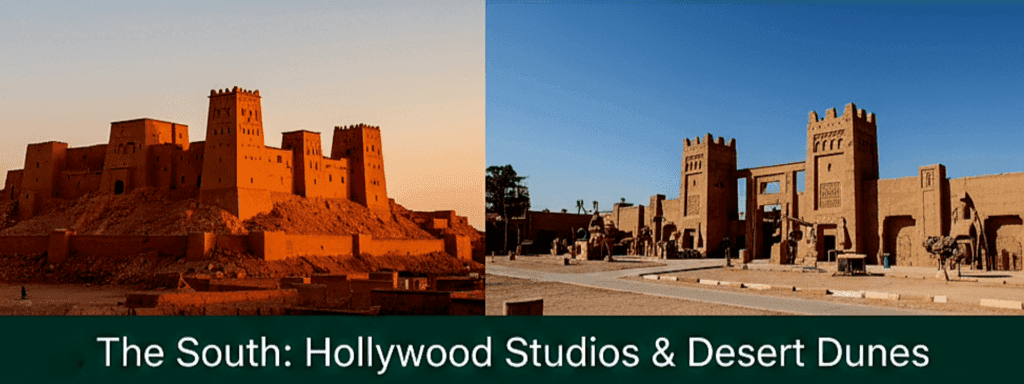
4. The South: Hollywood Studios & Desert Dunes
The journey south is a plunge into grandiose landscapes and a fascinating nomadic culture. This is where the Sahara meets the Atlantic Ocean, a unique experience for your travel to Morocco.
Ouarzazate: The Gateway to the Desert
Ouarzazate serves as a vital junction between the High Atlas Mountains and the Sahara Desert. Known as the « Hollywood of Africa, » this city is a major hub for the film industry, having hosted productions like Gladiator, Lawrence of Arabia, and Game of Thrones.
- Atlas Film Studios: Visitors can tour the sets, seeing elaborate props and scenery from various iconic movies.
- Taourirt Kasbah: A stunning 19th-century earthen fortress built by the powerful Glaoui family, showcasing intricate Berber architecture.
- Aït Benhaddou: Just outside the city, this UNESCO World Heritage-listed ksar is a breathtaking example of earthen architecture, serving as a must-see stop for anyone doing travel to Morocco.
5. The Saharan Provinces: Desert Dunes & Ocean Breezes
Continuing further south, the landscape becomes more desert-like until reaching the vicinity of La Güera, at the southern border.
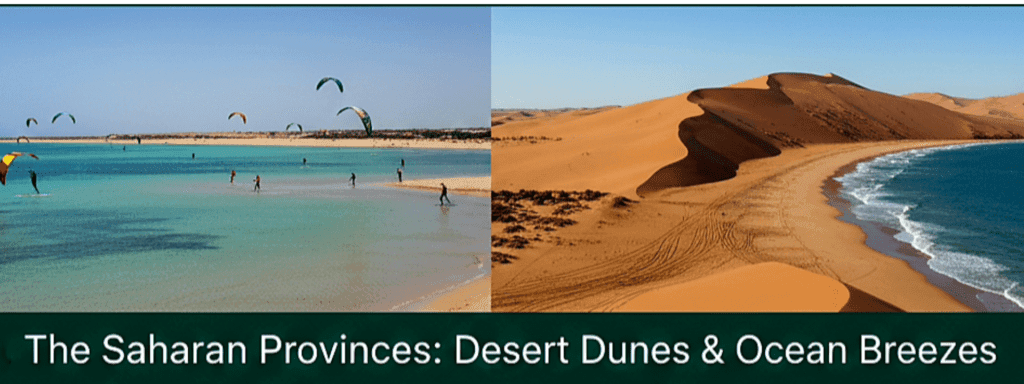
Laayoune: Capital of the Saharan Provinces
Laayoune is a modern and dynamic city, a true cultural crossroads between northern Morocco and the desert. It is famous for its distinctive architecture, wide avenues, and proximity to unique natural sites.
- Foum el-Oued Beach: Near the city, it offers a spectacular encounter between the dunes and the ocean, ideal for quad biking or moments of relaxation.
- Hassani Culture: Laayoune is the ideal starting point to explore Hassani traditions, local music, and discover desert handicrafts.
Dakhla: The Paradise for Water Sports
Further south, Dakhla is a world-renowned destination for kitesurfing and windsurfing. Situated on a narrow peninsula, the city offers a lagoon with crystal-clear turquoise waters, perfect for gliding enthusiasts, whether beginners or professionals.
- The White Dune: A white sand dune in the middle of the lagoon, accessible by boat, offering a lunar landscape.
- Asmaa Hot Springs: Relax in these hot springs rich in sulfur, renowned for their therapeutic properties.
- Kitesurfing: Ideal wind conditions throughout the year.
Towards La Güera: Wild Adventure
Continuing south, the landscape becomes more desert-like until reaching the vicinity of La Güera, at the southern border. This wild zone offers a pure adventure experience for travelers seeking pristine landscapes and absolute solitude by the Atlantic. It is a stopover for 4×4 adventurers.
6. Moroccan Culture, Traditions, and Hospitality
Moroccan culture is a rich blend of Berber (Amazigh), Arab, Hassani, and Andalusian influences. Hospitality is a fundamental value throughout the territory.
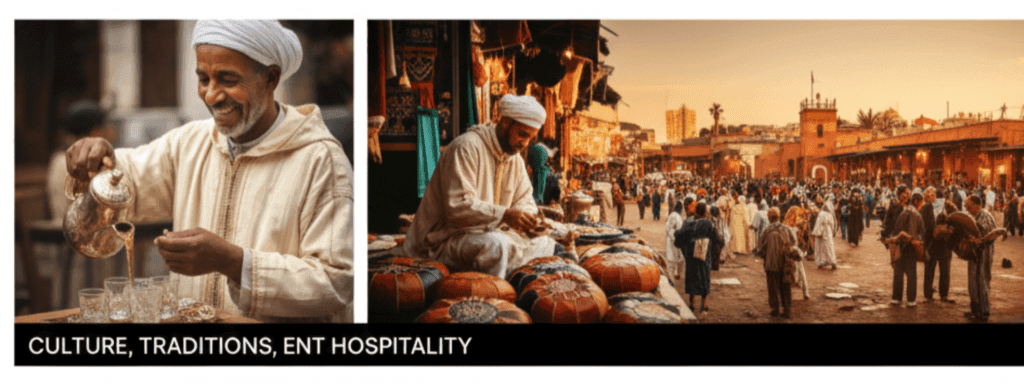
The Art of Hospitality
It is common to be invited to drink mint tea, a symbol of welcome, whether in the souks of Fez, with locals in the Atlas, or under a nomadic tent near Dakhla.
Traditional Clothing
Morocco is famous for its handicrafts: Berber carpets, Safi pottery, Fez leather, Essaouira woodwork, and silver jewelry from Tiznit.
- Djellaba: A long, loose-fitting robe with a hood, worn by both men and women.
- Caftan: A more elaborate dress worn by women, especially during weddings and celebrations.
7. A Cuisine Rich in Spices and Flavors
Moroccan cuisine uses spices like cumin, saffron, ginger, and ras-el-hanout to create rich, complex flavors.

- Tajine: Iconic dish slow-cooked in a clay pot.
- Couscous: Traditional dish served on Fridays.
- Pastilla: Sweet and savory flaky pastry pie.
- Southern Specialties: Discover fresh fish in Dakhla (seabream, octopus) or traditional mechoui in the Saharan regions.
8. Practical Advice for Your Travel to Morocco
When to Go?
- Spring (March to May) and Autumn (September to November): Ideal for the whole country.
- Summer: Ideal for the Atlantic coast, but very hot inland.
- Winter: Mild in the south, but cold in the Atlas Mountains and Ifrane.
How to Get Around?
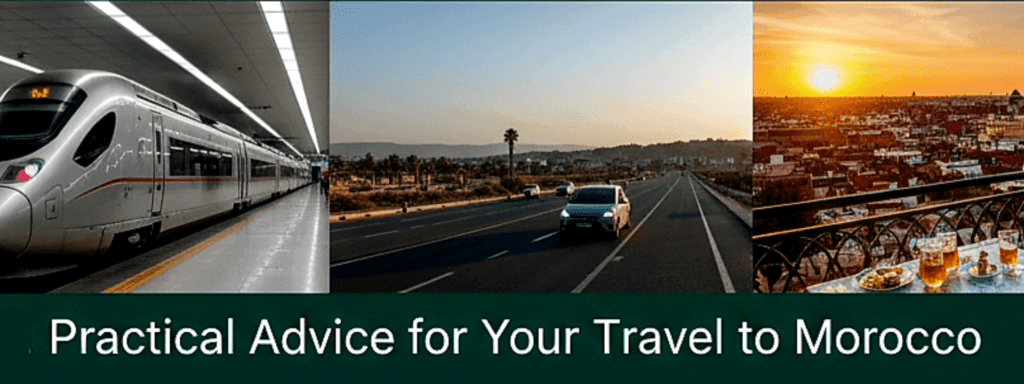
- Train: The Al Boraq high-speed train connects Tangier to Casablanca via Rabat.
- Bus: Companies like CTM and Supratours are safe and comfortable for traveling south to Laayoune and Dakhla.
- Plane: Domestic flights connect Casablanca to the main southern cities.
- Car Rental: The best option for exploring at your own pace.
From the blue of Chefchaouen to the shimmering desert of Dakhla, passing through the alpine air of Ifrane and the cinematic landscapes of Ouarzazate, Morocco offers inexhaustible richness. It is a country that demands to be explored with curiosity and respect. Pack your bags; the Cherifian Kingdom awaits you.
- Morocco Walker