

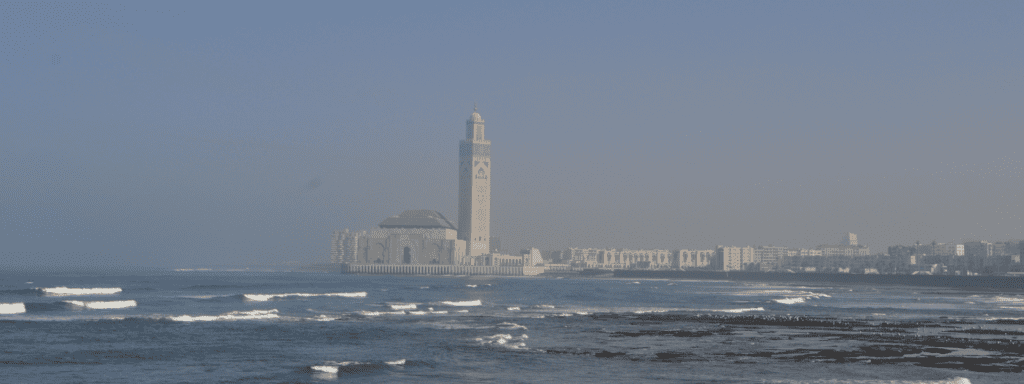
Standing majestically on the edge of the Atlantic Ocean, the Hassan II Mosque in Casablanca is not just a place of worship; it is a monumental testament to Moroccan craftsmanship, modern engineering, and spiritual ambition. Completed in 1993, this masterpiece is the largest mosque in Africa and one of the largest in the world. But what makes this structure truly special?
In this comprehensive guide, we will explore the power world of the Hassan II Mosque, uncovering 10 architectural secrets that define its grandeur. From its record-breaking minaret to its innovative retractable roof, we will take you on a journey through the heart of Morocco’s most iconic landmark. Whether you are planning a visit or simply marveling at its beauty from afar, this article covers everything you need to know about this breathtaking Moroccan architectural marvel.
- The Historical Vision of King Hassan II
- Architectural Marvel: Blending Tradition and Technology
- Visiting the Mosque: A Practical Guide for 2026
- The Hassan II Mosque Museum and Complex
- Cultural Impact, Symbolism, and Beyond
The Historical Vision of King Hassan II
The idea for the mosque was commissioned by King Hassan II as a national project to commemorate the 60th birthday of his father, King Mohammed V. However, its purpose went beyond a mere commemoration. The King wanted to provide Casablanca, the economic heart of Morocco, with a spiritual beacon of immense beauty.
A Symbol of Unity and Pride
The project was funded not just by the state, but through a massive national subscription. Moroccans from all walks of life contributed to the construction, creating a sense of national pride and unity. It was built by over 6,000 traditional artisans from all over the kingdom, working tirelessly for five years to bring this vision to life.
Built on Water
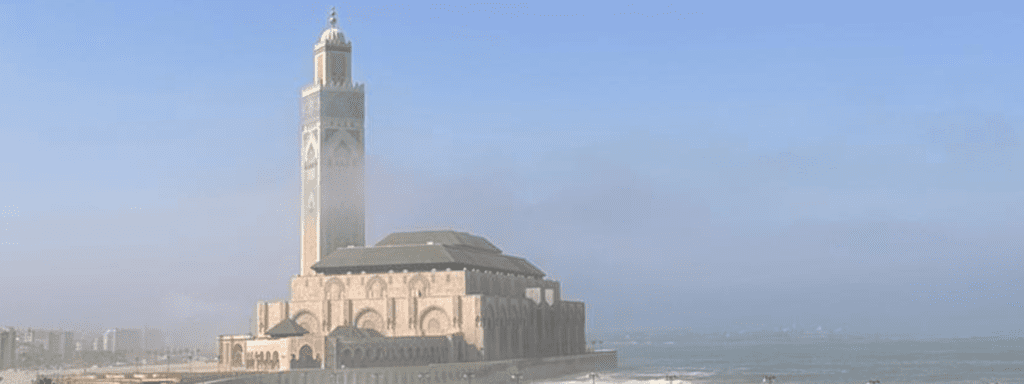
One of the most striking aspects of the mosque is its location. It is built partially on land and partially over the ocean. This was inspired by a Qur’anic verse: « The throne of God was upon the water. » This strategic placement allows believers to contemplate God’s sky and ocean while praying on firm soil.
Architectural Marvel: Blending Tradition and Technology
The construction of the Hassan II Mosque was a monumental undertaking that brought together 6,000 of the finest Moroccan artisans and the most advanced modern engineering techniques. The design was overseen by French architect Michel Pinseau, who worked closely with local craftsmen to ensure the building honored Moroccan architecture traditions while utilizing modern materials like reinforced concrete.
Traditional Craftsmanship (Maâlem)
The mosque showcases the incredible skills of Moroccan Maâlems (master craftsmen):
- Zellij (Tilework) : Hand-cut mosaic tiles adorn the walls, featuring complex geometric patterns that represent infinite patterns of creation.
- Stucco Work (Gebs) : Intricate plaster carvings line the ceilings and arches, requiring immense patience and precision.
- Carved Wood (Cedar) : From the Middle Atlas region, the cedar wood is carved with verses from the Qur’an and geometric motifs.
Modern Engineering
Beneath the traditional aesthetic lies a structure built for longevity and functionality:
- Seismic Resistance : Built in a seismic zone, the foundation is reinforced to withstand significant earthquakes.
- Retractable Roof : Perhaps the most famous feature, the 1,100-ton roof can slide open in just five minutes, turning the main prayer hall into an open-air courtyard.
- Underfloor Heating : The floor is designed to be comfortable during winter prayers, preventing dampness and cold.
The 10 Most Stunning Features of the Mosque
To truly understand the scale of this power world, one must examine its individual components. Here are 10 of the most breathtaking features.
1. The Minaret: Towering High
Standing at an impressive 210 meters (689 feet), the minaret was once the tallest in the world. It is topped by a laser that shines a beam towards Mecca, reaching a distance of 30 kilometers.
2. The Main Prayer Hall: Unmatched Capacity
The hall can accommodate 25,000 worshippers, with another 80,000 in the outside courtyard. The sheer volume of the space is humbling.
3. The Floor-to-Ceiling Glass
Looking out from the prayer hall, worshippers can see the Atlantic Ocean, creating a direct connection between prayer and nature.
4. The Grand Chandelier
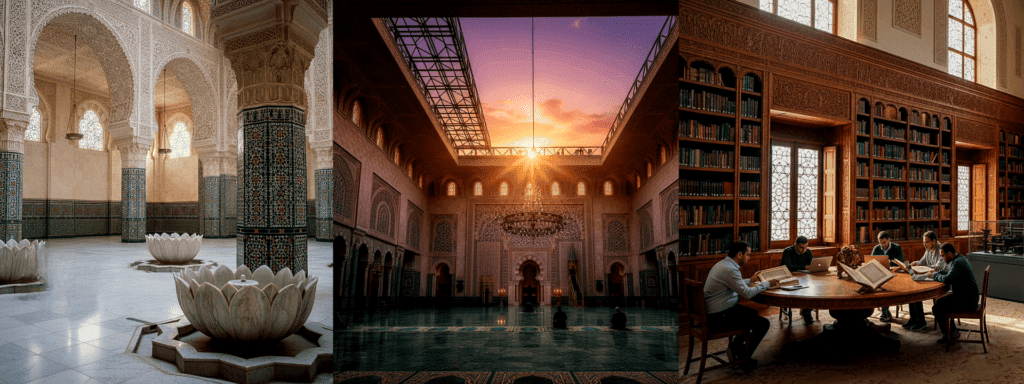
Several massive chandeliers illuminate the prayer hall, imported from Italy and crafted from Murano glass.
5. The Ablution Room
Located in the basement, this area features dozens of stunning fountains shaped like lotus flowers, made of polished marble.
6. The Hammam
The mosque includes a traditional Moroccan bathhouse, showcasing the cultural importance of purification.
7. The Medersa (Quranic School)
A center for Islamic learning is located within the complex, traditional in design but modern in functionality.
8. The Library
A vast repository of Islamic knowledge, containing rare manuscripts and modern texts.
9. The White Marble Courtyard
The exterior courtyard is paved with white marble, designed to keep the surface cool under the Moroccan sun.
10. The Ocean Foundations
The construction required immense effort to hold back the sea, featuring massive concrete pillars anchored deep into the bedrock beneath the ocean floor.
Visiting the Mosque: A Practical Guide for 2026
Visiting the Hassan II Mosque is a highlight of any trip to Casablanca. Unlike most mosques in Morocco, this one is open to non-Muslims, making it a unique cultural experience.
Guided Tours
Access to the interior is only possible through guided tours.
- Duration : Tours last approximately 45 to 60 minutes.
- Languages : Tours are available in English, French, Spanish, German, and Arabic.
- Booking : It is highly recommended to book your tickets in advance online to avoid long queues, especially during peak tourist season.
Entrance Fees (Approximate for 2026)
- Adults : 130 MAD
- Students : 60 MAD (with valid ID)
- Children under 12 : 30 MAD
Dress Code and Etiquette
Respectful behavior and clothing are required at all times.
- Clothing : Both men and women must cover their shoulders and knees.
- Shoes : You will be required to remove your shoes before entering the prayer hall. They will be placed in plastic bags provided at the entrance.
- Photography : Photography is allowed inside, but please avoid using flash in the main prayer hall and be respectful of people praying.
Opening Hours
Hours vary based on prayer times and the month (especially during Ramadan).
- Summer : Typically open from 9:00 AM to 6:00 PM.
- Winter : Typically open from 9:00 AM to 4:00 PM.
- Ramadan : Schedules change significantly; check the official website before visiting.
The Hassan II Mosque Museum and Complex
The complex is vast and includes more than just the prayer hall and minaret.
The Museum of Moroccan Arts
Located near the mosque, this museum showcases the craftsmanship involved in the mosque’s construction. You can see the tools, raw materials (like cedar wood and zellij tiles), and photos documenting the construction process.
The Library and Madrasa
The library is open to researchers and visitors interested in Islamic studies. The Madrasa is a functional school where students study the Qur’an and Islamic law, representing the educational aspect of the complex.
Cultural Impact, Symbolism, and Beyond
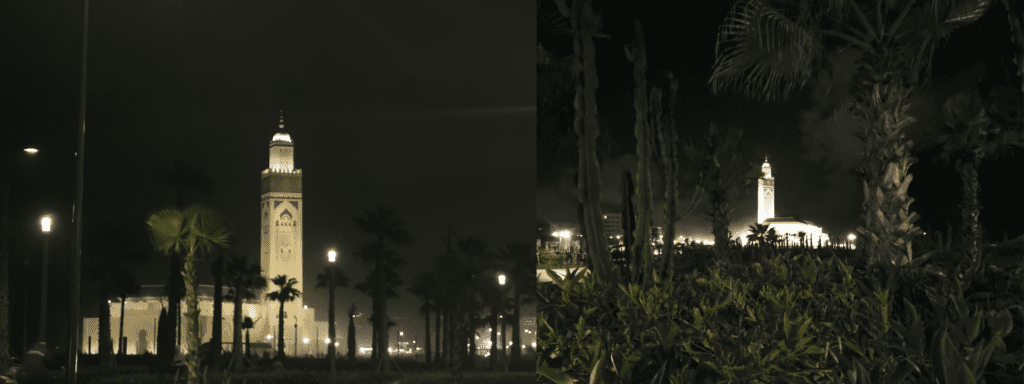
The Hassan II Mosque is not just a building; it is a symbol of Morocco’s modern identity, bridging the gap between its rich Islamic heritage and its future as a technologically advanced nation. It represents the pride of a people who contributed to its creation and remains a beacon of light on the Atlantic coast.
Its environmental significance is also noteworthy. The mosque is designed to be sustainable, with the retractable roof reducing energy consumption and the vast open spaces allowing for natural ventilation.
Summary of the 10 Architectural Secrets
- The Minaret: The 210-meter beacon of light.
- Ocean Foundations: Built over water inspired by the Qur’an.
- Retractable Roof: Modern engineering marvel.
- Hand-Cut Zellij: Infinite geometric patterns.
- Intricate Stucco: Master craftsmanship in plaster.
- Cedar Wood Carvings: Traditional art from the Atlas mountains.
- Floor-to-Ceiling Glass: Views of the sea from the prayer hall.
- Murano Glass Chandeliers: Italian craftsmanship in a Moroccan setting.
- Lotus-Shaped Fountains: Artistic ablution areas.
- National Subscription: Built by the people of Morocco.
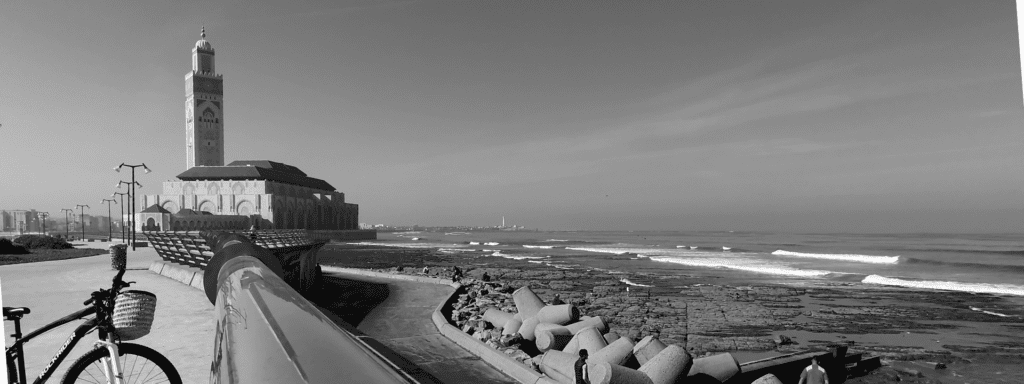
A Must-Visit Landmark in Morocco
Whether you are seeking spiritual reflection, architectural inspiration, or a deeper understanding of Moroccan culture, the Hassan II Mosque in Casablanca offers an unforgettable experience. It stands as a testament to what can be achieved when tradition meets innovation, creating a true power world on the edge of the sea.
Plan your visit to this breathtaking Moroccan architectural marvel today and witness the grandeur for yourself!
- MOROCCO WALKER
[…] most travelers, Casablanca is merely a transit hub a brief stop to see the monumental Hassan II Mosque before rushing off to the imperial alleys of Marrakech or Fes. But for the Walker, the true spirit […]