

The City That Defied Empires
History books tell you that Rabat is the dignified administrative heart of Morocco. But beneath the polished boulevards and the white-washed walls of the Medina lies a ghost story written in salt and gunpowder. In the 17th century, Rabat was not a capital; it was a rebel state—a Pirate Republic.
Founded by Moriscos fleeing the Spanish Inquisition, this « Republic of Bouregreg » was a Mediterranean anomaly: a sovereign state of corsairs who elected their own leaders, minted their own coins, and negotiated as equals with the kings of Europe. Today, the echoes of this era are hidden in plain sight—in secret tunnels, in the DNA of Rabat’s oldest families, and in the mysterious keys to Spanish estates still held in velvet boxes behind heavy cedar doors. Welcome to the underground history of the Atlantic’s most daring outlaws.
The Morisco Exodus – The Architects of Rebellion
The story of Rabat’s pirate soul begins not in Morocco, but in the fertile valleys of Andalusia. In 1609, the Spanish Crown issued the Edict of Expulsion, forcing hundreds of thousands of Moriscos (Spanish Muslims) to flee. While many settled in Fez or Tunis, the most defiant—the « Hornacheros »—arrived at the mouth of the Bouregreg River.
The Rebirth of the Kasbah
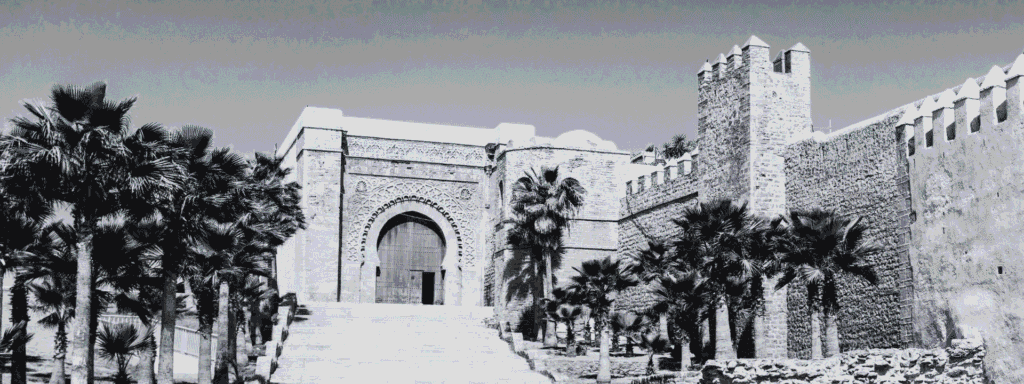
When these exiles arrived, the Kasbah of the Udayas was largely a ruin. The Hornacheros saw more than just a crumbling fortress; they saw a vantage point. With their superior knowledge of European naval warfare and Western engineering, they rebuilt the Kasbah into a high-tech naval base.
- The Strategic Secret : The mouth of the Bouregreg was notoriously dangerous due to a shifting sandbar. This was the pirates’ greatest defense. Only the Corsair captains, with their intimate knowledge of the currents, could navigate the shallow waters. European warships, with their heavy hulls, would often run aground, becoming easy pickings for the agile pirate « Sallee Rovers. »
- The « Matroose » Legacy : To this day, the architecture of the Rabat Medina bears the mark of these Spanish exiles. Look for the « Andalusian style » arches and the intricate tilework that feels more like Seville than the Sahara. These were not just houses; they were fortified memories of a lost homeland.
The Secret Keys of Exile
Perhaps the most poignant secret of Rabat’s pirate families is the « Legacy of the Keys. » > The Hidden Historical Fact: Many of the founding families of the Pirate Republic, such as the Bargach (from the Spanish name Vargas) or the Mouline, kept the original iron keys to their homes in Spain. These keys were passed down from father to son for four centuries. They represent a « Right of Return » that predates modern politics—a silent, metallic testimony to the day they were forced to trade their Spanish vineyards for the decks of pirate ships.
The Lost Language of the Sea
Inside the walls of the Kasbah, a secret dialect was born. It was a fusion of Spanish, Arabic, and « Lingua Franca » (a Mediterranean maritime slang). This allowed the Corsairs of Rabat to intercept European communications and run a sophisticated intelligence network that stretched from the English Channel to the Canary Islands. They weren’t just sailors; they were the world’s first maritime « intelligence agency, » fueled by a desire for justice against the empires that had exiled them.
The Mazmorras – Rabat’s Subterranean Labyrinth
While the residents of Rabat walk the bustling streets of the Medina, few realize that the ground beneath their feet is honeycombed with history. During the height of the Republic of Bouregreg, the city was as much an underground fortress as it was a coastal port. These were the « Mazmorras »—the silent, stone-cold chambers that held the wealth and the prisoners of the Atlantic.
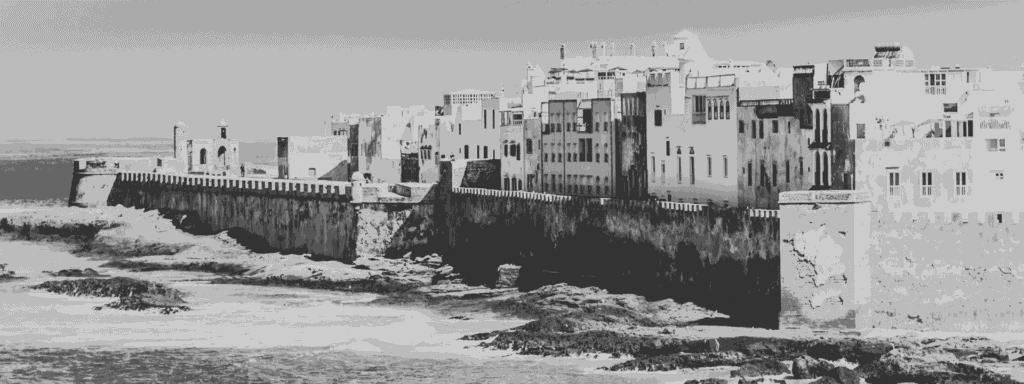
The Kasbah of the Udayas is not just a defensive wall; it is a hollowed-out rock. Beneath the picturesque blue streets lie vast, bell-shaped chambers carved directly into the sandstone.
- The Pirate’s Vault : These silos were originally designed as « Matmuras » for grain, but the Corsairs repurposed them as high-security vaults. Here, they stored the « spoils of the sea »—silks from Lyon, Dutch spices, and Spanish gold.
- The Secret Ventilation : If you look closely at the floor of certain private courtyards in the Kasbah, you will see small, decorative stone grates. These weren’t for drainage; they were air vents for the tunnels below, allowing the pirates to monitor their loot—and their captives—without ever opening a door.
The Hall of the Captives: A Subterranean Diplomacy
The most chilling part of Rabat’s underground history is the « Prison of the Christian Captives. » Unlike the brutal dungeons of the era, the Rabat Mazmorras were part of a sophisticated ransom economy.
- The « Mazmorra » Architecture : These were not small cells, but large, arched halls supported by massive pillars. The prisoners held here were often high-ranking European nobles or wealthy merchants.
- The Hidden Truth : The Republic of Bouregreg ran a « business of humans. » The underground halls were kept surprisingly secure because the pirates didn’t want their « merchandise » to perish. They needed them alive to exchange for the massive ransoms that funded the construction of the city’s great walls.
- The Secret Escape : Local legend whispers of a tunnel that runs from the heart of the Kasbah, beneath the seawall, and emerges into a sea cave accessible only at low tide. This was the « VIP exit » for Corsair leaders to escape if the city was ever successfully besieged by the Sultan or European fleets.
The Ghosts of the « Rue des Consuls »
The Rue des Consuls is famous today for its rugs and jewelry, but its name holds a subterranean secret. This street was the only place where European diplomats were allowed to live.
- The Tunnel to the Port : It is rumored that several of the oldest mansions on this street have basement entrances that connect to a master tunnel leading directly to the docks. This allowed consuls and pirate leaders to meet in total secrecy, away from the prying eyes of the public or rival spies.
- The Sign of the Cross : Hidden in the dark corners of these underground vaults, archaeologists have found faint carvings of crosses and European names etched into the stone—the silent signatures of those who waited in the dark for a ransom that sometimes never came.
The Pirate Constitution – Democracy in a Land of Kings
While the 17th-century world was dominated by absolute monarchs who claimed their power from God, the Republic of Bouregreg was doing the unthinkable: practicing a raw, early form of democracy. This wasn’t a chaotic « free-for-all. » It was a highly organized society governed by a strict legal framework known as the « Diwan. »
The Diwan: The Boardroom of the Sea
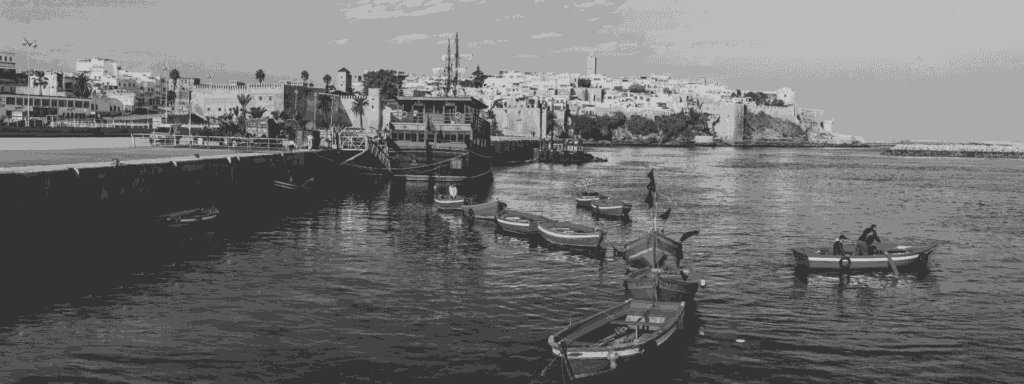
The Republic was governed by a council of 16 elective members, known as the Diwan. Every year, they elected a Governor (the Admiral of the Port).
- The Secret of Power-Sharing : Unlike the Sultanate to the south or the Kingdoms to the north, no one held power for life. The Governor had to justify every expedition and every gold coin spent to the council.
- The « Law of the Tenth » : The Republic had its own taxation system. Precisely 10% of every « prize » (captured ship) went to the government to maintain the city walls and the Great Mosque. The rest was divided with mathematical precision among the crew—a level of fairness that was non-existent in the European navies of the time, where sailors lived in near-slavery.
The Treaty of 1627: When Pirates Spoke as Kings
One of the most « rare » facts in Rabat’s history is that the Republic was a recognized diplomatic entity. They didn’t just hide; they negotiated.
- The Secret Alliance : In 1627, the Republic of Bouregreg signed a formal treaty with the Netherlands. The Dutch, who were also fighting for independence from Spain, saw the Rabat pirates not as criminals, but as « privateers »—useful allies against a common enemy.
- The Hidden Intelligence Network : The Corsair captains were often polyglots, speaking Spanish, Arabic, Portuguese, and Dutch. This made Rabat a global hub for maritime intelligence. If a Spanish treasure galleon was leaving Havana, the news often reached the Kasbah of the Udayas before it reached Madrid.
The « Sallee Rover » Code of Conduct
Life on a pirate ship was governed by a written code that would surprise modern readers.
- The Forbidden Acts : Violence against captives was often strictly regulated to preserve their ransom value, and theft among crew members was punished by marooning or « walking the plank » (though the Mediterranean version usually involved being cast off in a small boat without oars).
- The Religious Paradox : While they were holy warriors (Mujahideen) in their own eyes, their crews were surprisingly diverse. You could find « Renegades »—Europeans who had converted to Islam—working alongside Moriscos and local Berbers. It was a meritocracy of the sea: your skill at the helm mattered more than your bloodline.
The Lost « Golden Age » of the Salé Rial
The Republic even attempted to mint its own currency. Though few coins survive today, they represented the ultimate act of rebellion. In the eyes of the Sultan in Marrakech, this was the greatest sin. To mint one’s own money was to declare oneself a God-king, and it was this very « Pirate Pride » that would eventually lead the Moroccan Alouite dynasty to finally bring the rebellious Republic to its knees.
The Fall of the Republic and the Ghost Heritage
Every golden age of rebellion eventually meets its end. For the Republic of Bouregreg, the end did not come from a European fleet, but from the rising power of the Moroccan interior. By the late 17th century, the Alouite Sultans—determined to unify the country—could no longer tolerate a « state within a state » that minted its own coins and signed its own treaties.
The Siege of Sovereignty
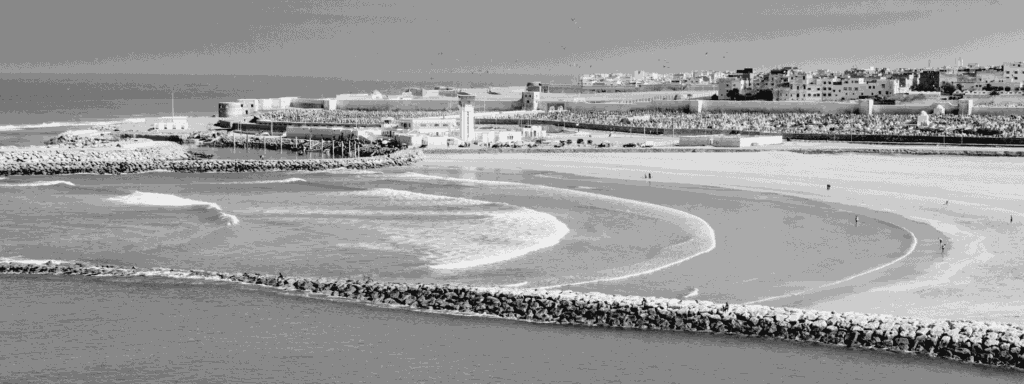
In 1668, the great Sultan Moulay Rashid finally brought the defiant twin cities of Rabat and Salé back under the central authority of the Makhzen. The « Pirate Governors » were replaced by royal administrators, and the revolutionary Diwan was disbanded.
- The Secret Transition : However, the Sultans were wise. They didn’t destroy the pirates; they absorbed them. The Corsair fleet became the core of the Royal Moroccan Navy. The fierce « Sallee Rovers » who once fought for their own pockets now fought for the Sultan, protecting the coast against the very European empires they had spent decades raiding.
The Living Shadows: Where to find the Corsairs Today
The Republic may be gone, but its « shadows » are everywhere in Rabat if you know where to look:
- The Cemetery of the Martyrs : Located just outside the Kasbah walls, overlooking the crashing Atlantic waves. Many of the unmarked, salt-worn headstones belong to the original Morisco captains. They were buried facing the sea—their true home—and toward the North, toward the Andalusia they never forgot.
- The « Secret » Culinary Ink : Notice the use of saffron and bitter orange in Rabat’s traditional recipes. These are the culinary ghosts of Al-Andalus, brought over by the pirates and preserved by their descendants for four centuries.
- The Family Names : If you meet someone in Rabat with the surname Bargach, Mouline, Balafrej, or Palafox, you are speaking to the direct royalty of the Pirate Republic. Their families have lived within these walls since the 1600s, maintaining a culture of refinement that was funded by the « prizes » of the Atlantic.
The Rebel DNA of the Capital of Light
Rabat is often described today as a city of order, diplomacy, and quiet gardens. Yet, as we have uncovered, its foundation is built on the salt-crusted stones of rebellion. The Republic of Bouregreg was more than just a den of thieves; it was a sanctuary for the exiled, a laboratory for democracy, and a bridge between the medieval and modern worlds.
When you walk the ramparts of the Kasbah des Oudayas today, you aren’t just looking at a beautiful view of the Atlantic. You are standing on the very platform where « Sallee Rovers » once scanned the horizon for Spanish galleons. You are walking over a hidden network of tunnels that once held the wealth of empires.
The pirate soul of Rabat hasn’t disappeared; it has simply evolved. It lives on in the city’s fierce independence, its sophisticated culture, and its refusal to be « just another city. » Rabat remains, as it was in 1627, a sentinel on the edge of the world—halfway between the secrets of the deep blue sea and the bright, ambitious future of the Moroccan Kingdom.
Morocco Walker’s Final Insight : To understand Rabat, you must look beneath the surface. The next time you see a blue door in the Kasbah, remember: it might just be the entrance to a story that the world tried to forget, but the stones refused to let go.
MOROCCO WALKER