

Soul Sabbatical i remember the exact moment my nervous system finally buckled. I was sitting in a high-rise cafe, the air conditioning humming a sterile tune, surrounded by the artificial glow of three different screens. My coffee was cold, my jaw was clenched, and my mind felt like a browser with fifty tabs open—half of them frozen, the other half playing a loud, invisible advertisement I couldn’t find.
I didn’t need a vacation. I didn’t need a « wellness retreat » with infinity pools and $30 green juices. I needed to vanish. I needed to see who I was when I wasn’t being « liked, » « followed, » or « pinged. » Two days later, I was on a train heading north toward the misty, emerald-shrouded peaks of Chiang Mai, carrying nothing but a small backpack and a hollow ache in my chest that only silence could fill.
The Arrival: Into the Emerald Silence
The transition from the chaos of Chiang Mai’s « Old City » to the forest monastery of the Kammatthana tradition is a sensory shock. As the red songthaew (taxi) climbed higher into the hills of Mae Wang, the smell of diesel and street food was replaced by the thick, resinous scent of damp pine and wild jasmine.
The temple didn’t have a grand gate. There were no golden Buddhas shimmering under spotlights. There was only a narrow, moss-covered stone path that disappeared into a canopy of ancient Banyan trees. I was met by a monk whose face seemed carved from the very teak wood of the forest—lined, patient, and impossibly still.
He didn’t ask for my reservation or my social media handle. He simply pointed to a small, wooden table. « The phone, » he said softly. I turned it off. The screen went black, and for a split second, I felt a surge of genuine panic—a phantom limb syndrome for the digital age. I handed it over, along with my watch and my books. I was now untethered from time, and for the first time in forteen years, I was unreachable.
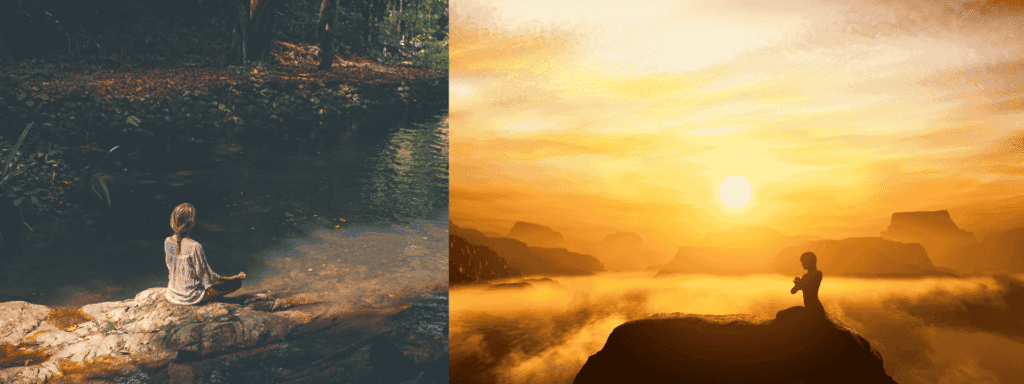
The First Night: The Architecture of Nothing
My home for the next two weeks was a Kuti—a tiny, elevated wooden hut no larger than a walk-in closet. It contained a thin grass mat, a hard wooden pillow, and a mosquito net that hung like a ghost in the corner. There was no electricity. As the sun dipped below the ridge, the forest didn’t go quiet; it woke up.
The cicadas began a rhythmic, electric drone that vibrated in my teeth. The darkness was absolute, a heavy velvet that pressed against my eyes. I lay on the hard floor, my back aching, my mind screaming for a distraction. This is the first lesson of the silence: when you stop the external noise, the internal noise becomes deafening. Every regret, every « to-do » list, and every anxious thought I had suppressed for years came rushing into the vacuum. I didn’t sleep. I just listened to the sound of my own frantic heartbeat in the void.
Day 1 to 3: The Itch of the Addict
The first three days are a brutal detox. We are addicted to the « hit » of information, and the withdrawal is physical. I found myself reaching for my pocket every few minutes, my thumb twitching to scroll a ghost screen. I was restless. I walked the perimeter of the forest path like a caged animal.
The schedule was a relentless exercise in simplicity. At 4:00 AM, the hollow strike of a wooden bell shattered the mist. We moved to the meditation hall—a simple roofed platform open to the forest. There, we sat. Not for twenty minutes, but for hours.
The pain in my knees was the first thing that spoke to me. It started as a dull throb and evolved into a searing heat. I wanted to move, to itch my nose, to adjust my posture, but the instruction was clear: Observe the pain. Do not become it. I realized then how much of my life I had spent running from discomfort, reaching for a phone or a snack the moment things felt « difficult. » Here, there was nowhere to run. I had to sit with the fire until it turned to ash.
The Ritual of the Alms: Barefoot Grace
Every morning at dawn, we followed the monks on the Bintabaht—the alms round. We walked barefoot through the local village. The ground was cold and slick with dew, then sharp with gravel, then soft with red dust.
There is a profound humility in walking barefoot and silent, holding a bowl, waiting for the kindness of strangers. The villagers would come out of their homes with steaming bundles of sticky rice or fresh mangoes. No words were exchanged. No « thank you, » no « you’re welcome. » Just a bow and a shared moment of human connection that transcended commerce.
Back at the temple, we ate our only meal of the day at 8:00 AM. A single bowl of mixed vegetables, rice, and tofu. When you only eat once a day, the act of chewing becomes a meditation. I tasted the sweetness of the grain, the bitterness of the greens, and the earthiness of the spice with a clarity that shocked me. My senses were beginning to wake up from their long, sugar-coated slumber.
The Heavy Mirror of Silence
By the end of the third day, the « Self-Care » I had imagined—peaceful thoughts and soft music—felt like a lie. Silence is not a spa; it is a mirror. Without the ability to speak, I couldn’t perform. I couldn’t crack a joke to deflect tension, I couldn’t explain my actions, and I couldn’t seek validation.
I was just a person, in a white linen shirt, sweeping leaves in a forest. I watched the leaves fall—red, gold, and brittle. I swept them into a pile. The wind blew them back. I swept them again. In the city, I would have found this « unproductive. » Here, I realized that the sweeping was the point. It was a physical manifestation of the mind—constantly trying to tidy up a world that is naturally messy and ever-changing.
The Dissolution and the Deep Blue
By the dawn of the fourth day, the « itch » had begun to subside, replaced by a strange, heavy stillness that felt almost liquid. This is the threshold of the Deep Silence. If the first three days were a battle against the world I had left behind, the middle of the retreat was a confrontation with the world I had carried inside me.
The Death of the Narrator
When you stop speaking to others, you realize with a jarring clarity that you have never stopped speaking to yourself. My mind was a relentless narrator, commenting on the quality of the light, the stiffness of my neck, and the perceived unfairness of the early wake-up call. But on Day Five, something snapped.
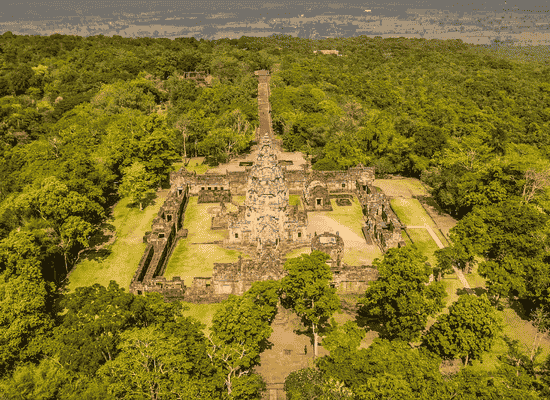
I was sitting by the base of a massive, ancient Banyan tree during the period of walking meditation. I stopped to watch a line of red ants transporting a beetle wing across a root. I waited for the narrator to chime in—to find a metaphor, to make a note for a future post, to judge the efficiency of the ants.
Silence.
For the first time in my adult life, I just saw the ants. There was no « me » watching them; there was just the movement, the sunlight, and the wing. The narrator had grown tired and simply walked off stage. In that gap, a profound sense of relief flooded my chest. I wasn’t the center of the universe; I was just another creature in the forest, as temporary and as vital as the ants.
The Hallucinations of the Quiet Mind
The human brain abhors a vacuum. When you starve it of the « junk food » of digital stimuli, it begins to manufacture its own. By Day Seven, my senses had become so hyper-attuned that the world took on a psychedelic edge.
I remember sitting in the meditation hall as a late-afternoon monsoon rain began to fall. The sound was not a « blur » of water; it was a million distinct percussive strikes on the broad leaves of the teak trees. I could hear the temperature of the rain—a cold, metallic scent that shifted the air pressure around my skin. When I closed my eyes, I didn’t see darkness; I saw geometric patterns of light, pulses of indigo and gold that moved in time with my breath.
This is what the monks call the Nimitta—a sign of the mind settling. It wasn’t magic; it was the nervous system finally untangling itself from the knots of a thousand unread emails and half-formed anxieties. I felt like a radio being tuned to a frequency I hadn’t realized existed.
The Mirror of the Wild
In the forest tradition, nature is the primary teacher. We shared our space with creatures that didn’t care about our « spiritual journeys. » There were emerald-green pit vipers that draped themselves like jewelry over the branches near the wells, and massive, prehistoric-looking spiders that spun webs across the paths at night.
Initially, I felt a surge of « city-born » fear—the need to control, to sanitize, to protect my space. But silence teaches you a different kind of bravery: the bravery of non-interference. One evening, a large huntsman spider appeared on the wall of my Kuti, right above my wooden pillow.
In my old life, this would have been a crisis involving a shoe and a frantic heart rate. Here, in the dim glow of a single beeswax candle, I just watched it. I watched the elegance of its many legs, the way it sensed the vibrations of the air. I realized that it had more right to this forest than I did. I bowed to it, lay down, and slept the deepest sleep of my life. I was learning the bohemian art of Radical Belonging.
The Anatomy of the Breath
Without books, music, or conversation, my breath became my primary entertainment. I started to notice the « flavors » of the inhalation—the way it felt cool against the back of the throat, the way it expanded the ribs like an accordion, the tiny pause at the top of the lungs where everything stands still.
I discovered that every emotion has a physical « breath-print. » Anxiety is a shallow, jagged tug in the upper chest. Peace is a long, oceanic swell that starts in the belly. By observing the breath, I realized I could « read » my emotions before they even became thoughts. I was no longer a victim of my moods; I was the atmosphere in which they occurred.
The Mid-Way Purge
On Day Nine, the « Self-Care » took a dark turn. This is the period often called the « Purge. » Without the ability to talk things through, every unresolved trauma and buried grief bubbled up to the surface. I spent four hours weeping while sweeping the courtyard.
I wasn’t crying about anything specific; I was crying for every time I had ignored my own heart, every time I had traded my authenticity for a « like, » and every year I had spent running on a treadmill that led nowhere. It was a psychic detox, a shedding of old skin that was too tight to live in anymore. The monks watched me with a gentle, detached compassion. They didn’t offer a tissue or a « U okay? » They simply let me be. They knew that the only way out was through.
The Integration of Joy and the Return to the Noise
As the calendar in my mind—a crude tally of scratches on a wooden beam—marked the arrival of Day Eleven, the heavy, purgative weight of the middle week lifted. It was replaced by a lightness so profound it felt as though my bones had been hollowed out like a bird’s. This was the final movement of the retreat: the transition from the void into a state of Active Presence.
The Texture of Joy
In the « outside » world, we are taught that joy is something to be chased, a trophy won through achievement or acquisition. In the forest, I discovered that joy is actually the default setting of a mind that has stopped fighting reality.
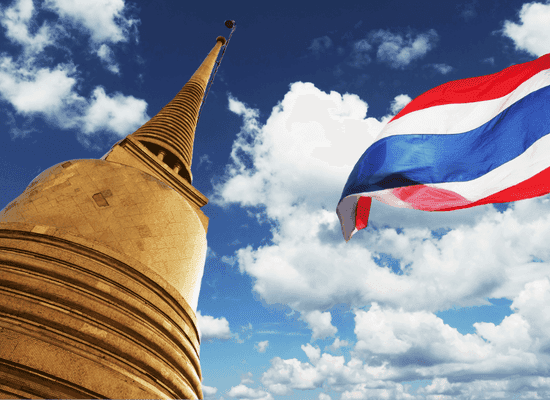
I remember the morning of Day Twelve. I was sitting on the steps of the meditation hall, watching the mist burn off the mountainside. I wasn’t doing anything « productive. » I wasn’t « manifesting. » I was simply existing. A small, brown bird landed on the railing inches from my hand. For ten minutes, we simply existed in the same space. I felt a surge of gratitude so intense it was almost painful—not for a miracle, but for the simple fact that I was alive to see the bird’s feathers catch the light. This is the bohemian core of self-care: the realization that the ordinary is the only true extraordinary.
The First Word: Breaking the Seal
On the final day, the vow of Noble Silence was lifted. It was a strange, almost frightening prospect. After 336 hours of quiet, the thought of speaking felt like breaking a beautiful, fragile glass.
The first word I spoke was « Thank you, » addressed to the monk who had guided me. My voice sounded alien—a low, gravelly vibration that felt too loud for the morning air. It was a physical sensation, the way the air moved over my vocal cords.
I realized then how much we waste our words. In the city, I used language as a shield, a weapon, or a filler to avoid the « awkwardness » of silence. Now, every word felt heavy with intention. I found myself speaking slowly, choosing each syllable with the care of a jeweler setting a stone. I didn’t want to fill the world with noise anymore; I wanted to contribute only what was necessary and kind.
The Reclaiming of the Digital Ghost
When the monk handed back my phone, it felt like a cold, heavy artifact from a dead civilization. I held it in my palm for a long time before turning it on. When the screen finally flickered to life, the deluge began: 482 emails, 126 WhatsApp messages, 14 missed calls, and a mountain of notifications from apps that claimed to « need » my attention.
Three weeks ago, this would have triggered a spike of cortisol. Now, I looked at the red badges and felt… nothing. It was just data. It wasn’t « me. »
I spent an hour under a teak tree, not replying, but deleting. I removed every app that lived on « outrage » or « comparison. » I silenced every notification that wasn’t from a human being I loved. I realized that my attention was the most valuable thing I owned, and I had been giving it away for free to companies that didn’t know my name. Reclaiming my digital life wasn’t about being a Luddite; it was about being an architect of my own peace.
The Bohemian Integration: Taking the Forest Home
The most common question I get when I tell people about the retreat is: « How do you keep that feeling when you’re back in the real world? » The truth is, you don’t « keep » the feeling—you build a temple for it within your daily life. I left Chiang Mai, but I brought the forest mind with me.
- The Ritual of the First Hour : I no longer reach for my phone the moment I wake up. The first hour of my day belongs to the breath and the silence.
- The « Noble Silence » in the City : Once a week, I spend four hours in « Mini-Silence. » No podcasts, no music, no talking. I go for a walk or cook a meal, and I practice being the narrator’s observer.
- Radical Essentialism : I stopped saying « yes » to things out of obligation. My time is a sacred resource. If an invitation or a project doesn’t resonate with the stillness I found in the forest, I decline with a bow and no explanation.
The Luxury of Presence
As I sat in the airport, waiting for my flight back to the « world, » I watched the people around me. Almost everyone was hunched over a screen, their necks bent, their eyes glazed, their minds a thousand miles away from the chair they were sitting in.
I felt a deep, quiet compassion for them. I used to be one of them. I wanted to tell them that there is a world right here—in the taste of the airport tea, in the hum of the terminal, in the way the light hits the floor.
I realized that the ultimate bohemian act—the ultimate « Self-Care »—is not to escape the world, but to be radically present within it. The 14 days in the forest didn’t change the world; it changed the way I look at it. The noise is still there, the Slack pings still happen, and the city is still loud. But I am no longer the browser with fifty tabs open. I am the screen. I am the silence between the words. And that is enough.
The Sacred Inquiry – Whispers of the Curious Soul
Returning from the silence, I found that people didn’t ask about the philosophy of Buddhism; they asked about the grit of the human experience. Here is the « Sacred QA »—the questions that bubbled up in the minds of others, answered from the depth of my own forest-born clarity.
The Final Threshold – A Bohemian’s Vow
As I stand at the edge of this narrative, looking back at the fourteen days that redefined my internal geography, I realize that the forest was never a destination. It was a mirror.
We live in a century that profiteth from our distraction. Every app, every flashing neon sign, and every « urgent » notification is a thief stealing the only thing we truly own: our attention. To choose silence in a world of noise is not a retreat; it is an act of spiritual revolution. It is a bohemian vow to live « un-colonized » by the demands of the digital empire.
The Compass of the Heart
The « Sabbatical » does not end when you put your shoes back on and step onto the tarmac of an international airport. It ends when you realize that the temple is not a place in Northern Thailand—it is a state of being. You can be in a traffic jam in Los Angeles or a crowded market in London and still be in the « Forest Mind. »
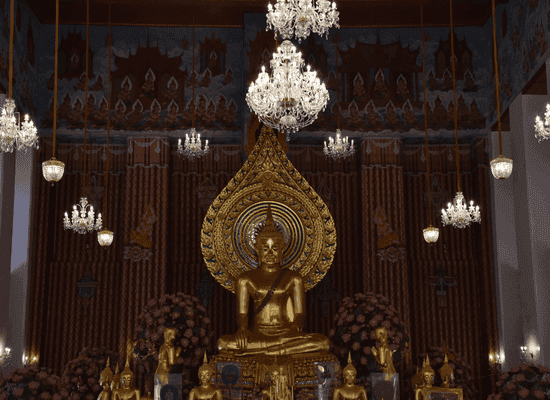
It is the ability to say: « This moment is enough. » It is the grace to watch a difficult emotion arise and say, « Ah, there is anger, » instead of « I am angry. » It is the freedom to exist without an audience.
The Traveler’s Benediction
To you, the reader who has walked with me: I wish you the courage to be boring. I wish you the bravery to be unreachable. I wish you the luxury of a mind that is no longer a battlefield, but a garden.
The world will tell you that you are falling behind. It will tell you that you are missing out. But as you sit in your own version of the « Forest, » watching the breath move in and out of your lungs, you will know the truth. You are not missing out on life; you are finally, for the first time, showing up for it.
The silence is not empty. It is full of everything you have been looking for.
The Pragmatic Soul – A Blueprint for Your Disappearance
A spiritual journey still requires a physical map. To vanish effectively, one must prepare with a quiet mind and a practical hand. This is the grounded wisdom of the forest—the logistical « hard data » you need to transition from the digital world to the monastic silence without friction.
I. The Gear of the Essentialist: What to Carry
In a world of « nothing, » what you carry becomes sacred. You are not packing for a holiday; you are packing for a ritual.
- The White Uniform : You will need 2 or 3 sets of loose, white clothing. Avoid synthetics; they are the enemies of the humid Thai forest. Seek out heavy linen or thick cotton. It must be modest—shoulders and knees covered. In Chiang Mai, the Warorot Market is the best place to find these « temple whites » for a few hundred Baht.
- The Mosquito Strategy : The forest is alive. Bring a natural, high-potency lemongrass or eucalyptus repellent. Chemical DEET often feels too « harsh » for the heightened senses of a retreat.
- The Light : A small, rechargeable headlamp is vital. When the sun sets and you are navigating the mossy path to your Kuti, you will need your hands free.
- The « Luxury » of Comfort : A simple shawl or a light pashmina. Even in Thailand, the pre-dawn hours (4:00 AM) in the mountains can be bone-chilling. This shawl will become your « meditation cocoon. »
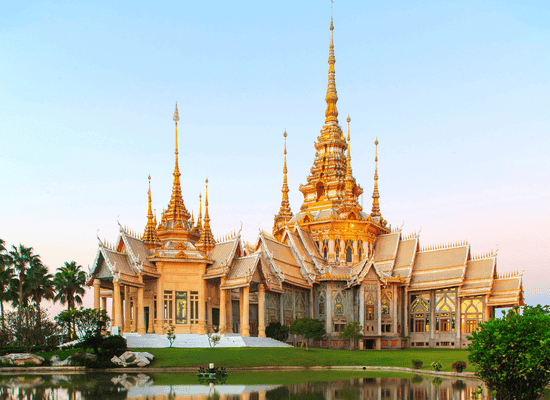
Most of the true « Forest Tradition » temples do not have sleek websites or booking engines. They operate on the ancient frequency of « showing up. »
- The Search : Look for Wat (Temple) names followed by « Vipassana » or « Forest Tradition. » Wat Umong is the easiest to reach via a short « Tuk-Tuk » ride from the city center. For the deeper, more isolated retreats like Wat Pa Tam Wua (in the Mae Hong Son loop) or the residences near Mae Wang, you will need to hire a Songthaew (red truck) or take a local bus from the Chang Phuak Gate.
- The Arrival : Do not just « turn up » at 8:00 PM. Arrive in the morning, between 9:00 AM and 11:00 AM. This is when the monks have finished their meal and the temple coordinator is most available to receive guests.
III. The Art of the « Dana » (Donation)
True monastic retreats are technically free. They operate on Dana—the principle of voluntary generosity.
- The Protocol : There is no « bill » at the end. Instead, look for a donation box, usually near the main hall or the office.
- The Amount : A common guideline for a « Bohemian Soul » is to calculate what you would have spent on a basic hostel and food in the city (perhaps 500 to 800 Baht per day) and offer that. It ensures the temple can provide for the next seeker who arrives with nothing.
IV. Digital Housekeeping: Before You Disconnect
To truly disappear, you must settle your affairs with the world you are leaving.
- The « Auto-Reply » of Peace : Set an out-of-office message that is honest. « I am offline and unreachable for a period of retreat. I will respond to your message with a clear mind upon my return. » Do not give an emergency number unless it is absolutely vital.
- The Flight Mode Ritual : Do not just turn off the phone. Delete the most addictive apps before you hand over the device. This prevents the « notification shock » when you power it back on two weeks later.
V. Health & Respect: The Unspoken Rules
- The Body : If you have back or knee issues, mention this to the meditation teacher early. They may allow you to use a small wooden stool. The goal is « Insight, » not « Torture. »
- The Feet : Never point your feet toward a Buddha image or a monk. It is the height of disrespect in Thai culture. Learn to « tuck » your legs or sit in the Burmese style.
- The Silence : Respect it like a physical wall. Even if you see another traveler you know, a simple bow is all that is required. The greatest gift you can give a fellow seeker is the permission to be alone.
[…] taught us about the weight of history. Chiang Mai taught us about the weight of silence. Tikaboo teaches us about the weight of the future. We live […]