

There is a specific frequency of noise in Marrakech that clings to the skin like humidity. It is a frantic, beautiful cacophony—the rhythmic strike of hammers in the blacksmith’s souk, the insistent cry of spice merchants, and the relentless hum of a city that has learned to perform its own soul for the world. But for those who carry the « hollow bone »—that restless, internal ache for the places the maps forgot to name—Marrakech is not a destination. It is a morocco departure gate.
I stood on the edge of the Jemaa el-Fnaa as the sun began to bleed into the ramparts, watching the smoke of a hundred grills rise like incense. Most travelers come here to find something; I was here to lose everything. I was looking for the « Invisible Morocco, » a kingdom that exists in the negative space between the postcards. It is a land that does not speak in the language of brochures or hashtags, but in the long, ancient vowels of the wind moving through limestone canyons.
To find it, one must commit to the « Call of the Void. » This is the visceral urge to turn the wheel where the asphalt ends and the gravel begins, to trust the intuition of a hand-drawn map over the sterile precision of a screen. It is a transition from the world of doing to the world of being. As I loaded my worn leather satchel into the back of a high-clearance 4×4—a vehicle that looked as though it had been weathered by the very dust it was meant to conquer—I felt the familiar tightening in my chest. It was the thrill of the threshold.
The « Invisible Morocco » is not a secret hidden by walls, but by silence. It is guarded by the sheer verticality of the High Atlas and the psychological barrier of the unknown. To reach it, you must be willing to trade the comfort of a scheduled itinerary for the sovereignty of the trail. You must accept that your only true currency will be your patience and your willingness to sit in the dirt and wait for the tea to brew.
As the city walls faded into a shimmering heat haze in my rearview mirror, the landscape began to shed its ornaments. The olive groves thinned, the villas disappeared, and the earth rose up to meet the sky in a jagged, uncompromising line of ochre and violet. I wasn’t just driving toward the mountains; I was driving toward a confrontation with the essential. This road trip would not be measured in kilometers, but in the layers of noise I could successfully peel away from my own soul.
- Beyond the Red Walls – The Ascent to Tizi n’Outfi
- The Emerald Sanctuary – The Aït Bouguemez Valley
- The High Plateaus – The Kingdom of the Koucer
- The Black Colossus – The Volcanic Spine of Jbel Saghro
- The Subterranean Echo – The Secret Caves of the Aït Atta
- The River of Dates – The Draa Valley & the Labyrinth of Ksours
- The Final Threshold – M’hamid and the Whispering Dunes
- The Wayfarer’s Log – Logistics, Routes, and the Tactical Itinerary
- The Horizon’s Promise
Beyond the Red Walls – The Ascent to Tizi n’Outfi
The transition from the plains of El Haouz to the jagged foothills of the Atlas is not a gradual shift; it is a violent architectural divorce. One moment, you are surrounded by the sprawling, horizontal geometry of olive groves and sun-scorched earth; the next, the world tilts upward at a defiant angle. To leave the red walls of Marrakech behind is to shed the skin of a spectator and don the mantle of a wayfarer. The air, once thick with the scent of charcoal and exhaust, begins to thin, replaced by the bracing, resinous perfume of Atlas cedar and wild thyme.
The road toward Demnate is a ribbon of fraying asphalt that eventually tires of its own existence, surrendering to the raw honesty of the piste. As the elevation gains, the temperature drops in five-degree increments, a tactile reminder that you are entering a different realm. This is the land of the Tizi n’Outfi, a high-altitude pass that serves as the gateway to the interior. It is here that the visual language of Morocco undergoes a profound transformation. The vibrant reds of the lowlands are bleached by the sun and the wind into a palimpsest of ochre, silver-grey limestone, and the deep, bruised purple of distant peaks.
The Threshold of the High Atlas
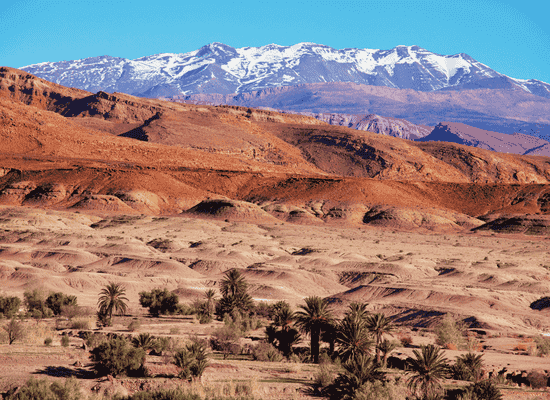
Passing through the Tizi n’Outfi is a ritual of the senses. At nearly 2,200 meters, the sky takes on a depth of blue that feels almost liquid, a stark contrast to the stark, mineral landscape. This is where the last vestiges of « official » geography fade away. There are no more signs indicating distance, only the silent, towering presence of the peaks. In this rarified air, sounds carry with an eerie clarity—the distant clatter of a goat’s hoof on stone, the snap of a dry branch, the hollow whistle of the wind through a narrow gorge.
As I navigated the switchbacks, the vehicle felt less like a machine and more like a humble intruder in a cathedral of stone. The geology here is a visible history of tectonic struggle. You can see the folded strata of the earth, massive sheets of rock pushed skyward millions of years ago, now standing as silent witnesses to the passage of time. To drive these roads is to realize that the mountain does not care about your schedule. It possesses a temporal scale that dwarfs the human lifespan, demanding a pace that is measured in breaths and heartbeats rather than kilometers per hour.
The First Outpost of the Invisible
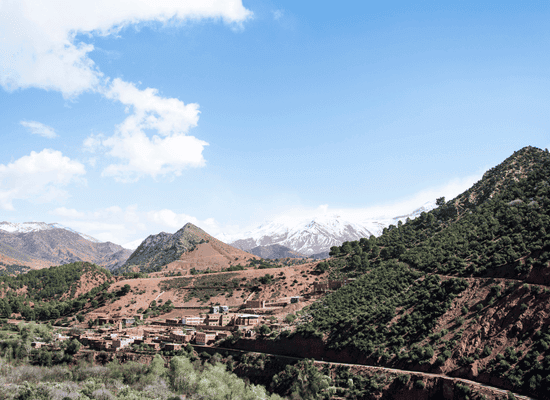
Descending from the pass, I encountered the first true « invisible » settlements—clusters of pisé houses clinging to the mountainside like barnacles on a ship’s hull. These villages are not built on the mountain; they are built of it. The mud and straw used to form the walls are harvested from the very ground they stand upon, creating a seamless continuity between human habitation and the natural world. From a distance, they are almost impossible to spot, camouflaged by their own materiality.
In these high-altitude hamlets, life is a masterclass in essentialism. There is no surplus here. Every scrap of wood is for heat; every terrace of soil is for survival. As I stopped to let the engine cool, the silence was absolute—a heavy, velvet blanket that muffled the world left behind. I sat on a sun-warmed boulder, watching the shadows of clouds race across the valley floor. In this moment, the frantic energy of the city felt like a fever dream. The Atlas had begun its work of stripping away the unnecessary, leaving behind only the raw, pulsing core of the journey.
The ascent was merely the intake of breath before the plunge. Ahead, the mountains part to reveal a hidden emerald world—a place where the water flows in crystal veins and the houses speak the language of the earth.
The Emerald Sanctuary – The Aït Bouguemez Valley
To descend from the sun-bleached crags of the Tizi n’Outfi into the Aït Bouguemez is to witness a geological miracle. After hours of navigating a world of grey slate and iron-red dust, the valley floor rises up like a long, emerald exhale. It is a ribbon of impossible fertility, a lush oasis of walnut groves and terraced fields of barley, cradled by the massive, protective arms of the M’Goun massif. This is the « Happy Valley, » a moniker that feels less like a tourist label and more like a statement of spiritual fact. Here, the air doesn’t just vibrate with the sound of the wind; it carries the scent of damp earth, mint, and woodsmoke.
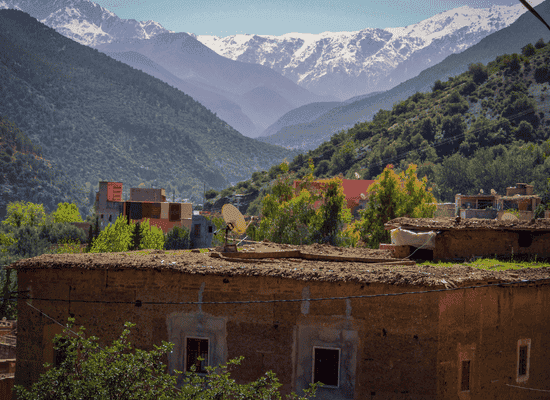
The architecture of the Aït Bouguemez is an extension of the soil itself. There are no harsh lines of concrete or the cold sterility of modern steel. Instead, the villages are composed of pisé—rammed earth that has been compressed into walls thick enough to withstand the brutal mountain winters and the searing summer sun. These buildings breathe.
They are organic entities that change color with the light of the day, turning from a pale straw at dawn to a deep, bruised terracotta at dusk. To touch the wall of a house here is to feel the grit of the valley floor and the straw of the previous harvest. It is a form of building that demands a dialogue with the environment, a humble acknowledgment that we are merely borrowing space from the earth.
The Sentinel of Sidi Moussa
Dominating the valley from a conical hill is the Agadir of Sidi Moussa. To the uninitiated, it looks like a fortress; to the locals, it is a sacred bank. These communal granaries are the architectural soul of the High Atlas. Perched on high ground to avoid the rare but devastating flash floods, the agadir was where families stored their most precious treasures: grain, oil, wool, and legal deeds.
Stepping inside the Sidi Moussa is like entering a labyrinth of shadows. The air is cool and smells of ancient dust and dried fruit. Each family had its own cell, locked with massive wooden keys carved from juniper. But there is a spiritual layer to this stone sentinel as well. It is a place of pilgrimage, dedicated to a saint believed to grant fertility.
Standing on the roof of the granary, looking out over the patchwork quilt of the valley, you realize that this is not just a building—it is a monument to collective survival. It represents a time when the individual was nothing without the tribe, and the tribe was nothing without its connection to the land.
The Pulse of the Seguia
If the pisé is the body of the valley, the seguia is its lifeblood. These ancient irrigation channels are a marvel of ancestral engineering, carving narrow paths along the mountain contours to bring snowmelt to the parched terraces. The management of this water is a silent, ongoing negotiation between neighbors. There are no meters or valves here; water is measured in « notches » of time, governed by the sun and the moon.
Walking along the banks of a seguia is the ultimate meditation. The sound of running water is a constant companion, a liquid heartbeat that dictates the rhythm of daily life. You see elders leaning on their staffs, watching the flow with eyes that have seen eighty harvests. There is a profound peace in watching the water divert into a field of clover, knowing that this simple act has remained unchanged for a thousand years. In the Aït Bouguemez, wealth is not measured in gold, but in the clarity of the water and the height of the walnut trees.
The sun is dipping behind the ridges of the M’Goun, casting long, violet shadows across the emerald fields. But our journey must push higher. Above the tree line, the green fades into the grey of the high plateaus, where the true lords of the Atlas—the nomads—await.
The High Plateaus – The Kingdom of the Koucer
To leave the emerald embrace of the Aït Bouguemez and ascend toward the high plateaus is to undergo a stripping of the spirit. The walnut trees, with their heavy, protective canopies, thin out and finally vanish, replaced by the low, resilient scrub of the mountain broom. The air loses its moisture and gains a crystalline, piercing quality that makes every jagged ridge of the Koucer Plateau stand out with terrifying clarity. Here, at 3,000 meters, you are no longer in a valley protected by giants; you are standing on the giants’ shoulders, exposed to a sky that feels immense enough to swallow the earth whole.
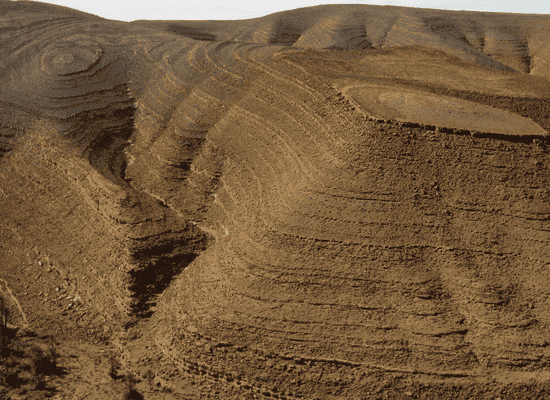
The track—for it can no longer be called a road—becomes a skeletal line etched into the limestone. This is the Transversal Crossing, a path that ignores the logic of modern engineering and follows the ancient instinct of the herd. It is a world of monochrome browns and sun-bleached greys, a landscape so stripped of ornament that the sight of a single, wind-bent juniper tree feels like a momentous event. In this high-altitude desert, the « Invisible Morocco » reveals its most austere face. It is a place of absolute silence, broken only by the rhythmic crunch of stone beneath wheels and the occasional, lonely cry of a chough circling the abyss.
The Architecture of the Horizon: The Black Tents
Across these vast, wind-swept expanses, the only signs of human life are the khaimas—the low-slung, black wool tents of the nomadic tribes. To the untrained eye, they look like dark shadows huddled against the mountain floor, but to the traveler, they are beacons of civilization in the void. These tents are woven from the hair of goats and sheep, a material that breathes in the heat and swells to become waterproof in the snow. They are the ultimate mobile architecture, refined over centuries to be as light as a memory and as strong as the mountain itself.
Approaching a nomadic camp is a lesson in humility. There are no fences here, no « private property » signs, yet the boundaries are clearly defined by tradition and respect. You do not simply arrive; you wait to be seen. Life here is dictated by the migrations—the transhumance. These families move with the seasons, chasing the receding snowline to find the freshest pasture for their goats. Their wealth is not stored in banks but in the vitality of their herds and the resilience of their children. To witness a caravan on the move, with donkeys laden with copper pots and woven rugs, is to see a living bridge to a past that refuses to be erased.
The Nomad’s Code: The Law of the Three Teas
In the silence of the high plateaus, hospitality is not a choice; it is a sacred law. When you are invited into the shade of a khaima, you are stepping into a sanctuary where the outside world ceases to exist. There is a specific gravity to the tea ritual here that transcends the simple act of drinking. The tea is prepared with a meditative slowness, the mint bruised by hand, the sugar broken from a hard cone.
As the charcoal embers glow in the dim interior of the tent, the first glass is served. It is « bitter like life. » The second is « sweet like love, » and the third is « gentle like death. » To rush this process is to insult the very fabric of nomadic existence. Between the glasses, conversation is sparse. In the « Invisible Morocco, » words are used sparingly, like water. A nod, a shared look toward the horizon, or the simple act of breaking bread (the agroum baked in the earth) conveys more than a thousand sentences. You realize that these people do not « own » this land; they belong to it, just as the stone and the wind do.
The shadows are beginning to stretch across the Koucer, turning the limestone into a sea of liquid gold. The high plateaus have tested our resolve, but the journey must now descend into the darkness of the earth’s own history. Ahead lies the volcanic spine of the Saghro, where the mountains turn to ink and the stones have memories of fire.
The Black Colossus – The Volcanic Spine of Jbel Saghro
To cross the invisible threshold between the High Atlas and the Jbel Saghro is to witness the earth’s own anatomy shift from flesh to bone. If the High Atlas, with its limestone folds and emerald valleys, represents the living, breathing muscle of Morocco, the Saghro is its scorched, volcanic skeleton. The landscape undergoes a violent chromatic purge; the warm ochres and soft greys of the sedimentary world are replaced by a palette of bruised purples, charcoal blacks, and the shimmering, oil-slick sheen of obsidian. This is a land forged in a cosmic furnace and then abruptly abandoned to the wind.
The transition is marked by a profound change in the very sound of the journey. The soft crunch of limestone beneath the tires gives way to the sharp, metallic clatter of basalt. In the Saghro, the silence is heavier, more mineral. It is the « Mountain of Thirst, » a massif that has stripped itself of all excess. There are no walnut groves here, no lush terraces. Life persists only in the deepest creases of the rock, where a few resilient almond trees and splashes of pink oleander cling to the subterranean moisture of hidden oueds.
The Sentinels of Bab n’Ali
Rising out of the volcanic dust like the ruins of a titan’s cathedral are the towers of Bab n’Ali. These two massive basalt pillars, known as the « Fingers of Ali, » stand as the definitive gateway to the southern reaches of the massif. They are geological anomalies, the remains of ancient volcanic vents that have been sculpted by millions of years of erosion into jagged, sky-piercing needles. To stand at their base is to feel the crushing weight of deep time.
The architecture here is not made by human hands, yet it possesses a deliberate, almost haunting geometry. The rock is fractured into hexagonal columns and sharp-edged plates, creating natural fortresses that look like they were designed by an architect of shadows. As the sun begins its descent, the basalt absorbs the light rather than reflecting it, turning the landscape into a silhouette of impossible complexity. In this light, the Saghro does not feel like a place on Earth; it feels like the surface of a dead moon, beautiful in its absolute, unforgiving desolation.
The Mineral Solitude of the Anti-Atlas
Navigating the interior of the Saghro requires a different kind of vision. The trails are no longer paths; they are fractures in the stone. You are moving through a world of « inverted mountains, » where the deep canyons hold more mystery than the peaks. This is the ancestral home of the Aït Atta, the legendary warriors who once used these volcanic mazes to defy entire empires. Their presence is felt in the scattered azibs—stone summer shelters that blend so perfectly into the scree that they are invisible until you are upon them.
In this mineral solitude, the concept of a « road trip » dissolves into something more primal. You are not driving through the landscape; you are being absorbed by it. The heat of the day radiates from the black stone long after the sun has vanished, creating a shimmering thermal haze that blurs the line between reality and mirage. To spend a night under the stars in the Saghro is to understand the true meaning of « the void. » Without the humidity of the valleys or the dust of the plains, the atmosphere is so transparent that the Milky Way appears not as a smear of light, but as a dense, three-dimensional river of fire.
The volcanic fires of the Saghro have burned away the last of our city-born distractions. But the mountain has one more secret to yield—not on its surface, but within its dark, echoing heart. Below these basalt towers lie the sanctuaries of the deep
The Subterranean Echo – The Secret Caves of the Aït Atta
To step off the sun-scorched basalt of the Saghro and into its hidden caverns is to move from the world of fire into the world of shadow. If the surface of the Jbel Saghro is a testament to the earth’s violent birth, its subterranean reaches are a sanctuary of its ancient memory. These are not the commercial caves of the north with their neon lights and paved walkways; these are the « hollows of the soul, » known only to the Aït Atta nomads and the mountain winds. To find them, one must look for the « breathing rock »—crevices where the air suddenly turns cool and smells of wet flint, a stark contrast to the parched, metallic scent of the volcanic plains.
Descending into the belly of the Saghro is a sensory recalibration. The blinding glare of the Moroccan sun is extinguished, replaced by a profound, velvety darkness that feels almost solid. As my torch beam cuts through the gloom, the walls reveal a tapestry of geological history: veins of quartz shimmering like frozen lightning and layers of ash that tell the story of eruptions from an eon ago. But there is a human layer here too—soot-stained ceilings from fires lit by resistance fighters and nomads seeking refuge from the « Mountain of Thirst. »
The Sanctuary of Resistance
These caves are more than geological accidents; they are the « Invisible Citadels » of Morocco. During the 1930s, when the colonial tide attempted to wash over the Anti-Atlas, the Aït Atta warriors retreated into these limestone and volcanic labyrinths. Here, they were untouchable. The caves provided a natural fortification, a place where the temperature remained a constant, cool embrace while the world above baked in 40-degree heat.
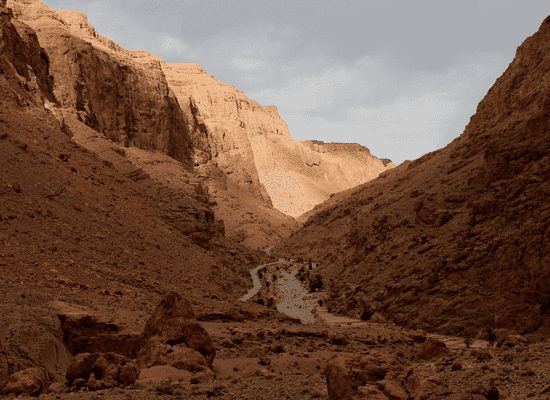
Walking through these chambers, you feel the weight of that defiance. There are flat stones worn smooth by generations of women grinding grain in total darkness, and hidden niches where water—filtered through hundreds of meters of rock—drips into natural stone basins with a rhythmic, hypnotic precision. This is the « Music of the Dripping, » a liquid heartbeat that sustained thousands of people and their livestock during sieges. In a land where water is gold, these caves were the ultimate banks.
The Guardian of the Deep
Legend among the Saghro nomads speaks of the Djinni of the Depths—spirits that guard the furthest reaches of the tunnels where the light of the moon can never penetrate. It is a way of respecting the danger of the void. Some tunnels are said to stretch for kilometers, connecting the Saghro to the Draa Valley in a subterranean highway of shadows.
In the deepest chamber I reached, I extinguished my light. The silence was absolute—not an absence of sound, but a presence of it. You hear the internal hum of your own nervous system, the thud of your heart, and the occasional, crystalline tink of a water drop hitting a pool. It is a place for the « great stripping. » Without the horizon to guide the eye or the sun to mark the time, you are forced inward. You realize that the « Invisible Morocco » isn’t just a place you visit; it’s a state of being that the mountain imposes upon you.
I emerge from the cavern’s mouth, squinting as the golden hour turns the basalt pillars of the Saghro into pillars of fire. The underground has cleansed the palate of the soul. Now, we must follow the gravity of the water we heard dripping in the dark. We follow the dry veins down, toward the lush, palm-fringed ribbons of the Draa Valley.
The River of Dates – The Draa Valley & the Labyrinth of Ksours
To leave the volcanic austerity of the Saghro and descend toward the Draa Valley is to transition from the realm of stone into the realm of the garden. The descent is a long, winding surrender to gravity, where the jagged basalt finally softens into the alluvial plains. Suddenly, the horizon is no longer a serrated blade of rock; it is a dense, rhythmic explosion of green. This is the longest river valley in Morocco, a five-hundred-mile ribbon of date palms that fights a daily, silent war against the encroaching sands of the Sahara.
The air here changes instantly. It loses the dry, metallic bite of the high altitudes and gains a heavy, sweet humidity—the scent of ripening fruit, damp earth, and the faint, dusty perfume of henna. In the Draa, water is not a secret hidden in caves; it is a public miracle. The river, though often invisible beneath its sandy bed, feeds a subterranean sea that sustains millions of palms, creating a canopy so thick that the sun only reaches the valley floor in dappled, shifting coins of light.
The Labyrinthine Architecture of the Ksour
Nestled within this emerald forest are the Ksours—fortified villages that look like they have sprouted directly from the mud of the riverbanks. Unlike the scattered pisé houses of the Atlas, a Ksar is a collective masterpiece of defensive urbanism. It is a hive of sun-dried brick, a vertical labyrinth of interconnected houses, communal granaries, and narrow, shadowed alleys designed to trap the cool air and baffle the desert winds.
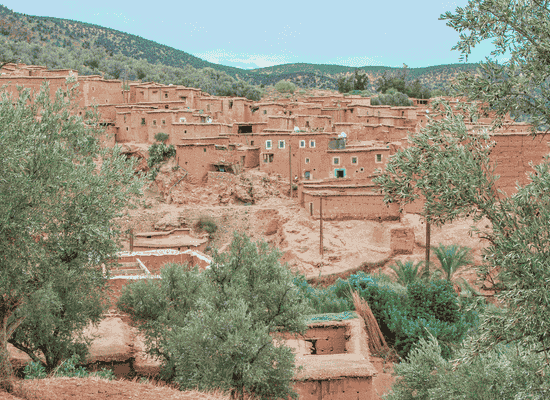
Entering a Ksar like Tamnougalt is like stepping into a living shadow. The streets are often « covered »—the second floors of houses bridge the alleys to create a natural air-conditioning system. You walk in a subterranean twilight, guided by the sound of a distant fountain or the soft shuffle of a leather babouche on packed earth. This architecture was built for a world of caravans and tribal rivalries, where a village had to be a fortress. Today, these walls are a library of human stories, where the « Invisible Morocco » is written in the crumbling calligraphy of the mud-brick facades.
Deep within the Draa, specifically in the village of Tamegroute, the « Invisible » takes a literary turn. Here, beneath the dunes, lies one of the most significant collections of ancient manuscripts in Africa. The Sufi brotherhood of the Nasiriyya founded a library here in the 17th century that served as a beacon of knowledge for caravans crossing the Sahara.
I spent an afternoon in the cool, dim library, watching a scholar turn pages of gazelle skin that were centuries old. These manuscripts—covering astronomy, medicine, and law—are written in inks made from saffron and crushed minerals, their margins decorated with gold leaf that still catches the stray beams of light. It is a staggering realization: in a place that looks like the end of the world, there exists a deep, intellectual lineage that has survived fires, wars, and the relentless desert sun. The Draa is not just a valley of dates; it is a valley of memory.
The palms are thinning now as the valley begins to dissolve into the reg—the vast, stony desert. The river has done its work, and the green is giving way to the gold. We are approaching the final threshold, where the road ends and the silence of the dunes begins.
The Final Threshold – M’hamid and the Whispering Dunes
To reach M’hamid El Ghizlane is to reach the end of the world as we know it. The road, which began in the frantic pulses of Marrakech and climbed the spine of the Atlas, finally loses its resolve here. The asphalt doesn’t just stop; it is swallowed. This is the « Gate of the Desert, » the final settlement before the vast, undulating emptiness of the Hamada and the great erg. In M’hamid, the wind is the primary architect, constantly rearranging the landscape, blurring the lines between the village walls and the encroaching dunes.
Standing at this threshold, you realize that the « Invisible Morocco » has shifted its nature once again. In the mountains, it was hidden by stone; in the Draa, by palms; here, it is hidden by the horizon itself. The desert is not a landscape of absence, but of overwhelming presence. It is a mirror of the soul, where the lack of external landmarks forces you to confront the internal ones. To move beyond M’hamid is to step into a realm where the only maps are the stars and the ancient memory of the camel.
The Philosophy of the Horizon: Erg Chegaga
Beyond the village lies the Erg Chegaga, a sea of sand that stretches toward the Algerian border. These are not the « tourist dunes » of Merzouga with their easy access and luxury camps. Chegaga is raw, wild, and requires a two-hour trek across the reg (stony desert) just to reach its edge. When you finally arrive, the scale is staggering. The dunes rise like frozen waves of gold, some reaching heights of 300 meters, their crests sharp as a knife-edge against the indigo sky.
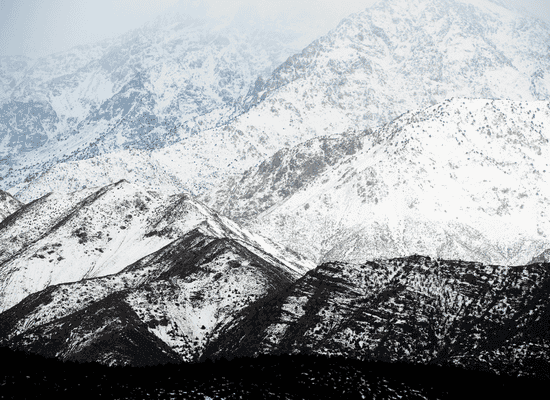
Walking into the dunes at sunset is a lesson in the philosophy of the ephemeral. Every step you take is immediately filled by the shifting grains. The desert does not keep records of your passage. It is a place of « now. » As the sun dips, the sand undergoes a chromatic symphony—turning from a blinding white to a deep apricot, then to a bruised violet, until finally, the stars ignite. In the Erg, the « Invisible » becomes visible through the sheer clarity of the atmosphere. You are not looking at the sky; you are standing inside the universe.
The Last Campfire: A Ritual of Return
On my final night, I sat with a group of Blue Men—the Sahrawi nomads whose indigo-dyed robes have stained their skin over centuries. We sat around a fire of dry tamarisk wood, the only sound being the soft hiss of the sand and the bubbling of the tea pot. This is the ultimate destination of the road trip: the « Zero Point. » There is nowhere left to drive, nothing left to « do » but exist.
The conversation, as always, was sparse. We spoke of the « Voice of the Sand »—the low, humming vibration caused by the wind moving through the dunes. The nomads believe it is the mountain’s memory speaking to the desert. As I looked back toward the north, toward the mountains we had crossed and the valleys we had explored, the 2,000 kilometers felt like a single breath. The desert doesn’t give you answers; it strips away the questions until only the essential remains.
The road trip has reached its physical limit. The dust of the Saghro and the salt of the Draa have become part of my skin. I have seen the « Invisible Morocco, » and it has changed the way I see everything else. But every end is a prologue. The world is vast, and the next adventure is already whispering my name.
The Wayfarer’s Log – Logistics, Routes, and the Tactical Itinerary
To transform this narrative from a dream into a dusty reality, one must master the mechanics of the terrain. This is not a journey of convenience; it is a 2,000-kilometer tactical engagement with the elements. To drive the « Invisible Morocco, » you must respect the physics of the Atlas and the whims of the Sahara. Below is the blueprint for the odyssey—the hard data carved from the stone and sand.
The Vessel: Choosing Your Companion
Do not attempt this route in a standard sedan. The « Invisible Morocco » begins where the clearance ends.
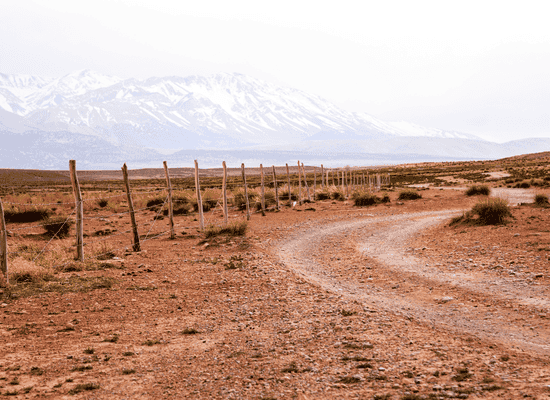
- The Vehicle : A high-clearance 4×4 with a low-range gearbox is non-negotiable (Toyota Land Cruiser or Nissan Patrol are the kings of this terrain).
- The Tires : Ensure you have All-Terrain (A/T) tires with at least two full-sized spares. The volcanic basalt of the Saghro is notorious for « shaving » rubber.
- The Fuel : Always top off. In the High Atlas and the Saghro, fuel stations are ghost stories. Carry a 20L jerry can for the long transversal between the Draa and M’hamid.
The 14-Day Tactical Itinerary
| Stage | Route | Focus | Terrain |
| Day 1-2 | Marrakech → Demnate → Tizi n’Outfi | The Ascent | Asphalt to graded gravel |
| Day 3-5 | Aït Bouguemez (The Happy Valley) | Immersion | Walking & village tracks |
| Day 6-7 | The Koucer Transversal → Ikniouen | The High Plateaus | Rough, rocky piste (Slow pace) |
| Day 8-9 | Jbel Saghro (Bab n’Ali) | Volcanic Spine | Sharp basalt, steep inclines |
| Day 10-12 | N’Kob → Agdz → Draa Valley | The Oasis | Riverbeds & palm groves |
| Day 13-14 | M’hamid → Erg Chegaga | The Deep Sand | Soft dunes & reg (Desert driving) |
In the deep canyons of the Saghro and the folds of the Atlas, GPS is a fickle friend.
- The Map : Obtain the Michelin 742 (National Morocco) map. It is the only reliable record of the secondary pistes.
- The Compass : A simple mechanical lensatic compass is essential for the Erg Chegaga if your electronics fail in the heat.
- The Guide : For the Jbel Saghro caves and the deep dunes of Chegaga, a local Aït Atta or Sahrawi guide is not a luxury; they are your insurance policy against the void.
Tactical Loadout: Essential Gear
- Water : 5 liters per person, per day. Plus a 10L « emergency reserve » hidden in the vehicle.
- Communication : A satellite messenger (like a Garmin InReach) is the only way to signal for help in the « Invisible » sectors where GSM towers do not exist.
- Recovery Gear : Sand ladders (Maxtrax), a heavy-duty kinetic tow rope, and a high-lift jack.
- The « Nomad’s Gift » : Carry small bags of high-quality green tea and sugar cones. These are more valuable than currency when you are invited into a khaima on the high plateaus.
The Golden Rules of the Road
- The Rule of Noon : In the Saghro and the Desert, avoid heavy driving between 12:00 PM and 3:00 PM. The heat thins the oil and beats the spirit.
- The Oued Law : Never camp in a dry riverbed (oued). A storm 50km away in the mountains can turn a dry trench into a wall of water in minutes.
- The Tea Protocol : If invited for tea, the answer is « Yes. » Budget three hours for the ritual. To rush is to offend the very soul of the land you are visiting.
The Horizon’s Promise
As the final embers of the tamarisk fire fade into gray ash beneath the Saharan sky, the 2,000-kilometer arc of this journey feels less like a distance traveled and more like a skin shed. We began in the frantic red pulse of Marrakech, climbed the emerald cathedrals of the Aït Bouguemez, weathered the volcanic silence of the Saghro, and finally surrendered to the golden infinity of the dunes.
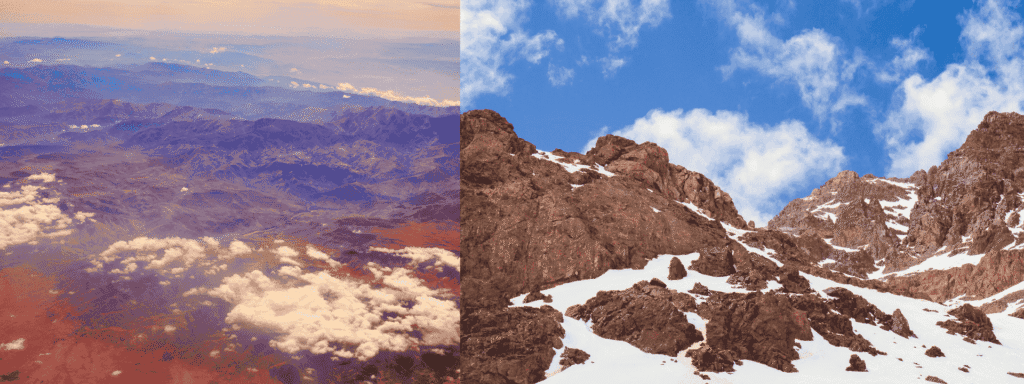
To seek the « Invisible Morocco » is to realize that the most profound landscapes are not found on a screen, but in the spaces where the signal dies. It is found in the rough texture of a pisé wall, the bitter-sweet ritual of the third tea, and the haunting « voice » of the shifting sands. This road trip was never about reaching a destination; it was about re-learning how to listen to the earth. The dust now coating my boots is not dirt—it is a collection of stories from the Atlas, a map of experiences that no GPS could ever replicate.
But the world is a restless teacher, and the horizon never stays still for long. As I pack my worn leather satchel one last time, my mind is already drifting across oceans toward a different kind of mystery.