

Before the steam, before the diesel, there was the intent. To travel by rail across the American North in 2026 is an act of quiet, deliberate rebellion. In an era defined by hypersonic flight, algorithmic efficiency, and the frantic compression of space-time, the train is a glorious glitch in the system. It is a 2,206-mile stretch of purposeful slowness that demands something the modern world has almost entirely forgotten: patience.
The Empire Builder is not merely a route; it is a vascular system for the North American continent. It is the silver thread that stitches together the « Third Coast » of the Great Lakes with the salt-spray of the Pacific Northwest. It passes through the « Invisible America »—the vast, un-Instagrammed stretches of silos, wetlands, and high-altitude passes that exist between the coastal headlines.
To board this train is to accept a contract with the landscape. You agree to see the world not as a series of thumbnails from 35,000 feet, but as a continuous, unfolding narrative. This is a journey for the collection of echoes, for those who realize that the most profound distances are not measured in miles, but in the slow transition of light across an endless prairie.
- The Great Hall Ritual – Chicago and the Birth of Momentum
- The Mississippi Mirror – Day One and the Water’s Edge
- The High Plains Zen – The Architecture of the Void
- The Glacier Peak Crescendo – The Spine of the Continent
- The Logistics of the Invisible – The Master-Guide
- The Pacific Arrival – Conclusion and the Echo of the Rails
The Great Hall Ritual – Chicago and the Birth of Momentum
The journey begins in the shadow of the Willis Tower, at Chicago Union Station. To walk into the Great Hall is to feel the physical weight of every goodbye ever whispered in the city. The architecture itself—a Beaux-Arts masterpiece of soaring limestone and honey-colored light—is designed to make the human traveler feel small, a temporary guest in a cathedral of transit.
The Metropolitan Lounge: The Liminal Space
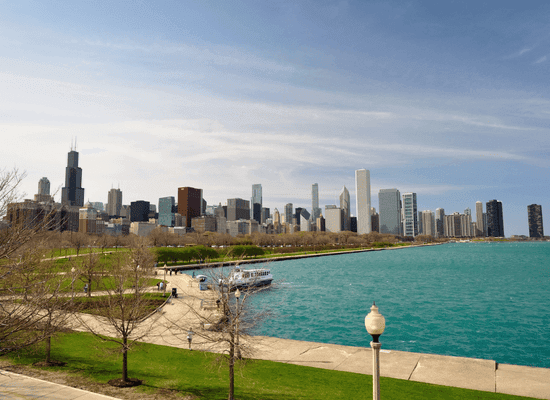
For the 2026 traveler, the ritual begins in the Metropolitan Lounge. This is a sanctuary of transition. Here, the « Invisible Traveler » sheds the skin of the city. You see the sociology of the rails play out in real-time: the high-stakes digital nomad syncing their last files via the lounge’s fiber-optic line, the retired professor clutching a weathered copy of Stegner, and the multi-generational family embarking on a rite of passage.
The lounge is where you first encounter the « Rail Protocol. » There is no frantic boarding process; there is only the quiet, dignified wait. When the call for Train 7 finally echoes, it doesn’t feel like a departure—it feels like an invitation to a secret society.
The Superliner Anatomy: Silver Giants
Descending to the subterranean platforms, you are met by the Superliners. These double-decker behemoths, built with the ruggedness of a tank and the aerodynamics of a 1970s jet, loom over the platform.
To step into the vestibule is to experience a specific sensory palette: the sharp scent of ozone, the faint metallic tang of hydraulic fluid, and the hushed, thick atmosphere of industrial carpeting. You climb the narrow, winding stairs to the upper level, your heavy luggage left in the racks below, and find your cabin. The « thunk » of the heavy sliding door closing behind you is the final seal. The city is now a silent film behind a double-pane window.
The First Mile: An Industrial Ballet
Leaving Chicago is not a sudden burst of speed; it is a slow-motion industrial ballet. The train weaves through a labyrinth of rusted drawbridges, over the Chicago River, and past the sprawling railyards of the South Side. You see the « Backstage of the City »—the graffiti-covered brick warehouses, the hidden gardens of the suburbs, and the gradual thinning of the concrete. Slowly, almost imperceptibly, the skyscrapers of the Loop begin to shrink, replaced by the first long, green reaches of the Illinois prairie. You are no longer in Chicago. You are in the Steel Pulse.
The Mississippi Mirror – Day One and the Water’s Edge
As the sun begins its long, golden descent, the Empire Builder finds its true rhythm. We have cleared the suburbs of Milwaukee, and the train begins to lean into the curves of the Wisconsin Dells. But the true climax of the first day occurs as we hit the banks of the Mississippi River.
The River’s Edge: Five Hours of Reflection
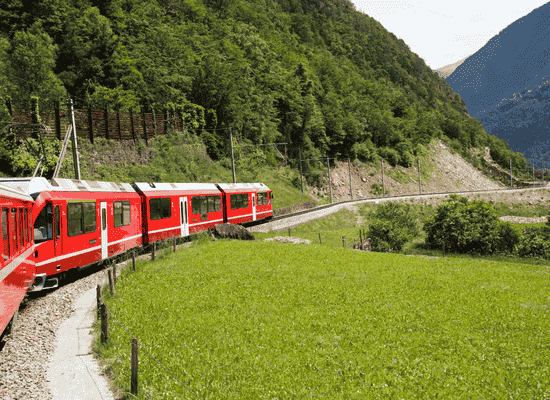
For nearly five hours, the tracks are pinned between towering limestone bluffs and the widest river in North America. In 2026, this remains one of the most protected and pristine stretches of the route.
- The Blue Hour : As the light turns to a deep, bruised purple, the river becomes a mirror. You watch the rhythmic blinking of the lock-and-dam systems—monuments to 20th-century engineering—and the long, low shadows of tugboats pushing barges toward the Gulf.
- Wildlife Watch : This is the kingdom of the Bald Eagle. From the Sightseer Lounge, you can see them huddled in the bare branches of the wetlands, silent sentinels watching the silver snake of the train pass by. The sensation of gliding on water while sitting on 400 tons of steel is a paradox that never fades.
The first night’s dinner is a mandatory immersion into the sociology of the rails. In 2026, the Traditional Dining Car has been fully restored as a white-linen experience.
- The Communal Table : You do not choose your seat; you are seated where there is space. This « forced intimacy » is the antidote to the digital bubble. You might find yourself sharing the signature Amtrak Flat Iron Steak with a tech billionaire from Seattle on one side and a wheat farmer returning to North Dakota on the other.
- The Conversation : The clinking of heavy Amtrak silverware and the swaying of the car create a unique conversational space. Without the distraction of phones (as the river bluffs often kill the signal), the art of the « Rail Anecdote » flourishes. You learn about lives you would never encounter in your own echo chamber.
The Night Shift: Rocked to Sleep
As the train crosses the river into Minnesota and the lights of the Twin Cities fade, the « Night Shift » begins.
- The Roomette Transformation : Your attendant arrives to flip the seats into a lower berth and lower the top bunk. The white linens are crisp, and the blue Amtrak blanket is surprisingly heavy.
- The Acoustic Sleep : There is no sleep quite like rail sleep. It is not silent; it is a deep, rhythmic vibration—the click-clack of the rail joints and the distant, mournful wail of the whistle at small-town crossings. You are being carried through the dark, a passenger in a silver dream, as the train accelerates into the great, empty heart of the continent.
The High Plains Zen – The Architecture of the Void
You awake to a world that has been ironed flat. If the first day of the Empire Builder was a cinematic transition from urban density to riverine beauty, the second day is a journey into the Sublime. As the train crosses the border into North Dakota, the geography undergoes a radical simplification. This is the « Middle Act »—the test of the true traveler.
I. The Gospel of the Sightseer Lounge: The 2,000-Mile Living Room
In 2026, as our lives are increasingly lived in the 15-second bursts of short-form video, the Sightseer Lounge is an act of defiance. By 8:00 AM, the car is already humming. The sociology here is fascinating: the « Rail Rats » (veteran travelers who have staked out the best swivel chairs) mingle with wide-eyed first-timers.
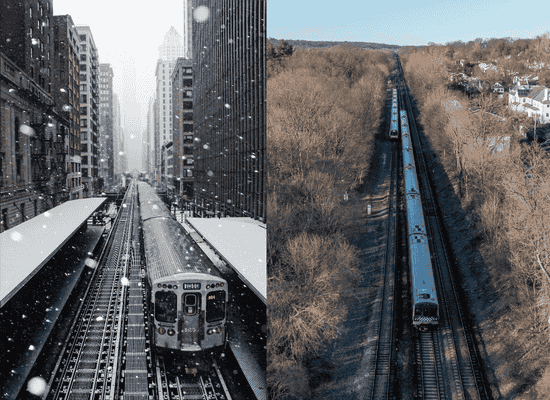
- The Zen of the Horizon : North Dakota offers a landscape of « Negative Space. » The beauty is not in the presence of things, but in their absence. You watch the sun rise over an ocean of frozen soil and dormant wheat. There are no hills to break the gaze, only the occasional cluster of « Cathedrals of the Plains »—the towering silver grain elevators that mark a town’s existence before you can even see its houses.
- The Bakken Scars : The narrative of the plains is not just pastoral. We glide through the heart of the Bakken Oil Fields. In 2026, the industrial footprint is a startling contrast to the wilderness: clusters of drilling rigs, flare stacks burning off gas like flickering torches against the dawn, and thousands of black tanker cars lined up on sidings like beads on a necklace. It is a reminder that the Empire Builder travels through the engine room of the American economy.
II. The Station Stops: Ghosts in the Wind
The 10-minute « Fresh Air » stops in Minot, Williston, and Havre are micro-dramas.
- The Smoker’s Ritual : As soon as the doors open, a desperate contingent of passengers spills onto the platform. In the biting cold of a North Dakota morning, they huddle together, a fleeting community of habit.
- The Transient Connection : Standing on a platform in Minot, you feel the vastness. The wind here doesn’t just blow; it searches. You see the station agent, a figure of frozen permanence, watching this silver tube of humanity pause for a moment before disappearing again into the white void. You are a ghost passing through their world, and they are a ghost in yours.
III. The Digital Detox: Reclaiming the Mind
This is where the « Invisible Travel » philosophy truly takes hold. Somewhere between Stanley and Williston, the bars on your phone vanish.
- The Psychological Shift : For the first hour, there is phantom-vibration syndrome—passengers checking devices that will not respond. But by midday, a collective calm descends. People start reading physical books. They start looking.
- The Conversation of Strangers : Without the digital shield, the lounge car becomes a 19th-century salon. You hear a retired schoolteacher explaining the geology of the Missouri River to a backpacker from Berlin. In the « Architecture of the Void, » the human voice becomes the primary entertainment.
The Glacier Peak Crescendo – The Spine of the Continent
By late afternoon of Day Two, the « Zen of the Flatlands » is shattered. As the train crosses into Montana, the horizon begins to jagged. The sky, which had been a pale dome, is now pierced by the rising teeth of the Rockies. This is the entry into Glacier National Park, the spiritual and physical climax of the journey.
I. The Sacred Land: The Great Northern Legacy
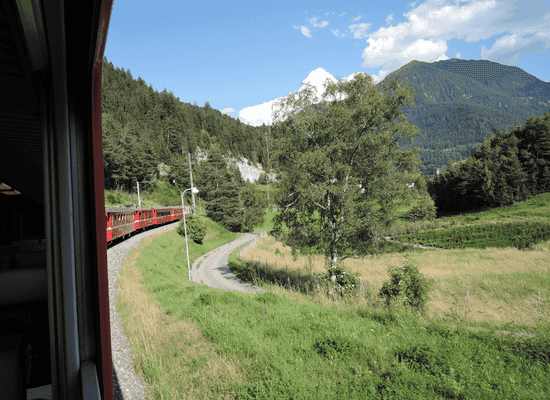
As we approach Browning, the train enters the territory of the Blackfeet Nation.
- The Iron Horse and the Buffalo : In 2026, the narrative of the Empire Builder acknowledges its complex history. The Great Northern Railway was built through this land with a ruthless efficiency that changed the indigenous world forever. Looking out at the rolling foothills, you see the land as it was—a sea of grass that once supported millions of buffalo.
- The Transition : The train begins to climb. The yellow grasses of the plains give way to the dark, somber greens of sub-alpine fir and lodgepole pine. The air outside, if you catch a breath of it at a vestibule crack, is suddenly sharp with the scent of cold stone and resin.
II. The Engineering Marvels: Gravity and Steel
The ascent to Marias Pass is a masterclass in mountain railroading.
- The Gassman Coulee Trestle : The train slows as it traverses this towering steel bridge. Looking down, you feel a surge of visual vertigo. Hundreds of feet below, turquoise glacial meltwater carves through the ravine. You are suspended between heaven and earth, a silver needle threading through the granite eye of the mountains.
- The Snow Sheds : We pass through long, dark tunnels of timber and concrete designed to protect the tracks from the massive winter avalanches. These are the « Invisible Fortresses » of the line, keeping the pulse of the American North beating even when the mountains try to bury it.
III. The Summit: The Continental Divide
Reaching the summit of Marias Pass is the emotional peak of the 46 hours.
- The Turning of the Water : This is the Continental Divide. You are standing at the point where a raindrop falling on the roof of the train must choose its destiny: to flow east toward the Atlantic or west toward the Pacific.
- The Golden Hour in the Rockies : If the timing is right, the sun sets as the train winds along the southern edge of the park. The peaks of Mount Isaac Walton and Theodore Roosevelt turn a burning, alpenglow orange. In the dining car, the clinking of glasses stops. Everyone—the staff, the veterans, the skeptics—simply stares. This is the « Cinema of the North » at its most profound. The train isn’t just moving through the landscape; it is becoming a part of its geological scale.
The Logistics of the Invisible – The Master-Guide
To master the Empire Builder in 2026 is to understand that the train is a closed ecosystem. Once the doors hiss shut in Chicago, your world is defined by the steel walls of the Superliner. To thrive here, rather than merely survive, requires a tactical approach to the « Hard Data » of rail life. This is the manual for the invisible elite.
I. The Sleeper-Class Economics: Roomette vs. Bedroom
The first decision is the most critical: where will you sleep?
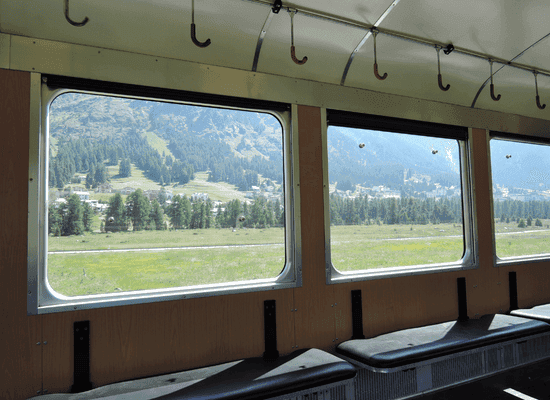
- The Roomette (The Minimalist Sanctuary) : Measuring approximately 3.5′ x 6.5′, the Roomette is a masterpiece of Japanese-style spatial efficiency. It is designed for the solo traveler or a very close couple. You have two facing seats that convert into a bed, and a pull-down upper berth. While it lacks a private bathroom, it grants you full access to the « Sleeper Amenities » (all meals included, private shower down the hall, and the Metropolitan Lounge).
- The Bedroom (The Rolling Suite) : Double the size of a Roomette, the Bedroom features a private sink, vanity, and a combined toilet/shower unit. In 2026, this is the gold standard for those who require total autonomy.
- The « BidUp » Maneuver : If you’ve booked Coach, monitor your email exactly 48 hours before departure. Amtrak’s algorithmic bidding system allows you to place a « blind bid » for an upgrade. Pro-tip: A bid of $350–$450 for a Roomette often wins on mid-week departures, effectively giving you $600 worth of value and food for a fraction of the price.
II. The Packing Manifesto: The « Train Bag »
You cannot « live out of a suitcase » in a Roomette. The stairs are narrow, and the space is tight.
- The Dual-Bag Strategy : Check your large luggage through to your final destination (Seattle or Portland). Bring a single, soft-sided duffel into the cabin.
- The Essentials : * Thermal Layers: Superliners are notoriously over-cooled. Pack a high-quality wool sweater or a light down vest, even in August.
- Slippers/House Shoes : Do not be the person walking to the coffee station in socks or bare feet. You need a rubber-soled slipper for the « Night Trek. »
- The Power Strip : Each Roomette has exactly one outlet. In 2026, with laptops, phones, and cameras, a small, non-surge protected power strip is your best friend.
III. The Food & Drink Audit: 2026 Standards
- The Menu : Traditional Dining has returned. The Amtrak Signature Steak remains the champion of the rails—a surprisingly tender flat iron steak served with a baked potato and green beans.
- The « Invisible » Bottle: While alcohol is served in the Dining and Cafe cars, it is priced at a premium. Sleeper guests are legally allowed to consume their own alcohol within the privacy of their cabins. A bottle of high-quality Pinot Noir brought from Chicago, enjoyed as the sun sets over the Montana peaks, is the ultimate insider move.
The Pacific Arrival – Conclusion and the Echo of the Rails
As the train clears the Cascade Tunnel—a seven-mile concrete passage through the heart of the mountain—the world changes again. The arid, brown hills of Eastern Washington vanish, replaced by the dripping, emerald lushness of the Pacific Northwest. This is the « Closing Credits » of our 46-hour film.
I. The Descent into the Emerald City
The final hours are a blur of moss-covered trees, misty fjords, and the first scent of salt air. As the train winds along the shores of Puget Sound, you see the sailboats and the grey-blue expanse of the Pacific. The Empire Builder slows, weaving through the outskirts of Seattle until it finally slides into the tracks of King Street Station.
II. The Residual Vibration: The Invisible Mark
As you step off the train and onto the firm, non-moving concrete of the platform, something strange happens. Your body still feels the sway. You find yourself waiting for the click-clack of the rails, for the voice of the conductor, for the horizontal shift of the horizon.
This is the Residual Vibration.
The traveler who steps off in Seattle is not the same person who boarded in Chicago. You have lived through a « Cinema of the North. » You have seen the Mississippi in the blue hour, the Dakota void at noon, and the Rockies at sunset. You have participated in a social experiment that proved, even in 2026, that humans are capable of silence, of conversation, and of wonder.
The Empire Builder is more than a train; it is a vow. A vow to remember that the world is large, that time is precious, and that the best way to see the heart of a continent is to follow the steel pulse of the iron path.
« If you enjoy this rail trip in the north of America, you might also love the Oriental Desert Express in Morocco. »
- MOROCCO WALKER