

The Moroccan Atlantic coast is more than just a shoreline; it is a legendary route where the roaring Atlantic Ocean meets the silence of the Sahara Desert. From the bohemian surf swells of Taghazout to the white dunes of Dakhla, an Atlantic road trip in Morocco is a bucket-list adventure that combines adrenaline, culture, and absolute freedom.
In this comprehensive guide, we will dive into everything you need to know to master the coastal drive of a lifetime. Whether you are a solo surfer, a couple seeking romantic sunsets in Essaouira, or an adventurer heading to the deep south, this is your roadmap.
1 – Planning Your Atlantic Adventure
Before hitting the road, preparation is key. The Moroccan coastline stretches for over 2,500 kilometers, offering a dramatic change in climate and terrain.
The Best Time for a Coastal Road Trip
While Morocco is a year-round destination, the Atlantic coast has its own rhythm.
- Spring (March – May): The best overall weather. Wildflowers bloom along the cliffs, and temperatures are perfect for both driving and exploring.
- Autumn (September – November) : Ideal for surfers. The first big swells arrive, and the summer crowds have vanished.
- Summer (June – August) : Great for escaping the inland heat (Marrakech can hit 45°C while Essaouira stays at a cool 25°C), but expect more local tourists.
Logistics: Choosing the Right Vehicle
For this road trip, your choice of wheels depends on how far south you plan to go.
- Casablanca to Agadir : A standard economy car is perfectly fine. The highways and regional roads are well-maintained.
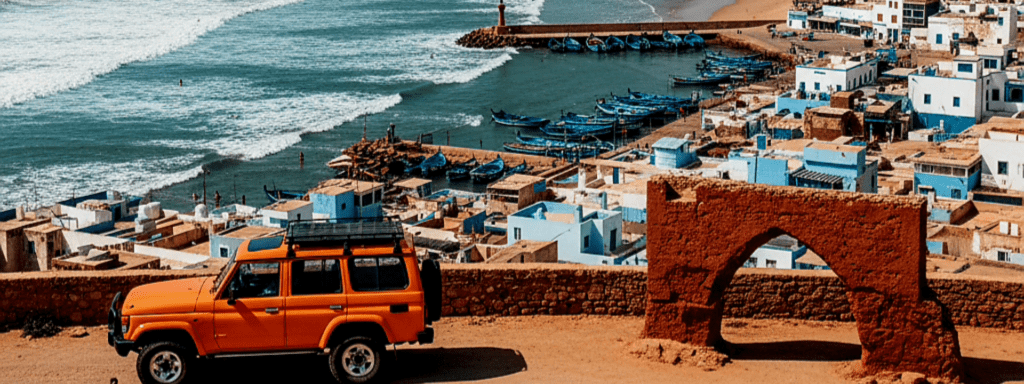
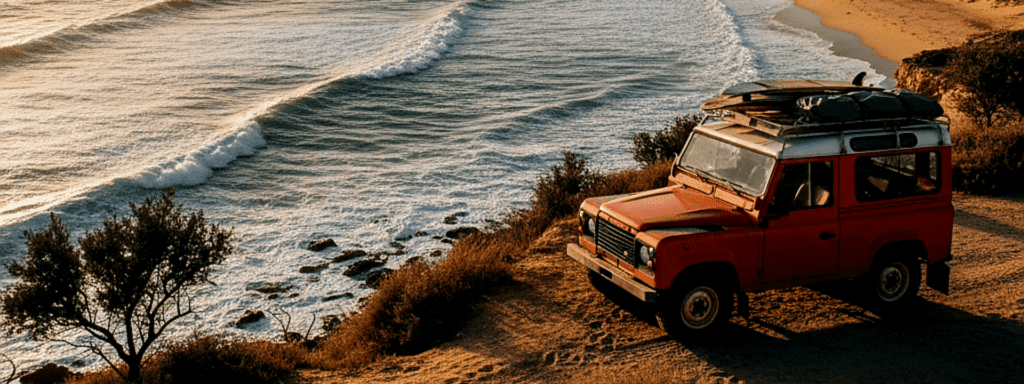
- Agadir to Dakhla : We strongly recommend renting a 4×4 or a sturdy SUV. As you enter the Sahara regions, crosswinds can be strong, and sand occasionally drifts onto the road. A 4×4 also allows you to explore « off-map » beaches and secret surf spots safely.
Estimated Travel Budget (Per Day – 2026 Prices)
| Travel Style | Budget (Per Person) | What’s Included? |
|---|---|---|
| Backpacker | $35 – $50 | Surf hostels, street food, local buses. |
| Mid-Range | $80 – $130 | Boutique Riads, car rental, seafood dinners. |
| Luxury | $250+ | 5-star surf resorts, private 4×4 driver, fine dining |
Why the Atlantic Road Trip is Unique
Unlike the Imperial Cities (Fes, Marrakech), the coast offers a relaxed « slow travel » vibe. You’ll trade the chaotic souks for the sound of crashing waves, and the red dust of the Atlas for the golden sands of the Sahara.
2 – From Imperial Grandeur to Bohemian Waves (Casablanca to Taghazout)
After the initial planning, your Moroccan coastal adventure truly begins as you leave the bustling metropolis behind and head south. This section of the road trip offers a rich blend of history, vibrant culture, and world-class surfing.
Casablanca: The Modern Gateway
Often overlooked for its historical counterparts, Casablanca is the pulsating heart of modern Morocco. While our [Hassan II Mosque] article covers its majestic beauty in depth, allow for a half-day to explore the Corniche and the Art Deco architecture of the city center.
- Don’t Miss : A stroll along the waterfront (Corniche), a visit to the Habous Quarter for traditional crafts, and of course, the Hassan II Mosque, a true architectural marvel.
- Driving Tip : Navigating Casablanca can be intense. Consider a taxi or tram for initial explorations before picking up your rental car.
El Jadida: Portugal’s Legacy
Just an hour’s drive south of Casablanca, El Jadida offers a stark contrast with its relaxed pace and rich history. Its main draw is the Cité Portugaise (Portuguese City), a UNESCO World Heritage site.
- Explore : The formidable ramparts, offering panoramic views of the Atlantic, and the incredible underground Cistern, an architectural masterpiece of light and shadow.
- Local Taste : Fresh seafood is a must here, especially near the old port.
Oualidia: The Oyster Capital
Further south, the picturesque lagoon of Oualidia is a hidden gem. Famous for its birdwatching, tranquil waters, and, most notably, its oysters.
- Activity : Take a small boat trip around the lagoon, visit an oyster farm, and enjoy a tasting directly from the source.
- Eat : Indulge in some of the freshest seafood in Morocco at one of the lagoon-side restaurants. It’s an essential stop on any Morocco Atlantic Road Trip for foodies.
Essaouira: The Wind-Blown Citadel
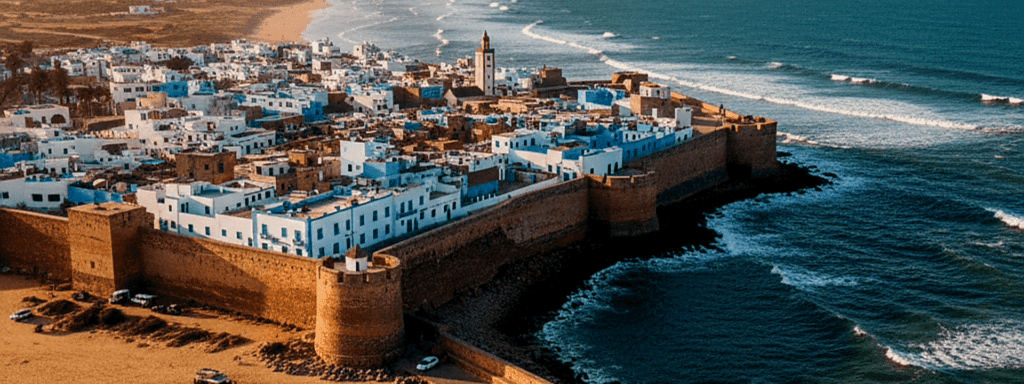
As you approach Essaouira, the landscape changes, becoming more arid and dotted with argan trees. Essaouira, the « Wind City of Africa, » is a UNESCO-listed medina famed for its blue and white architecture, bustling fishing port, and vibrant arts scene.
3 – Into the Deep South – Where the Sahara Meets the Sea
Leaving the surf vibes of Taghazout and the urban energy of Agadir, the landscape undergoes a dramatic transformation. This is the Grand Sud. The greenery of the north disappears, replaced by vast, golden plains, limestone cliffs, and the iconic argan forests of the Souss-Massa National Park.
Sidi Ifni & The Arches of Legzira
Your first major stop in the deep south is Sidi Ifni, a town that feels frozen in time. Once a Spanish territory (until 1969), its Art Deco architecture and blue-and-white streets offer a unique Mediterranean-Latino vibe in the heart of Morocco.
- Legzira Beach : Located just north of Sidi Ifni, this is home to the world-famous natural stone arches. Although one arch collapsed in 2016, the remaining one is a geological masterpiece.
- The Vibe : Sidi Ifni is for the slow traveler. Enjoy a coffee in the Spanish garden and watch the mist roll in from the ocean.
Tan-Tan: The Gateway to the Sahara
As you push further south, you cross the « official » boundary of the desert at Tan-Tan. The road (the N1) becomes an endless ribbon of asphalt between the dunes and the cliffs.
- Oued Chbeika : A stunning spot where a river mouth meets the ocean, creating a landscape of sand dunes that seem to float on the water.
- Safety Note : This is where the « Sahara Drive » begins. Fuel stations become rarer. Rule of thumb: Never let your tank drop below half.
Dakhla: The Jewel of the South
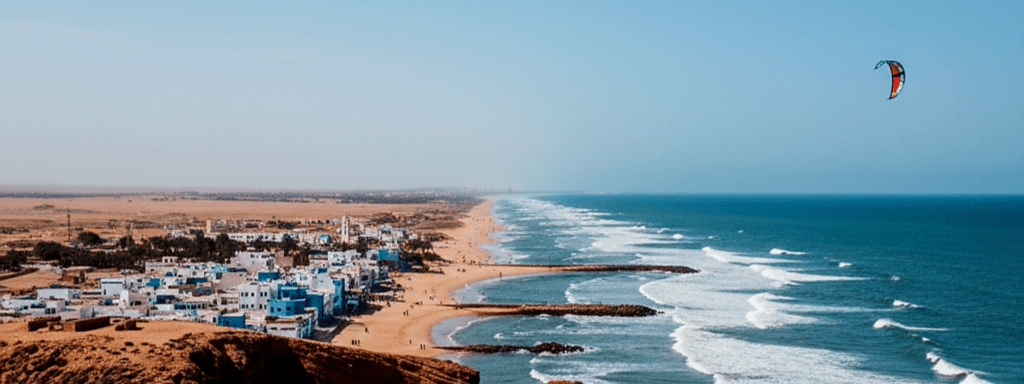
After a long but breathtaking drive, you reach the peninsula of Dakhla. This is the ultimate destination for kitesurfers and nature lovers. Dakhla is a 40-km long lagoon of turquoise water surrounded by white sand dunes.
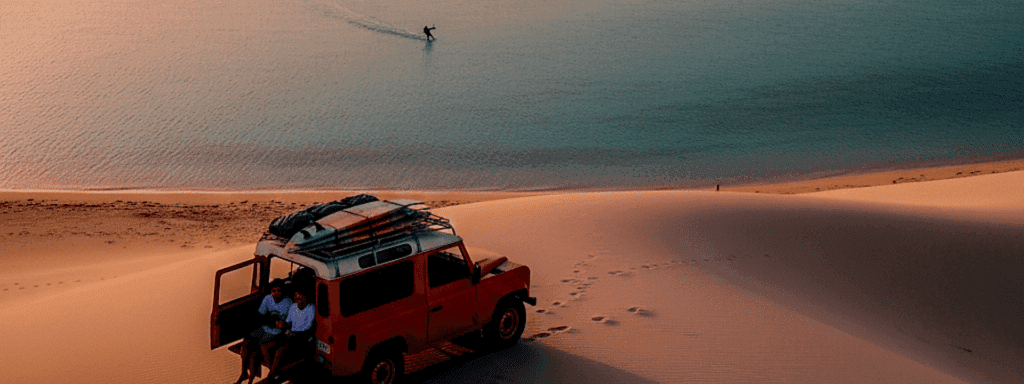
- The White Dune (Dune Blanche) : A massive sand dune that rises out of the lagoon. At high tide, it becomes an island; at low tide, a playground for 4×4 enthusiasts.
- Dragon Island : Accessible by foot at low tide, it’s a perfect spot for birdwatching and finding peace.
- The Gastronomy : Dakhla is world-renowned for its oysters and lobster. Visit a local park (like Parc ostréicole) to enjoy a feast for a fraction of European prices.
4 – Expert Travel Tips & The Ultimate Road Trip FAQ
To conclude this epic journey along the Moroccan coast, we’ve gathered the essential « insider » knowledge. Driving 2,500km through diverse terrains requires more than just a map; it requires an understanding of the local flow.
Safety and Driving Advice
Driving in Morocco is an adventure, but the Atlantic route has specific challenges:
- The « Coastal Mist » : In the early mornings, especially around Sidi Ifni and Dakhla, a thick sea fog can settle. Reduce your speed and use fog lights.
- Checkpoints : You will encounter Gendarmerie checkpoints, especially in the South. Always stop completely, smile, and have your documents (Passport, Driver’s License, Rental Papers) ready. They are there for your safety.
- Fuel Strategy : Between Tan-Tan and Dakhla, fuel stations can be 200km apart. Don’t gamble; fill up whenever you see a station.
The Atlantic Packing List
Beyond your swimsuit, don’t forget:
- A Windbreaker : The Alizés winds are famous. Even in summer, evenings in Essaouira or Dakhla can be chilly.
- Portable Power Bank : Essential for long stretches of desert driving where GPS usage drains your battery.
- Physical Map : Google Maps is great, but in the deep Sahara, signal can be spotty. A paper backup is your best friend.
Frequently Asked Questions (FAQ)
Your Atlantic Legacy
The Morocco Atlantic Road Trip is more than just a vacation; it’s a transition. You start with the urban majesty of Casablanca and end in the silent, wind-swept lagoons of the Sahara. It is a journey that teaches you the beauty of the « slow drive » and the warmth of Moroccan hospitality.
Ready to start your engine? Don’t forget to check our other guides to complete your Moroccan itinerary!