
To cross the invisible line into the Moroccan Rif mountains in 2026 is to experience a geological and psychological fracture. For centuries, this crescent-shaped range in northern Morocco has stood as a bastion of resistance—against empires, against humidity, and against the flattening effects of modern globalization.
While the rest of the world rushes toward the polished surfaces of « smart cities, » the Rif remains textured, vertical, and unapologetically raw. It is a land of limestone peaks that tear at the clouds and forests of ancient firs that drink the Mediterranean mist. To travel here is not to « visit » Morocco; it is to enter an enclave with its own laws of hospitality, its own dialect of Arabic and Tamazight, and its own relationship with time. The « Blue Fracture » starts in the indigo alleys of Chefchaouen, but it ends in the silent, white-cliffed coves of the Mediterranean, crossing a heartland of emerald green that most travelers never dare to see.
The Indigo Threshold – Chefchaouen Reimagined
I. The Psychology of Blue: More than a Pigment
By 2026, Chefchaouen has become one of the most photographed places on Earth, yet it remains one of the least understood. To the casual eye, the blue is a backdrop for a digital post. To the « Invisible » traveler, the blue is a theological and thermal shield.
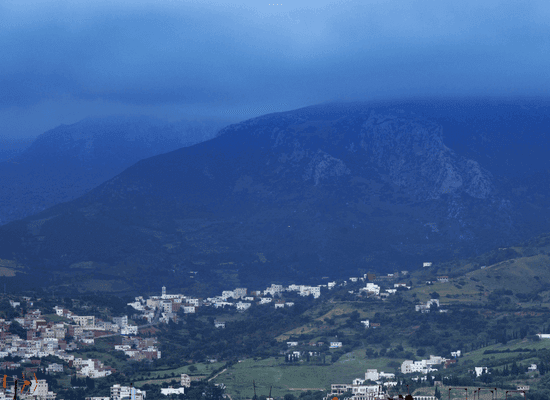
- The Sacred Origin : We peel back the layers of the indigo. It wasn’t always this way. The blue was introduced and intensified by the Jewish refugees fleeing the Spanish Inquisition and later the horrors of the 1930s. For them, the color was a reminder of the sky and the heavens—a spiritual anchor in a mountain refuge.
- The Thermal Logic : Beyond the divine, there is the practical. The specific lime-wash (nila) acts as a natural repellent for mosquitoes and a thermal regulator against the fierce African sun. To walk these streets is to walk inside a cooling lung.
II. The Dawn Protocol: The Hour of the Cats and Bakers
Chefchaouen is a victim of its own beauty between the hours of 10:00 AM and 6:00 PM. The « Invisible » strategy requires a temporal shift: The Dawn Protocol.
- The 5:00 AM Silence : At sunrise, the city is a monochromatic dream. The harsh light of the Mediterranean hasn’t yet flattened the shadows. This is when the city belongs to its people. You hear the rhythmic slap of dough in the communal ovens (farran) and the call to prayer echoing off the limestone walls of Mount Tisouka.
- The Geometry of Shadow : Without the crowds, you begin to see the architecture—the Spanish-Moorish arches, the hidden fountains (saqaya), and the way the blue pigment changes from a dusty periwinkle in the shade to a blinding electric cobalt in the first rays of light.
While the main thoroughfares sell mass-produced trinkets, the side-alleys of the Sabbakin district house the last of the true masters.
- The Leather Alchemists : Chefchaouen’s leatherwork is distinct from the heavy, pungent tanneries of Fez. Here, the work is finer, often dyed with natural pigments found in the Rif. We sit with the craftsmen who still hand-stitch the traditional mountain pouches, a skill passed down through generations of Jbala artisans.
- The Weaver’s Rhythm : In the small workshops, the wooden looms still clatter. They produce the Mendil—the red-and-white striped cloth that is the uniform of the Rifaine woman. This isn’t a costume; it is a cultural badge of honor, a textile that tells the story of the mountain’s enduring spirit.
The Emerald Lungs – Talassemtane and the Fir Forests
Leaving the blue gates of the city, the landscape undergoes a violent shift in color. We enter the Tassemtane National Park, a 580-square-kilometer sanctuary that represents the « Emerald Lung » of the Rif.
I. The Abies Pinsapo Saga: The Last Stand
Phú Quốc had its palms; Ucluelet had its cedars; the Rif has the Moroccan Fir (Abies pinsapo var. marocana).
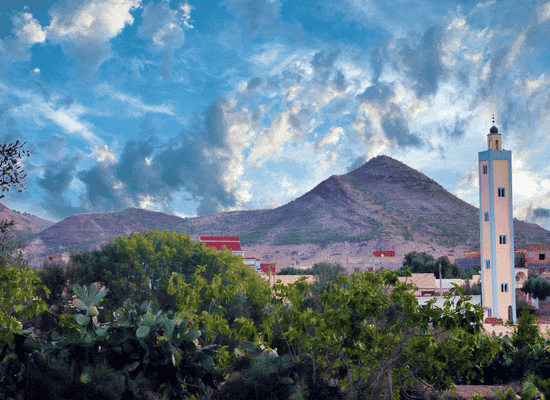
- The Botanical Fossil: These trees are living relics from the Tertiary period. They survived the ice ages and the drying of the Sahara. Standing in a grove of these firs, 1,800 meters above sea level, the air is thin and chilled.
- The Mist-Drinkers: These forests exist because they « mine » the moisture from the Mediterranean clouds that snag on the Rif’s peaks. In 2026, protecting this micro-climate is the frontline of Moroccan conservation. For the hiker, it is a cathedral of deep, dark green that feels more like the Pyrenees than North Africa.
II. The Sound of Silence: Acoustic Ecology in the Canyons
The Rif is a landscape of profound echoes. The deep limestone canyons of Akchour create an acoustic environment unlike any other.
- The Forest Bathing (Rif Edition) : We explore the practice of « listening to the mountain. » Away from the generators of the city, you hear the « invisible water »—the subterranean rivers that carve through the karst limestone.
- God’s Bridge (Ponte de Dios) : This is not a man-made structure, but a massive natural stone arch spanning the Oued Farda. In 2026, we avoid the crowded lower waterfalls and hike the high ridges to look down on the bridge. From this height, the scale of the Rif’s geological upheaval becomes clear. You are standing on a fractured earth that is still moving.
The High Altitudes – The Soul of the Jbala
To ascend beyond the tree line of the Talassemtane is to enter the realm of the Jbala. Unlike the southern Berbers of the Atlas, the Jbala (meaning « mountain people ») possess a distinct cultural identity forged by the collision of Andalusian refinement and rugged mountain independence. In 2026, as urban Morocco digitizes at breakneck speed, the high Rif remains a bastion of unstructured time.
I. The Jbala Wisdom: The Code of the Ridge
The psychology of the Rifaine highlander is defined by a fierce sense of sovereignty. Here, hospitality is not a commercial transaction; it is a sacred duty.
- The Silent Pact : When you enter a Jbala village, there is an unspoken protocol of respect. You are observed before you are welcomed. The « Invisible » traveler understands that a greeting here is not just a « Hello, » but an assessment of character.
- The Oral Archive : History in the Rif is not kept in books, but in the long-form poems and songs of the elders. These verses tell of the resistance against the Spanish Protectorate and the legendary leadership of Abd el-Krim. To sit with a village elder is to realize that for the Jbala, the 1920s happened only yesterday.
II. The Gastronomy of Hardship: The Caloric Luxury
In the high altitudes, food is an act of resilience. There is no pretense in a Jbala kitchen; there is only the concentration of sunlight and soil.
- Bissara (The Liquid Earth): This is the fuel of the Rif. A thick, velvety puree of dried fava beans, served in a terracotta bowl and swimming in a lake of neon-green, cold-pressed olive oil. It is seasoned only with cumin and chili, a dish that tastes of the very limestone from which the beans grew.
- Wild Thymelaea Honey: The bees of the high Rif forage on wild thyme and rosemary. The resulting honey is dark, medicinal, and carries a floral « burn » that clears the lungs. In 2026, this honey is recognized as one of the world’s most potent superfoods, yet it is still sold in simple glass jars by the side of the road.
- Goat Cheese (J’ben): Wrapped in palm leaves, the fresh goat cheese of the Rif is salty, creamy, and infused with the scent of the mountain herbs the herds graze upon. It is the purest expression of the « Slow Food » philosophy, produced miles from the nearest refrigerated truck.
III. The Architecture of Resilience: The Earth as Shelter
The Jbala house is a masterclass in vernacular engineering. It is an « invisible » architecture that blends into the mountain slopes.
- Stone and Earth : Houses are built from local limestone and coated in a thick layer of mud and straw. This provides a thermal mass that stays cool during the scorching Mediterranean summers and retains heat during the snow-dusted winters.
- The Mendil Weave : Look at the women working the terraced fields. They wear the Mendil—the iconic red, white, and black striped wool cloth. In 2026, we explore the geometry of this weave. It is more than a garment; it is a tribal marker. Each stripe, each subtle variation in the red dye (sourced from local madder root), tells a story of lineage and village origin. It is a textile language that has remained unchanged for a millennium.
The White Coast – The Road to El Jebha
The final fracture occurs as we descend from the emerald heights of the mountains toward the Mediterranean. The air changes from the scent of fir needles to the sharp, ozone-heavy tang of salt. We are heading for the White Coast, the most secluded maritime frontier in Morocco.
I. The Route Nationale 16: The Mediterranean Corniche
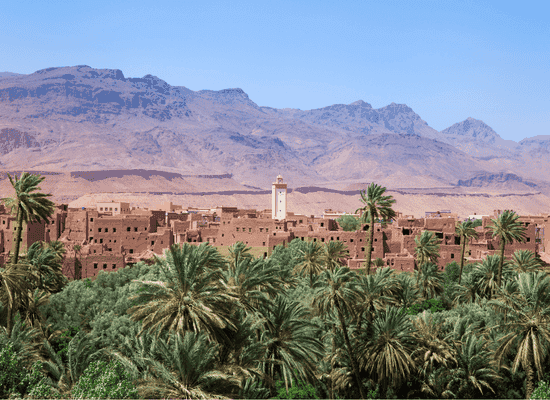
This is not a road for the faint-hearted. Carved into the side of crumbling limestone cliffs, the RN16 is a 2026 masterpiece of engineering that feels like a tightrope walk.
* The Visual Vertigo: To your left, the mountains rise in jagged white towers; to your right, the Mediterranean drops away in a vertical plunge of cerulean blue.
* The Ghost Bays: From the high road, you see coves—Calas—that are accessible only by boat or a four-hour hike. These are the « Silent Shores, » where the water is so clear that the fishing boats appear to be floating in mid-air.
II. El Jebha: The Forehead of the Sea
El Jebha is the final destination of the « Invisible » traveler. Its name means « The Forehead, » referring to the massive limestone headland that protects the harbor.
- The Village That Time Forgot : While the world flocks to Tangier, El Jebha remains a working fishing village. The « luxury » here is found in the simplicity of a wooden chair on the quay, a glass of mint tea, and the sight of the blue-and-white fleet returning with the day’s catch of sardines and sea bream.
- The Grottoes of the White Coast : We charter a local felucca to explore the sea caves. The white cliffs here are perforated with grottoes where the light reflects off the sandy bottom, creating an interior world of shimmering turquoise. This is the Mediterranean as it was fifty years ago—unspoiled, quiet, and profoundly beautiful.
III. Cala Iris and the Islet of Badis: A Geographical Anomaly
Further east lies Cala Iris, a horseshoe bay of golden sand. But the true intrigue is Badis.
- The Spanish Rock : Connected to the Moroccan mainland by a narrow strip of sand is a massive rock fortress that belongs to Spain (Peñón de Vélez de la Gomera). It is one of the shortest land borders in the world.
- The Invisible Border : This anomaly—a piece of Europe physically fused to the Rif—is a silent reminder of the region’s long history of colonial friction. Today, it is a quiet spot where fishermen from both sides share the same waters, a surreal ending to our journey through the « Blue Fracture. »
The Logistics of the Rugged – The Master-Guide
Navigating the Deep Rif in 2026 is not about following a GPS; it is about mastering the art of the « Grand Taxi » and understanding the rhythm of the « Souk. » This is the tactical toolkit for the seeker who wishes to disappear into the ridges without losing their way.
I. The Transportation Maze: The Grand Taxi Protocol
In the Rif, the Mercedes 240D is the undisputed king of the road. While newer models are appearing, these vintage tanks remain the backbone of mountain transit.
- The « Invisible » Seat : To travel like an insider, you buy two seats in the front. It costs double, but it grants you the « Command View » of the canyons and saves you from the literal crush of five people in the back.
- The Trans-Mountain Leap : There are no fixed schedules. You go to the Station des Grands Taxis in Chefchaouen or Bab Taza and wait until the car is full. In 2026, this remains the most authentic social network in Morocco. You will learn more about the price of olives and mountain politics in a two-hour taxi ride than in a month of reading.
II. The Seasonal Compass: When to Breach the Fracture
The Rif is a landscape of extremes.
- The Mystic Winter (November to March) : This is the season for the poet. The mountains are draped in thick Atlantic mists, and the fir forests of Talassemtane look like an ink-wash painting. It is cold, damp, and hauntingly beautiful. The wood fires in the guesthouses (Gîtes) are the center of life.
- The Golden Window (April to June) : The ideal time for the trekker. The wildflowers—wild iris, poppies, and lavender—explode across the terraces, and the water in the Akchour streams is at its peak.
- The Maritime Summer (July to September) : While the mountains can be hot, this is the time for El Jebha. The Mediterranean is glass-calm, and the sea caves offer a cool sanctuary from the sun.
III. Safety, Etiquette, and the « Hormas »
The Rif operates on a code of honor known as Hormas (sanctity/respect).
- The Gaze : People in the Rif are direct. Do not mistake a steady gaze for hostility; it is curiosity. Return a greeting with a hand over your heart.
- Photography : Always ask. The Jbala are private people. In 2026, the « Invisible » traveler leaves the drone in the bag; the sound of a drone in a quiet mountain valley is a profound violation of the local peace.
- The Guest Status : If you are invited for tea, the « Rule of Three » applies. Drink three glasses, accept the bread, and never offer money for hospitality—offer a small gift or simply a sincere prayer for the family’s health.
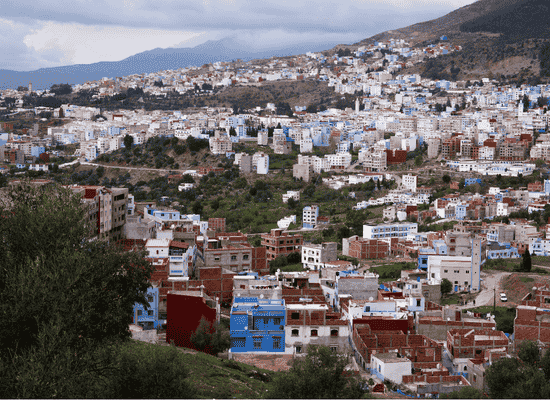
The Echo of the Ridges
As you stand on the white headland of El Jebha, looking back at the dark, jagged spine of the mountains you have just crossed, the « Blue Fracture » finally heals. You realize that the Rif is not a place you simply visit; it is a place that recalibrates your senses.
I. The Permanent Exile
There is a specific melancholy—a nostalgia for the present—that hits you when you prepare to leave these ridges. You have become accustomed to the scent of burning cedar, the taste of oil-slicked fava beans, and the sight of a landscape that refuses to be tamed. The traveler who survives the Rif carries an echo of its silence back to the « real » world.
II. The 2026 Vision: Bastion of the Sovereign
In a world that is increasingly homogenized, the Deep Moroccan Rif stands as a bastion of the Sovereign. It is a reminder that there are still corners of the map where the land dictates the lifestyle, where hospitality is a sacred duty, and where « luxury » is defined by the depth of one’s connection to the earth.
The Blue Fracture is open. It is a journey through the indigo, the emerald, and the white—a descent into the heart of Morocco that is as challenging as it is sublime. You didn’t just see the Rif; you felt the weight of its history and the lightness of its air. And as the Mediterranean sun sets behind the « Forehead » of the sea, you realize that the most beautiful paths are the ones that lead you away from the map and back to yourself.
- MOROCCO WALKER