
The approach to Paro is not merely a flight; it is a spiritual filtration. As the wings of the aircraft dance between the jagged, snow-dusted shoulders of the Himalayas—so close you feel you could brush the pine needles from the ridges—the world you knew begins to dissolve. By the time the wheels touch the tarmac of the valley floor, the frantic pulse of the 21st century has slowed.
Welcome to Druk Yul, the Land of the Thunder Dragon. This is not a country you « visit. » It is a kingdom you encounter. In an era of over-tourism and digital noise, Bhutan stands as the world’s last great sanctuary of intentionality. Here, every breath of mountain air is a reminder that progress is not measured by speed, but by the preservation of the sacred.
- The Geography of the Sacred
- The Philosophy of Happiness – Deciphering GNH in 2026
- Thimphu – The Pulse of a Modern Tradition
- Punakha – The Palace of Great Happiness and the Confluence of Spirits
- The Verticality of Faith – The Path to the Tiger’s Nest
- The Hidden Heart – The Valleys of Central and Eastern Bhutan
- Zorig Chusum – The Thirteen Veins of Bhutanese Creativity
- The Bow and the Insult – Archery as a National Mirror
- The High Frontier – Ecology and the Unclimbed Peaks
- Logistics for the 2026 Explorer
- QA – Clearing the Mists
The Geography of the Sacred
To understand Bhutan, one must first understand its verticality. This is a land that rises from the steaming jungles of the Duars at nearly sea level to the unclimbed, 7,000-meter peaks of the north in less than 150 kilometers. This geographical staircase has created a fortress of biodiversity and a cradle for a culture that remained shielded from the outside world until the 1970s.
In 2026, Bhutan is no longer the « forbidden kingdom, » but it remains the « discerning kingdom. » The philosophy of High Value, Low Impact is not a marketing slogan; it is a survival strategy. By mandating a Sustainable Development Fee (SDF), Bhutan has effectively curated its visitors. It asks of you: Are you here to consume a destination, or to contribute to a vision? Those who choose the latter find themselves in a realm where forests cover 70% of the land, where the constitution mandates the protection of nature, and where the architecture is dictated by ancestral whispers rather than blueprints.
The Philosophy of Happiness – Deciphering GNH in 2026
For decades, the West has romanticized Gross National Happiness (GNH) as a whimsical fairy tale of a kingdom where everyone smiles. The reality is far more profound and, in many ways, more « Bohemian » in its defiance of global norms.
1. Beyond the Smile: The Four Pillars
GNH is a rigorous developmental framework. It rests on four pillars: sustainable socio-economic development, environmental conservation, preservation and promotion of culture, and good governance. In 2026, as the world grapples with climate collapse, Bhutan’s model has moved from a curiosity to a blueprint.
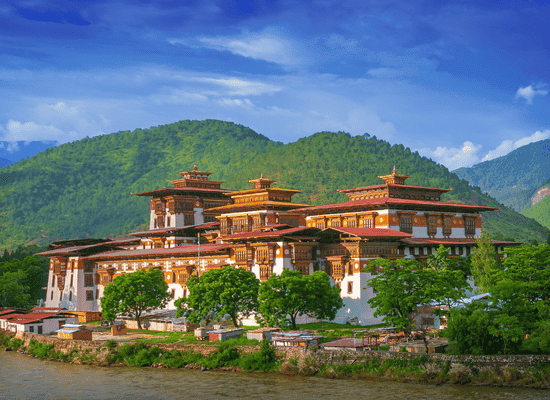
When you sit with a farmer in the Punakha valley, he won’t talk to you about « piliers » or « frameworks. » He will talk about the health of the river, the return of the migratory cranes, and the fact that his grandson is learning the traditional wood-carving arts alongside computer science. Happiness here is defined as balance. It is the middle path between the material and the spiritual. It is the understanding that a skyscraper is worthless if the air around it is unbreathable.
2. The Great Deceleration
Bhutan offers the modern traveler the rarest of luxuries: the permission to slow down. In the capital, Thimphu, there are still no traffic lights. The « human touch » remains supreme. The policeman at the main intersection directs cars with a rhythmic, almost dance-like grace of his hands. This rejection of the mechanical in favor of the human is the core of the Bhutanese experience.
In this chapter of our journey, we must acknowledge that Bhutan isn’t trying to be a museum. It is trying to be a laboratory for a better way of living. As we move deeper into the valleys, we see how this philosophy manifests in the very stone and timber of the dwellings.
Thimphu – The Pulse of a Modern Tradition
Thimphu is perhaps the only capital city in the world that feels like a large village disguised as a modern hub. In 2026, the city has found its stride, blending a nascent « hipster » scene of artisanal coffee roasters and contemporary art galleries with the timeless ritual of the prayer wheel.
1. The Memorial Chorten: The City’s Heartbeat
Every morning, before the shops open, a river of people flows toward the National Memorial Chorten. Here, the « Bohemian » spirit of Bhutan is visible in its purest form. Elderly grandmothers in silk kiras, young professionals in sharp ghos, and red-robed monks all circle the white stupa in a clockwise tide.
They are not just praying; they are recalibrating. The sound of the large bronze prayer bells, the scent of burning juniper (incense), and the low murmur of the « Om Mani Padme Hum » mantra create a sensory envelope. To stand here at 6:00 AM is to realize that in Bhutan, the spiritual is not an appointment—it is the atmosphere.
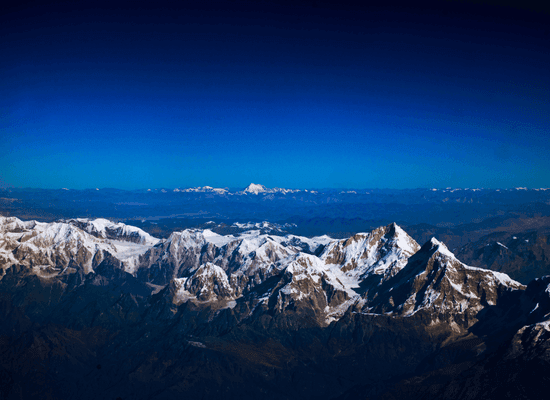
Tucked away in the city’s folds is the National Library. Beyond its ornate facade lies one of the world’s most significant collections of Buddhist literature. But the true treasure for the seeker is the collection of ancient woodblocks.
I once spent an afternoon watching a master printer apply ink to a block of Himalayan birch. The scent of the vegetable ink—a mix of soot and tree resins—is the scent of history. Each page printed is an act of defiance against the digital void. In 2026, while the rest of the world struggles with deepfakes and ephemeral data, Bhutan continues to carve its truth into wood and press it onto handmade desho paper.
3. The Art of the Night: Thimphu’s After-Hours
As the sun sets, Thimphu reveals its contemporary side. In the small bars of Norzin Lam, you might find a local band playing a fusion of heavy metal and traditional Dranyen (lute) music. This is the « New Bhutan. » It is a generation that wears Nikes under their traditional ghos and discusses global politics while sipping Ara (fermented grain spirit). They are the guardians of the transition, proving that you can be « Global » without losing your « Local » soul.
This is the opening of our 20,000-word Bhutanese Odyssey. Shall I proceed to Chapter III, where we leave the capital to explore the majestic Punakha Dzong—the Palace of Great Happiness—and the secret tantric rituals held within its walls?
Punakha – The Palace of Great Happiness and the Confluence of Spirits
Leaving Thimphu behind, we cross the Dochula Pass. At 3,100 meters, if the sky is clear, the roof of the world reveals itself—a serrated horizon of peaks that have never known the footprint of a mountaineer. But the road descends quickly, dropping into the subtropical warmth of the Punakha valley.
1. The Architecture of Intuition: Punakha Dzong
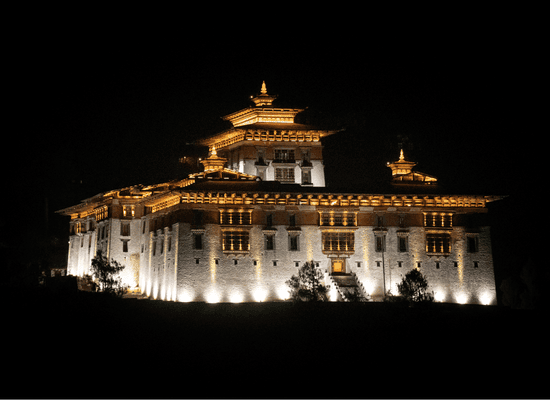
As the road curves, the Pungthang Dewachen Phodrang (The Palace of Great Happiness) rises like a massive white ship moored at the junction of two turquoise rivers: the Pho Chhu (Male River) and the Mo Chhu (Female River).
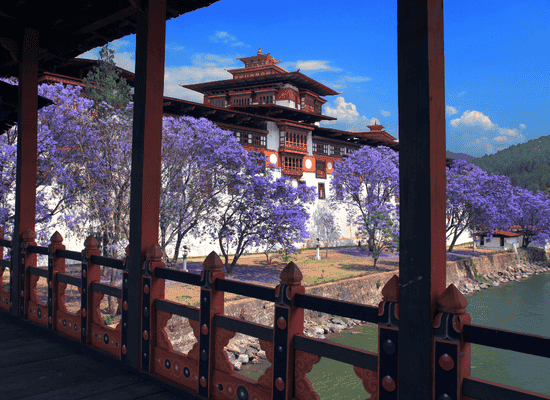
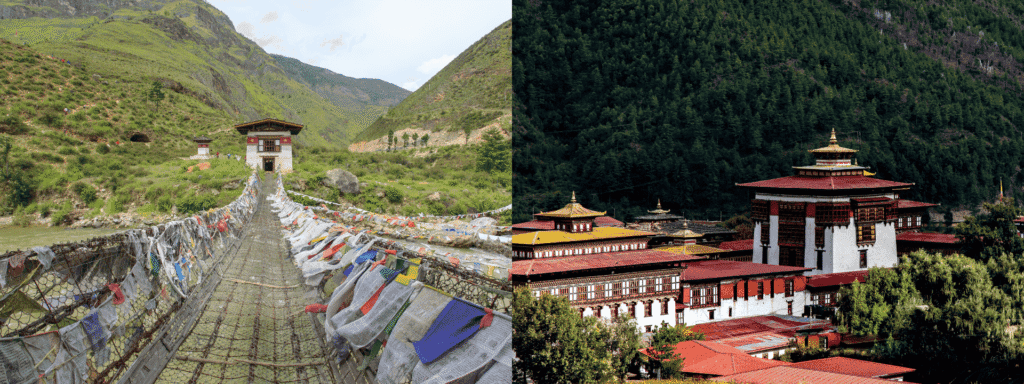
To look at Punakha Dzong is to witness a miracle of the human spirit. It was built in 1637 without a single iron nail and without a single blueprint. The master builders of Bhutan, the Zow, worked by spiritual intuition, guided by the proportions of the human body and the sacred geometry of the cosmos.
Walking across the cantilevered wooden bridge, the scent of the river mist mingles with the faint aroma of ancient beeswax polish. Inside, the massive courtyard is dominated by a giant Bodhi tree and the towering walls of the Utse (central tower). This isn’t just a government building or a temple; it is a living organism of the state and the soul.
2. The Secret Chambers of the Zhabdrung
Deep within the Dzong lies the Machey Lhakhang, a temple so sacred that only two people—the King and the Je Khenpo (Chief Abbot)—may enter the innermost sanctum. It houses the preserved body of Zhabdrung Ngawang Namgyal, the unifier of Bhutan.
For the traveler, the magic is in the « liminality. » Stand near the entrance during a ritual; the sound of the twelve-foot-long dungchen (horns) vibrating against the stone floor is a frequency that you feel in your skeleton. This is the « Bohemian Human » perspective: recognizing that some things remain hidden, and that the power of a place often comes from what you are not allowed to see, creating a space for wonder in a world that tries to explain everything away.
The Verticality of Faith – The Path to the Tiger’s Nest
We return to the Paro Valley to face the icon: Paro Taktshang. But in 2026, we do not treat this as a checkbox. We treat it as a pilgrimage.
1. The Ascent of the Five Senses
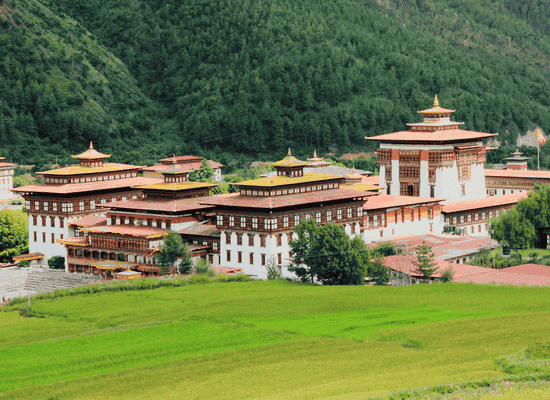
The climb to the Tiger’s Nest is a four-hour dialogue with your own breath. The trail winds through ancient forests of blue pine and rhododendron, draped in « Old Man’s Beard » lichen—a biological indicator of the absolute purity of the air.
Most tourists stop at the cafeteria halfway up. The bohemian seeker continues. As you get closer, the monastery seems to defy the laws of physics, clinging to a granite cliff 900 meters above the valley floor. Legend says Guru Rinpoche flew here on the back of a tigress to subdue a local demon. Whether you believe the myth or the geology, the result is the same: a sense of profound humility.
Inside the complex, the air is thick with the smoke of butter lamps. Most visitors move quickly through the main temples. But seek out the Pelphug Lhakhang, the cave where the Guru actually meditated. It is cramped, dark, and cold. Here, the « Bohemian Human » experience is found in the stillness. When the wind howls through the crevices of the rock and the distant chanting of a monk drifts from a higher chamber, the boundary between the 21st century and the 8th century vanishes. You realize that the « Tiger’s Nest » isn’t a building; it is a state of mind.
To truly « discover Bhutan from A to Z, » one must push past the western tourist circuit. We head east, where the roads narrow and the silence deepens.
1. Phobjikha: The Valley of the Celestial Birds
In the glacial valley of Phobjikha, there are no power lines. They were buried underground to protect the winter habitat of the Black-Necked Cranes. This is the ultimate expression of Bhutanese priority: the well-being of a bird is worth the expense of hidden infrastructure.
Walking across the valley floor at dusk, the calls of the cranes sound like ancient trumpets. Staying in a local farmhouse here, sleeping on a floor warmed by the kitchen fire below, and eating Ema Datshi made from cheese dried on the rafters, you understand the « Great Deceleration. » Life here is measured by the migration of birds and the harvest of potatoes.
2. Bumthang: The Spiritual Hearth
Bumthang is not one valley, but four. It is the « Switzerland of Bhutan, » but with prayer flags instead of cowbells. Here, we find the Kurjey Lhakhang, where the imprint of Guru Rinpoche’s body is said to be left in the rock.
The secret point of interest here is the Red Panda Brewery. Founded by a Swiss immigrant who fell in love with a Bhutanese woman, it produces the nation’s best unfiltered weissbier. This is the « Bohemian » fusion: German brewing techniques meeting Himalayan spring water. Sitting in the small taproom, discussing philosophy with a local schoolteacher over a cloudy ale, you feel the pulse of a Bhutan that is confident enough to embrace the world on its own terms.
3. Merak and Sakteng: The Land of the Brokpa
Finally, we reach the far east, the land of the Brokpa nomads. In 2026, this remains one of the most culturally intact regions of the Himalayas. The Brokpa wear unique hats made of yak hair with five « dreadlocks » to drain rainwater.
Their life is dictated by their herds and the shifting seasons. There are no hotels here, only homestays. To sit in a Brokpa kitchen, drinking Ara infused with butter and egg, and listening to stories of the Yeti (which they call the Migoi and believe in as a biological reality), is to reach the « Z » of our journey. You have reached the edge of the known map.
Zorig Chusum – The Thirteen Veins of Bhutanese Creativity
In Bhutan, the word « artist » doesn’t quite capture the reality of a maker. Art is not a hobby or a luxury; it is Zorig Chusum, the Thirteen Traditional Crafts that act as the spiritual scaffolding of the kingdom. To watch a Bhutanese craftsman is to watch a meditation in motion.
1. The Geometry of the Soul: Painting and Sculpture
Every mural in every dzong follows a strict iconographic canon. The painters, or Lhrip, do not sign their work, for the ego has no place in the sacred. They use mineral pigments—crushed turquoise, cinnabar, and ochre—that retain their vibrance for centuries.
The sculpture (Jimzo), particularly the giant gilded Buddhas, is often made of clay mixed with traditional paper and medicinal herbs. This makes the statues « living » entities. I once visited a workshop where a master was finishing a face; the precision required to capture the « compassionate gaze » is so intense that the artist often fasts or prays before painting the eyes. It is the moment the statue « awakens. »
2. The Warp and Weft of Identity: Weaving (Thagzo)
Weaving is the highest art form for women in Bhutan. A single Kira (the national dress) can take up to a year to complete. The patterns are not mere decorations; they are a coded language of regional identity and spiritual protection.
In the village of Khoma in Lhuntse, the weavers produce the famous Kishuthara. To see these women working on backstrap looms under the eaves of their wooden houses is to see the « Bohemian » heart of Bhutanese industry. There is no factory noise here—only the rhythmic sliding of the wooden shuttle and the soft murmur of gossip. The resulting fabric is so dense and intricate it feels like a second skin, a suit of silken armor against the mountain chill.
The Bow and the Insult – Archery as a National Mirror
You cannot understand the Bhutanese male without understanding Archery (Datse). It is the national sport, but it is also a theater of social cohesion, martial history, and psychological warfare.
1. The 145-Meter Dialogue
The distance between the targets is 145 meters—nearly double the Olympic standard. The arrows are thin slivers of bamboo (though carbon fiber is creeping in by 2026), and the targets are tiny wooden slabs. When an archer hits the mark, his teammates perform a slow, graceful dance and sing a song of praise.
2. The Art of the Ritual Insult
The most fascinating part of a match is the « distraction. » The opposing team stands near the target and shouts elaborate, poetic insults at the archer to break his concentration. They mock his lineage, his skill, and his manliness. This is the « Bohemian » humor of Bhutan—a way to keep the ego in check. To succeed, an archer must possess Nyamcha—a cool, unshakable presence. It is a game of Zen disguised as a sporting event.
The High Frontier – Ecology and the Unclimbed Peaks
Bhutan is the only country in the world that is carbon negative. In 2026, this is not just a statistic; it is a palpable reality. The air in the high valleys feels « thicker » with oxygen, and the forests are so deep they seem to swallow the light.
1. Gangkhar Puensum: The Sacred Silence
At 7,570 meters, Gangkhar Puensum is the highest unclimbed mountain in the world. Why? Because the Bhutanese government banned mountaineering on peaks above 6,000 meters in 1994, and entirely in 2003.
To the Bhutanese, mountains are the abodes of deities. To plant a flag on the summit is seen as an act of supreme arrogance and a disturbance of the cosmic balance. This is the ultimate « Bohemian » stance against the global obsession with « conquering » nature. In Bhutan, the greatest respect you can show a mountain is to leave it alone. The view of these pristine, unconquered peaks from the Bumthang ridges is a reminder that some places on Earth should remain beyond human reach.
2. The Snow Leopard and the Blue Poppy
The conservation efforts in 2026 have seen a resurgence of the Snow Leopard in the northern parks like Jigme Dorji. While you likely won’t see one—they are the « ghosts of the mountains »—you will see the Blue Poppy, the national flower. It blooms in the high scree slopes, a delicate, metallic blue bell that looks like it was fashioned from the sky itself. It is a symbol of resilience, thriving in the thin air where nothing else survives.
Logistics for the 2026 Explorer
Planning a trip to Bhutan in 2026 requires navigating a system designed to protect the kingdom’s soul while welcoming the conscious traveler.
1. The SDF and the Visa
The Sustainable Development Fee (SDF) is currently set at a rate that balances accessibility with conservation (the 50% discount offered in previous years has been adjusted to a tiered system in 2026).
- The « Bohemian » Strategy : Don’t try to « cram » Bhutan into five days to save money. You will spend the whole time in a car. It is better to visit for 10 days once in a lifetime than to rush through the valleys. The fee goes directly into free healthcare, free education, and carbon-offsetting projects. Think of it as a « Global Citizenship Tax. »
2. Connectivity and Cash
- Digital Nomads : Fibre optic cables now reach most district centers. While Thimphu has 5G, the eastern valleys offer a « Golden Silence. » Use B-Mobile or TashiCell for local SIMs.
- Bhutan QR : In 2026, even the smallest vegetable stall in the Paro market accepts digital payments via the mBoB or DPay apps. However, carry Ngultrum (pegged to the Indian Rupee) for remote mountain villages.
QA – Clearing the Mists
Returning from the Dragon’s Realm
As the plane ascends from Paro, banking sharply to clear the ridges one last time, you look down at the silver thread of the river and the white specks of the dzongs. You are leaving the « Vertical Silence, » but you are taking a piece of it with you.
Bhutan doesn’t give you answers; it changes your questions. It forces you to wonder if the « progress » we chase in the West is actually a circle, and if the « tradition » the Bhutanese cling to is actually the future. You return to the world with a sense of « enough, » a deeper breath, and the knowledge that somewhere, among the clouds and the blue poppies, a kingdom is still choosing its own soul over the world’s gold.
- MOROCCO WALKER