
It is time to leave the ocher fortresses of the Souss behind and slip into the verdant, mist-draped folds of Northern Thailand. Forget the electric frenzy of Bangkok or the neon-saturated shores of Phuket. We are setting our compass for Nan.
This is a city that does not simply give itself away; it must be earned. It hides at the end of a winding road, protected by mountains that seem to have stood guard since the dawn of time. Nan is not merely a destination; it is a whisper, an enchanted parenthesis in a world that never stops screaming.
Here is the chronicle of this timeless stopover.
Nan: The Whisper of the East
There are places that possess a different vibrational frequency. Nan is one of them. Situated on the fringes of the Laotian border, this ancient city-state remained independent until the early 20th century, cultivating a singular culture—a blend of aristocratic refinement and rural gentleness. Here, the traveler does not come to consume landscapes; they come to relearn the art of slowness.
The Atmosphere: A Silent Elegance
The moment you set foot in Nan, a profound silence envelops you. It is not the silence of a void, but that of a great fullness. The streets are wide, lined with dark teak houses and gardens where frangipani trees drop their waxy white blossoms, heavy with an intoxicating scent.
The city possesses that discreet elegance found in old, noble families. There is no desperate attempt to impress you. Luxury here is defined by space and time. The inhabitants, the Tai Lue people, greet you with a smile that has nothing commercial about it; it is a genuine invitation to share in their serenity.
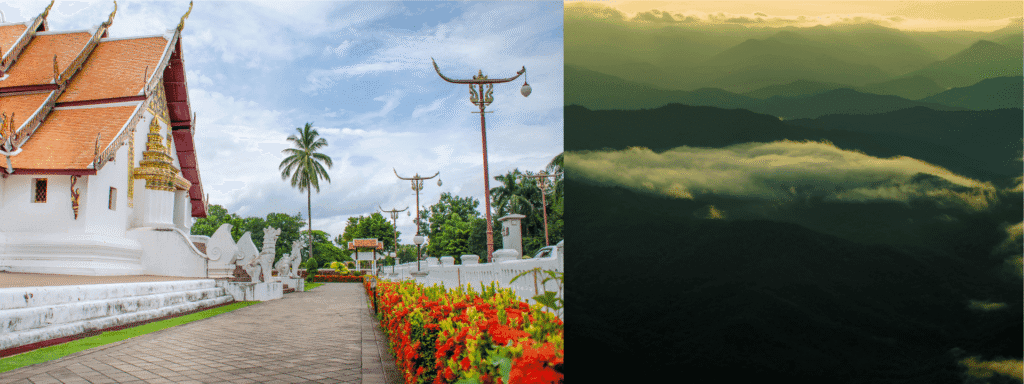
Wat Phumin: Asia’s Most Famous Whisper
The spiritual heart of Nan beats at Wat Phumin. This is no ordinary temple. Its cruciform architecture, unique in Thailand, seems to reach out to embrace the four cardinal points. But what truly stirs the soul lies within, upon its century-old walls.
The murals of Nan are the graphic novels of local history. They depict the daily life of yesteryear: women weaving cotton, men with intricate traditional tattoos, scenes of bustling markets. And amidst this painted turmoil, one masterpiece captures every gaze: « The Whisperer. » A man leans in to murmur into a woman’s ear. It is not a religious scene; it is a scene of love, of intimacy, of a staggering humanity. They say that if you listen closely enough, you can still hear the secret he is confiding to her.
The Craftsmanship: The Dance of the Shuttles
Nan is a land of creators. The Tai Lue women are the guardians of ancestral knowledge: the weaving of cotton and silk. In the surrounding villages, the rhythmic « click-clack » of looms can still be heard beneath houses built on stilts.
The patterns—complex and geometric—tell stories of the mountains, the rivers, and the spirits of the forest. To buy a textile in Nan is not just to buy fabric; it is to acquire a piece of woven poetry. Every thread represents patience; every color represents an emotion. It is here, far from the factories of mass production, that one truly understands the value of the human hand.
Gastronomy: The Fire and the Forest
The cuisine of Nan is an explosion of wild flavors. Here, one tastes Khao Soi, that famous curry noodle soup with coconut milk, but with a local twist—earthier, herbier, closer to the soil.
In the evening, at the night market that unfurls before the temple, you can sample the delights of the forest: crunchy bamboo shoots, rare mushrooms, and sausages spiced with galangal. You eat sitting on bamboo mats on the ground, beneath paper lanterns swaying gently in the night breeze. It is simple, it is authentic, and it is exquisite.
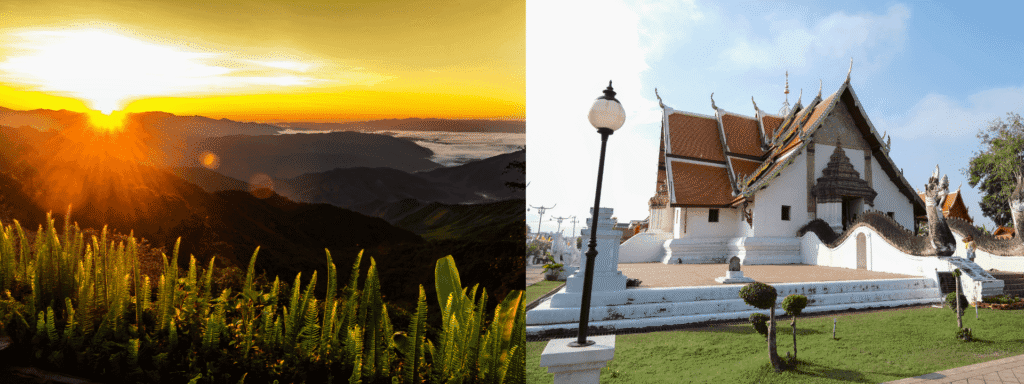
The Valley: The Emerald of the Rice Paddies
To truly grasp Nan, you must escape toward Pua, a small town north of the city. This is where nature reclaims its rights. The terraced rice paddies stretch as far as the eye can see, a green so intense it feels surreal.
In the early morning, mist clings to the mountain peaks, creating a fairytale atmosphere. Farmers, in their iconic straw hats, busy themselves in the shimmering water. It is a living painting that hasn’t changed in centuries—the face of an eternal Thailand, far from the reach of plastic and concrete.
The Secret Temples : Where Spirits and Saffron Robes Convene
In Nan, the line between the celestial and the terrestrial is as thin as the mist on the Doi Phuka peaks. To understand the « Circle of Secret Temples, » one must look beyond the gold leaf and the incense. Here, Buddhism is not a rigid doctrine; it is a living tapestry woven with ancient animist threads—a belief that every tree, river, and mountain peak possesses a heartbeat.
Wat Sri Panton: The Golden Flame
As you cycle through the quiet morning, Wat Sri Panton erupts from the greenery like a flash of fire. Its exterior is an intricate lace of gilded stucco, carved with such ferocity that the temple seems to vibrate under the sun. But the true secret lies in the Naga (serpent) sculptures. Unlike the sleek, uniform serpents of Bangkok, these Nagas have a wild, primitive energy. They represent the guardians of the underground waters, a nod to the city’s profound connection to the Nan River. To stand at its gates is to feel the weight of a protector that has watched over this valley for centuries.
Wat Phrathat Chae Haeng: The Guardian of the Golden Rabbit
Across the river, perched on a gentle hill, sits the most sacred site in the province. This is the temple of those born in the Year of the Rabbit. The air here is different—cooler, scented with drying jasmine and old wood. The central chedi (stupa) is wrapped in copper and brass plates, giving it a muted, ancient glow that outshines any modern gold.
I sat with a monk here, his robes the color of a setting sun. He explained that the temple isn’t just a place for prayer; it’s a cosmic anchor. People travel hundreds of miles to walk three times around the stupa, barefoot, their soles connecting with the warm stone. In the silence, you don’t hear chanting; you hear the soft rustle of Bodhi tree leaves, each one shaped like a heart, whispering the prayers of the thousands who came before you.
The Lost Rivers : A Liquid History
The Nan River is the lifeblood of this civilization. It is the road that brought the first settlers and the source that feeds the emerald rice paddies. To follow the « Circle of Lost Rivers » is to witness a world that refuses to be hurried by the pace of the 21st century.
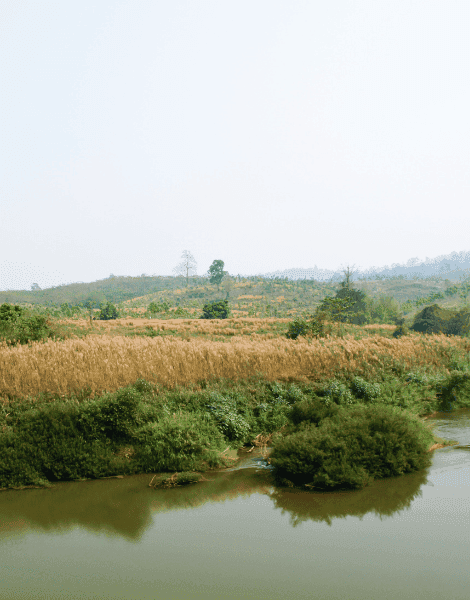
The Longboat Legacy
If you visit during the rainy season, the river transforms into a stadium. The traditional longboat races of Nan are not merely sports; they are a ritual of communal strength. Each boat is carved from a single massive tree trunk, painted with vibrant spirits, and manned by fifty rowers whose rhythmic shouting echoes off the limestone cliffs.
But in the dry season, the river is a mirror. I took a small wooden boat upstream, away from the city. The banks are lined with « tobacco drying barns »—tall, windowless brick structures that look like medieval towers. Here, life follows the rise and fall of the water. You see fishermen casting nets with a grace that looks like a slow-motion dance, their shadows stretching long over the silt-rich banks. This is the « lost » Thailand, where the river still dictates the menu, the mood, and the memory of the people.
Ancestral Wisdom : The Green Pharmacy
Deep in the hills surrounding Nan, the « Circle of Ancestral Wisdom » flourishes in the shade of the jungle canopy. This is the domain of the Htin and Khamu tribes, who have lived in harmony with these forests for a millennium.
The Herbalists of the Heights
I met an elder named Mae Buu in a village where the houses are still thatched with palm leaves. Her hands were stained green and purple—the marks of a lifetime spent gathering. She showed me roots that could cure a fever and barks that could stop a heart from racing.
In Nan, « wisdom » isn’t found in books; it’s found in the taste of a leaf. The local cuisine is a testament to this. They use makhwaen—a wild zanthoxylum berry similar to Sichuan pepper but with a bright, citrusy soul. It numbs the tongue and opens the palate. Eating a meal prepared with these forest ingredients isn’t just dining; it’s a form of internal alchemy. You feel the forest’s vitality entering your veins.
The Stars of Bo Kluea : The Salt of the Sky
Our journey reaches its peak in the remote district of Bo Kluea. The name literally means « Salt Well, » and it is one of the most surreal places in Southeast Asia. Nestled in a deep valley, 1,000 meters above sea level, are ancient pits of saltwater.
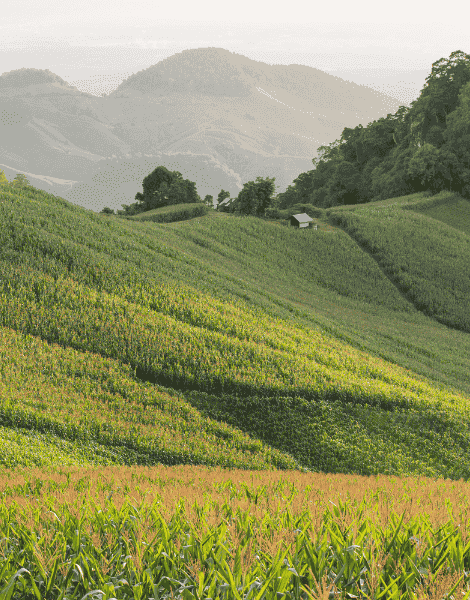
The Alchemy of the Pit
How did saltwater get into the heart of these high mountains? It is a geological mystery that the locals have turned into a way of life for over 800 years. I watched as families lowered buckets into the dark, steaming depths of the earth to pull up the brine. They boil it in massive iron vats over wood fires, twenty-four hours a day, until only the pure, crystalline white salt remains.
At night, the smoke from the salt fires rises to meet the low-hanging clouds. The village smells of woodsmoke and minerals. There is a profound sense of isolation here, but it isn’t lonely. It is the feeling of being at the very edge of the world, where the stars feel close enough to touch and the only currency that matters is the salt in your hand and the fire in your hearth.
The Call of the Hidden North
Nan does not demand your attention; it waits for you to become quiet enough to hear it. It is a place for the traveler who has seen the world and is now looking for something deeper—a connection to the earth, a respect for the hand-made, and a moment of pure, unadulterated peace.
The mountains are calling, the « Whisperer » has a secret to tell you, and the rice is turning emerald in the valley. Are you ready to lose yourself in the mists of Nan?
- MOROCCO WALKER
Ping : Marrakech the Invisible Heart (2026 Edition)
Ping : Why Ucluelet is the Definitive "Dupe" for the Wild Heart 2026