
For decades, the compass of the Pacific Northwest pointed toward a single coordinates: Tofino. It was the promised land of cold-water surfing, the postcard of Vancouver Island’s rugged spirit. But fame is a double-edged sword. As the crowds swelled, as the prices climbed into the stratosphere, and as the « vibe » transitioned from soulful grit to curated luxury, a quiet migration began.
The sophisticated traveler started looking further south, past the neon signs and the bustling surf shops, to a place where the road seemingly ends. Welcome to Ucluelet.
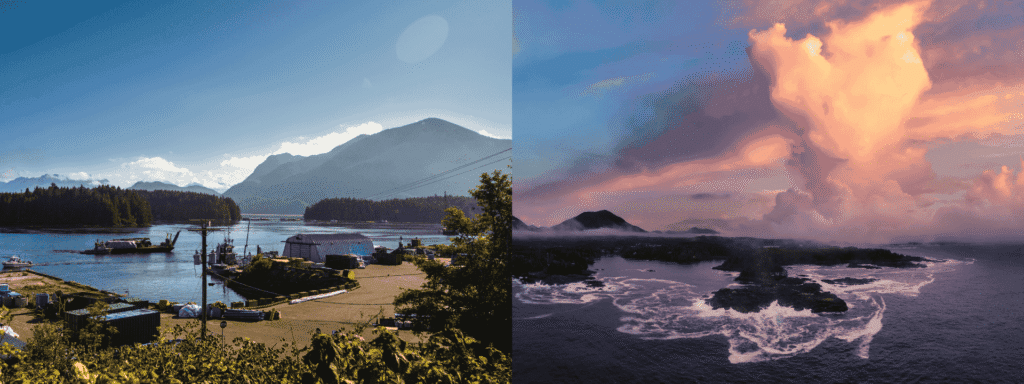
Known to locals simply as « Ukee, » this is a town that refuses to be a resort. It is a working harbor, a place of rain-slicked docks, commercial fishing trollers, and a prehistoric forest that breathes against the salt spray. If Tofino is the polished stage, Ucluelet is the backstage—raw, honest, and profoundly quiet. Choosing this coast over its famous neighbor isn’t just a budget-conscious « dupe »; it is a strategic retreat into a landscape that hasn’t yet been tamed by the lens of a smartphone.
- The Aesthetic of « Wild Hygge »
- The Geography of Disappearance – Navigating the Rim
- The Wild Pacific Trail – A Walk through Deep Time
- Storm Watching : The Ultimate Micro-Retreat
- The « Dupe » Comparison – Ucluelet vs. Tofino
- Ocean Alchemy – Gastronomy and the Working Harbor
- First Nations & Sacred Land – The Yuułuʔiłʔatḥ Heritage
- The Wildlife Protocol – Sovereignty and Stewardship
- The Mega-FAQ – Truths of the West Coast
- The Last Coast – A Final Reflection
The Aesthetic of « Wild Hygge »
In Ucluelet, the fog is not an obstacle; it is a curtain that grants you privacy. The aesthetic here is what we call « Wild Hygge. » It is the sharp, bone-chilling cold of the Pacific mist followed by the dry heat of a cedar-fired sauna. It is the contrast between the violent, churning power of the « Graveyard of the Pacific » and the absolute stillness of a cabin tucked into a grove of Sitka spruce.
To spend time here is to learn that grey is not a dull color. In Ukee, grey comes in a thousand shades: the silver of weathered driftwood, the charcoal of volcanic rock, the translucent slate of the morning tide, and the soft pearl of a cloud-heavy sky. This is the palette of recovery.
Reaching the edge of the world requires a certain level of commitment. The journey to the west coast of Vancouver Island is a physical and psychological peeling away of the modern world.
I. The Passage: Route 4 and the Cathedral of Trees
The drive from the ferry terminals of Nanaimo to the Pacific Rim is an initiation. As you steer onto Highway 4, the road begins to twist like a serpent through the Beaufort Range. You pass through Cathedral Grove, where 800-year-old Douglas firs stand like silent titans, their canopies blocking out the sun and creating a cathedral-like hush that hums through the car windows.
The road eventually narrows at the infamous « Kennedy Hill. » Here, you are carved into the side of a cliff, with the deep, obsidian waters of Kennedy Lake on one side and vertical rock on the other. This journey acts as a filter; by the time you reach the junction where the road splits—right for Tofino, left for Ucluelet—you have already left your city-self behind.
II. The Car-Free Strategy: Slowing the Pulse
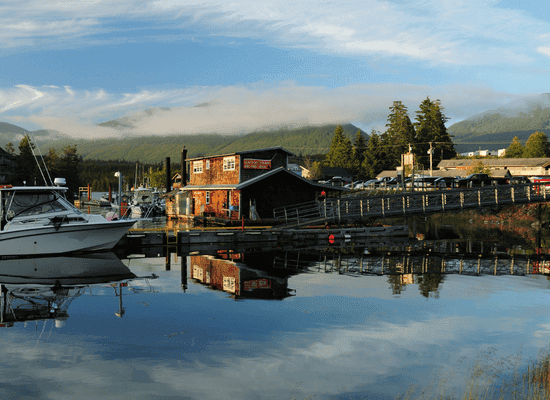
While the region was once the domain of the 4×4, a new movement toward « Slow Travel » has reshaped how we navigate this coast.
- The Electric Rim : E-bikes have become the preferred mode of transport for those staying within the village. The trail systems connecting the harbor to the beaches allow for a silent, sensory immersion that a car engine only disrupts.
- The Shuttle Philosophy : Local transit services now connect Ucluelet to the Long Beach units of the Pacific Rim National Park Reserve. This allows the traveler to disappear into a 20-kilometer hike on the sand and return without the logistical burden of parking—a commodity that has become increasingly scarce in the busier parts of the island.
III. The Connectivity Paradox
In the era of the « Digital Nomad, » Ucluelet offers a rare balance. The village provides high-speed satellite connectivity for those who must remain tethered to the machine, yet it is surrounded by « Dead Zones » where the geography itself acts as a signal jammer. The most sought-after cabins are those situated on the Amphitrite Point, where the only thing you can pick up is the rhythmic pulse of the lighthouse and the low-frequency boom of the waves. It is a place where « Out of Office » is not just a setting, but a physical reality.
The Wild Pacific Trail – A Walk through Deep Time
If the world were to end, it would look like the Wild Pacific Trail. This is not a « hiking path » in the traditional sense; it is a masterpiece of environmental engineering that allows humans to walk the jagged, terrifying edge of the continent with the grace of a shorebird.
I. The Lighthouse Loop: Where the Ocean Roars
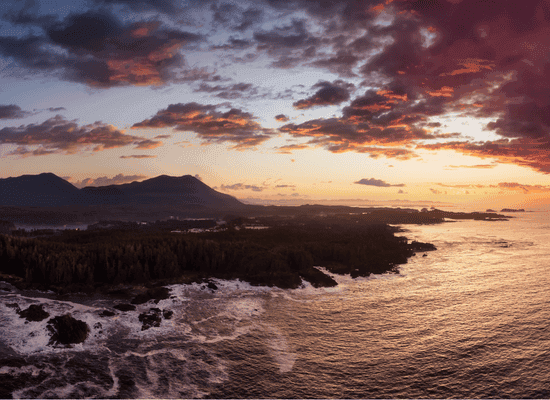
The most famous section, the Lighthouse Loop, circles the peninsula’s southern tip. Here, the volcanic rock is black and sharp, a jagged teeth-line that has claimed hundreds of ships over the centuries.
- The Amphitrite Lighthouse : This is the silent sentinel of the coast. Standing before it during a gale, you feel the spray of the Pacific hitting your face—water that has traveled thousands of miles across the open abyss just to shatter against these rocks.
- The Perspective : Unlike the flat, sandy expanses of Tofino’s beaches, the trail here is elevated. You look down into the belly of the ocean. You see the kelp forests swaying like drowned hair in the surge, and you realize the sheer, unbridled depth of the Pacific.
II. The Ancient Cedars: Breathing with Titans
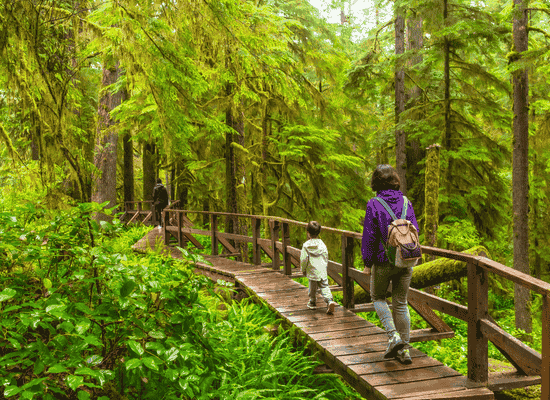
Moving inland, the trail plunges into a grove of Ancient Cedars. These trees were saplings when the crusades were being fought in Europe. Their trunks are so wide that five people cannot link hands around them.
Walking here is a lesson in « Deep Time. » The forest is an emerald labyrinth of moss, ferns, and decaying « nurse logs » that give life to new saplings. The air is heavy with the scent of damp earth and decomposing wood—the smell of a world that is constantly recycling itself. In the presence of an 800-year-old tree, your « urgent » emails and social anxieties reveal themselves for what they are: ephemeral dust.
III. The Bog Trail: The Miniature Alien World
Hidden along the edge of the park is the Shorepine Bog. Due to the high acidity of the soil and the lack of nutrients, the trees here are stunted and twisted into bonsai-like shapes. A 100-year-old tree might only be five feet tall. It is a surreal, alien landscape that feels detached from the towering giants only a few hundred meters away. It serves as a reminder that survival in the wild takes many forms—sometimes it is about height, and sometimes it is about the stubborn refusal to break.
Storm Watching : The Ultimate Micro-Retreat
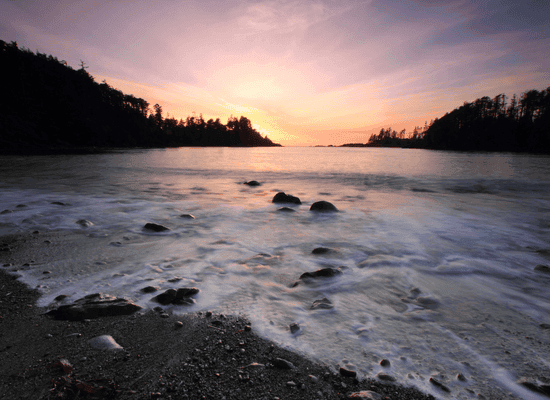
In most parts of the world, a storm is a reason to stay inside. In Ucluelet, it is the main event. Between November and March, the coast plays host to roughly 15 to 20 « mega-storms »—colossal low-pressure systems that have gathered momentum across thousands of miles of open Pacific, with nothing but Japan on the distant horizon to stop them.
I. The Season of Giants
The peak of this season is the definitive « Micro-Retreat. » While summer visitors fight for parking at the beaches, the winter traveler in Ucluelet finds a town that has turned inward, focusing on the primal relationship between the elements and human comfort.
- The Physics of the Surge : Waves here regularly reach heights of 6 to 10 meters (20 to 30 feet). Because Ucluelet sits on a jagged, volcanic peninsula rather than a flat, sandy bay, the impact of these waves is explosive. They don’t just roll in; they collide with the black rock, sending plumes of saltwater spray over the tops of 30-foot trees.
- The Sound of the Foghorn : On heavy weather days, the acoustic landscape changes. The rhythmic groan of the Amphitrite Point foghorn and the clanging of the channel buoys become the heartbeat of the town. It is a haunting, beautiful soundtrack that lulls you into a deep, restorative sleep.
II. Designing the Retreat: Fire, Glass, and Cedar
The accommodation strategy in Ucluelet has evolved to prioritize the « Storm Viewing » experience. Unlike the sprawling resorts further north, the lodging here is intimate and vertically oriented.
- The « Black Rock » Standard : Properties like the Black Rock Oceanfront Resort are built literally into the rock. Their floor-to-ceiling glass walls allow you to watch the tide surge directly beneath your feet while you sit by a gas fireplace. It is the architectural equivalent of a front-row seat at a symphony of chaos.
- The Passive-Built Cabin : For those seeking the « Invisible » vibe, signature cabins at Terrace Beach offer a multi-level retreat. These are often passive-built, meaning they utilize high-performance insulation and wood-burning stoves to create a « heat-envelope. » The ritual is simple: hike the trail until you are soaked to the bone, return to shed your Gore-Tex in the mudroom, and spend the afternoon watching the mist swallow the forest from the comfort of a king-sized bed.
III. The Storm Watcher’s Gear: Survival as Style
To properly experience a Ucluelet storm, your equipment must be as serious as the weather.
- The « Yellow Slikker » Myth : Forget the yellow raincoats of postcards. You need a Gore-Tex Pro shell—something that can breathe while being hammered by sideways rain moving at 70km/h.
- Optics : For the « Invisible » observer, a pair of waterproof, nitrogen-purged binoculars is essential. From the safety of an elevated trail viewpoint, you can watch the resident bald eagles hunkering down in the Sitka spruce, their feathers ruffled by the gale, waiting for the front to pass.
The « Dupe » Comparison – Ucluelet vs. Tofino
This is where the strategy of the modern traveler becomes clear. The question is no longer « Which is better? » but « Which offers the soul-clarity I need? »
| Feature | Tofino (The Famous Neighbor) | Ucluelet (The Silent Choice) |
| Vibe | Surf-Chic, Social, Polished. | Rugged, Industrial, Solitary. |
| Geography | Long, flat, sandy beaches. | Jagged cliffs, rocky headlands, secret coves. |
| Average Nightly Rate | $280 – $700+ (Peak/Storm season). | $190 – $450 (Superior value/larger spaces). |
| Crowd Density | High (Even in winter, the cafes are packed). | Low (You can walk the trail for an hour in silence). |
| Dining | Trend-focused, high-volume, nightlife. | Ingredient-focused, intimate, « Ma & Pa » feel. |
| Storm Impact | Big swells on sandy beaches (Surfer’s paradise). | Explosive collisions on rock (Watcher’s paradise). |
Why Ucluelet Wins as the 2026 Dupe
The « Tofino Burnout » is a real phenomenon. Travelers who once sought the West Coast for its wildness now find themselves in traffic jams on the Pacific Rim Highway.
- The 40-Minute Buffer : By basing yourself in Ucluelet, you save significant budget on accommodation while retaining the ability to « day-trip » into Tofino for a specific dinner or a surf lesson. You enjoy the amenities of the neighbor while retreating to the sanctuary of the local.
- The Rugged Edge : If you are here for the photography and the « Wild Hygge » aesthetic, the rocky shoreline of Ucluelet is objectively more dramatic. Tofino’s beaches are beautiful, but Ucluelet’s cliffs tell a story of ancient volcanic struggle that feels more « Invisible » and authentic.
Ocean Alchemy – Gastronomy and the Working Harbor
In Ucluelet, the food doesn’t arrive on a long-haul truck; it arrives on a boat covered in salt spray. The culinary landscape here is defined by « Ocean Alchemy »—the transformation of the cold, nutrient-rich waters of the Pacific into something sublime. While the neighboring food scene has shifted toward global fusion, Ucluelet has doubled down on its identity as a working harbor.
I. The Working Harbor: The Real Stage
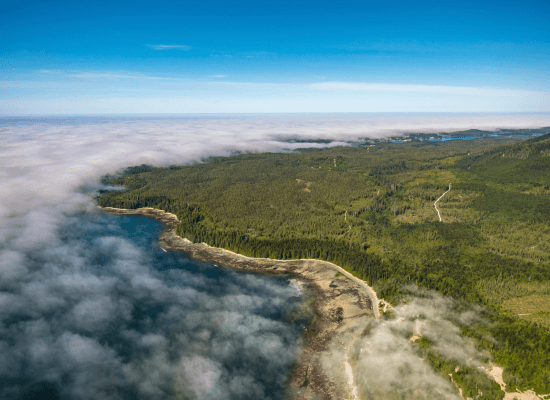
To understand the menu, you must first walk the docks of the Ucluelet Small Craft Harbour. This isn’t a yacht club; it is a forest of masts, pulleys, and heavy-duty nylon nets. This is the home of the « Ukee » trollers.
- The Catch : Depending on the month, you are looking at boats laden with Spot Prawns, Dungeness Crab, and the prize of the deep: Albacore Tuna.
- The Experience : There is a visceral luxury in watching a fisherman unload a crate of shimmering, ice-cold Chinook salmon at 6:00 AM, knowing that same fish will be served as a crudo or a seared fillet by 6:00 PM. This is the shortest supply chain on earth.
II. Foraged Flavors: The Forest to the Plate
The alchemy extends beyond the water. The surrounding rainforest is a pantry for those who know how to read it.
- Kelp and Sea Salt : Innovative local kitchens have begun integrating bull kelp—harvested from the swaying forests you see from the Wild Pacific Trail—into everything from seasonings to pickles. It provides a mineral, umami depth that tastes like the ocean itself.
- The Fungal Gold : In the damp autumn months, the forest floor erupts with Chanterelles and Pine Mushrooms. Local chefs often forage their own ingredients, creating dishes where the earthy musk of the woods meets the ozone of the sea.
III. The Micro-Brewery Culture: The Town Square
In a place where the rain is a constant companion, the local brewery is more than a business; it is a refuge. Ucluelet Brewing Co., housed in a repurposed steep-roofed church, is the town’s spiritual center.
Sitting by the large windows with a « St. Aidan’s Porter, » watching the fog roll over the harbor, you realize that the luxury here is communal. There is no velvet rope; there is only the warmth of wood, the smell of malt, and the shared understanding that the weather outside is magnificent and terrifying.
First Nations & Sacred Land – The Yuułuʔiłʔatḥ Heritage
You cannot walk the « Wild Pacific » without acknowledging that these trails are paths through a living history. Ucluelet sits on the traditional territory of the Yuułuʔiłʔatḥ (Ucluelet First Nation), members of the Nuu-chah-nulth Tribal Council who have inhabited this coastline for over 10,000 years.
I. The Name: « People of the Safe Harbour »
The word « Ucluelet » is an anglicized version of Yuu-lu-ilth-ath, meaning « People with a safe landing place. » For millennia, the harbor served as a sanctuary for cedar dugout canoes navigating the treacherous « Graveyard of the Pacific. » To see the harbor through this historical lens is to understand that the « Safe Haven » vibe of the town is not a modern marketing invention; it is a geological and cultural truth.
II. The Cedar: The Tree of Life
For the Yuułuʔiłʔatḥ, the Western Red Cedar is not just timber; it is a relative. Historically, every part of the tree was used: the wood for massive longhouses and canoes, the bark for weaving hats and clothing, and the roots for baskets.
- The Living Artifacts: As you hike the ancient cedar groves, look for « Culturally Modified Trees » (CMTs). These are living trees where bark was stripped or planks were removed centuries ago in a way that allowed the tree to continue growing. They are « Invisible Monuments »—silent witnesses to a sustainable relationship with the land that predates the concept of « ecology. »
III. Respectful Exploration in 2026
Modern travel to Ucluelet involves a protocol of humility.
- The Cultural Shift : Travelers are encouraged to visit the Kw’asistana (the nation’s cultural center) to understand the governance and the ongoing revitalization of the Yuułuʔiłʔatḥ language and arts.
- The Vow : Walking the land is a privilege granted by the nation. The « Invisible » traveler recognizes that they are guests on unceded territory. This awareness adds a layer of spiritual weight to every step taken on the trail; you are not just on a hike, you are walking through a sacred, ancestral home.
The Wildlife Protocol – Sovereignty and Stewardship
In the wild Pacific, animals are not scenery; they are sovereign inhabitants. By moving past the « up-close and personal » obsession of previous decades, the sophisticated traveler adopts a protocol of stewardship. Ucluelet provides a rare vantage point to observe life at its most raw, but it demands an « Invisible » presence.
I. Whale Watching: The 2026 Ethical Standard
The waters of Barkley Sound are a vital corridor for the great migrations. Between February and May, over 20,000 Gray Whales pass these shores on their way to the Bering Sea. From June to September, Humpbacks and Orcas take center stage.
Modern ethical viewing has shifted from « the chase » to « the wait. »
- The 200-Meter Rule : Current regulations mandate a minimum distance of 200 meters from all killer whales (Orcas) in southern BC waters, and 100 meters for most other marine mammals. In 2026, the best operators are those who use electric or « whisper-drive » engines to minimize underwater noise, allowing the whales to maintain their natural feeding and social behaviors without disruption.
- Shore-Based Viewing : The ultimate « Invisible » experience is watching the « blow » from the cliffs of the Wild Pacific Trail. Using a high-quality telephoto lens or binoculars, you can witness a breach or a spy-hop without ever displacing a single drop of water.
II. The Bear and Wolf Protocol: Coexistence over Conflict
Ucluelet is a landscape shared with black bears and the elusive Vancouver Island wolf. To see them is a gift; to interact with them is a failure.
- The 100-Meter Buffer : On land, the law is absolute: maintain at least 100 meters of space from bears and wolves. If a bear is feeding on the shoreline—a common sight in the spring when they hunt for crabs under rocks—it is your responsibility to move away, even if you were there first.
- The « Ukee » Bear-Smart Culture : This is a « Bear-Smart » community. Garbage is kept in locked, bear-proof containers, and the scent of human food is treated as a hazard. As a guest, you are part of this defensive line. Never leave attractants in your car or on your balcony; a « habituated » bear is a dead bear.
The Mega-FAQ – Truths of the West Coast
This section addresses the deep tactical questions for those planning a long-term « disappearance » to the coast.
I. Seasonal and Logistical Realities
II. Safety and Ethics
The Last Coast – A Final Reflection
As we conclude this journey, the fog is once again rolling into the harbor. Ucluelet is not just a destination; it is a reminder that the world is still vast, untamed, and indifferent to our presence.
The traveler who chooses the « Edge of Silence » is someone who has realized that the loudest experiences are often the most hollow. In the mist of Ukee, you find a different kind of volume—the sound of 800-year-old trees breathing, the boom of a Pacific swell that has traveled half the globe, and the quiet dignity of a community that lives in harmony with the Yuułuʔiłʔatḥ heritage.
You don’t come to Ucluelet to « do » things. You come to let the coast do something to you. Whether you are watching a storm from behind a wall of glass or standing on the black rock of the Lighthouse Loop, you are participating in a ritual as old as the mountains themselves.
The 2026 choice is clear. Let the world have the fame. You take the silence. You take the mist. You take the West Coast as it was meant to be.
« If you enjoy peaceful destinations like Ucluelet, you might also love the spirit of Meteora in Greece, the hidden mountains of Nan in Thailand. »
- MOROCCO WALKER