

The modern football pitch is often treated as a space of rigid systems, predictable passing lanes, and industrialized efficiency. Yet, every generation, a player emerges who treats the green turf not as a tactical grid, but as an open canvas for pure, unfiltered improvisation. In the opening spectacles of the FIFA World Cup 2026, that disruptor is Monaco’s 21-year-old virtuoso, Eliesse Ben Seghir.
Stepping onto the global stage with an almost insolent level of technical confidence, Ben Seghir has ignited international sports media with his signature style: sharp, unpredictable changes of direction, blindingly fast close-control dribbles, and a joy for the game that feels rooted in the raw creativity of street football. European football academies fought hard to claim his future, but Ben Seghir made a definitive choice of the heart, pledging his international career to the Atlas Lions.
While football analysts attribute his balance and explosive agility to elite training facilities in the south of France, a slow traveler looking for the soul behind the athlete must look higher. One must travel inland, climbing away from the coastal plains into the rugged, gravity defying landscapes of the « High Atlas Mountains », specifically the ancestral « Glaoua » tribal lands and the deep canyons of the « Ounila Valley ». This is the mountain crucible where Ben Seghir’s bloodline was forged a vertical world of ancient clay fortresses, twisting mountain passes, and a culture of absolute spatial adaptability that mirrors every dizzying turn the young playmaker executes on the pitch.
- 1. The Architecture of the Labyrinth: Earth, Stone, and Mountain Football
- 2. The Ounila Valley: The Ocre Secret Route Beyond the Tichka
- 3. The Salt and the Olive: A Sensory Mapping of High-Altitude Basins
- 4. The High-Altitude Track: Route Logistics for the Mountain Walker
- The Symphony of the Clay and the Star
1. The Architecture of the Labyrinth: Earth, Stone, and Mountain Football
LOGISTIQUE MOROCCO WALKER
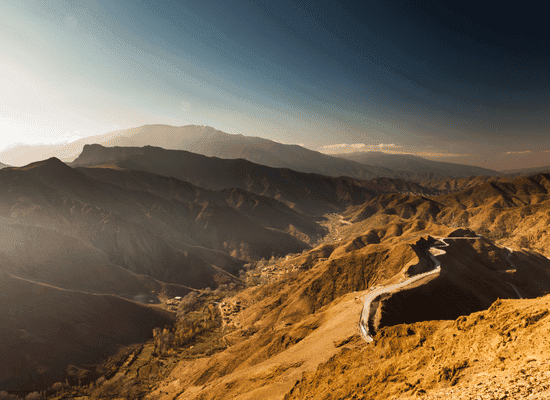
- Destination : High Atlas Spine (Ounila Valley & Glaoua Tribal Lands)
- Landscape Matrix : Vertical canyons, terraced slopes, rammed-earth architecture (Pisé)
- Cultural Anchor : Amazigh (Berber) mountain strongholds; independent highland identity
- Spatial Dynamic : Tight, multi-level layouts requiring hyper-focused physical balance
To understand the spatial intelligence of Eliesse Ben Seghir, one must first understand the architectural geometry of a traditional Amazigh ksar (fortified village). Perched precariously on the cliff faces of the High Atlas, these ancient structures are built entirely from the very earth they stand on using pisé a traditional rammed earth technique that creates massive, textured walls of deep ocre and rose clay.
+———————————–+———————————–+
| HYPER-STRUCTURED PITCH | VERTICAL ATLAS TOPOGRAPHY |
+———————————–+———————————–+
| Fixed boundaries and line markings | Terraced cliffs and sharp drops |
| Flat, predictable grass surfaces | Uneven clay, rock, and stone |
| Linear passing lane patterns | Multi-level labyrinth pathways |
| Expected tactical positioning | Instant, reactive adaptation |
+———————————–+———————————–+
Inside these villages, there are no straight lines. The pathways are a vertical labyrinth of steep, narrow alleys, covered stone tunnels, and sharp, ninety degree turns designed centuries ago to confuse invading forces. For generations, the children of the Atlas have used these highly complex spaces as their primary playgrounds.
When you watch a youth match played on a tiny, dust packed terrace hanging over a thousand-foot canyon drop, you witness the genesis of a completely different athletic psychology. There is no room for hesitation. A single misstep means losing the ball down the mountain face. The uneven clay teaches the ankles a profound, reactive strength;
The tight walls require a micro-precision of touch to keep the ball alive. When Ben Seghir drops his shoulder, shifts his weight in a millisecond, and maneuvers through a suffocating press of international defenders, he is using the exact spatial vocabulary inherited from these mountain mazes. It is an agility born from the need to survive and thrive within the strict, unforgiving angles of the rock.
2. The Ounila Valley: The Ocre Secret Route Beyond the Tichka
The vast majority of travelers crossing the High Atlas rush blindly along the paved highway of the Tizi n’Tichka pass, desperate to reach the desert hubs of Ouarzazate. But for the Walker, the true magic lies along the old caravan route that splits off into the heart of the mountains: the breathtaking « Ounila Valley ».
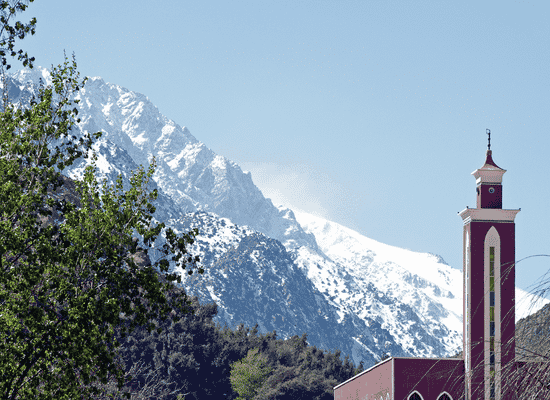
The Lost Majesty of Telouet
The journey into the valley begins at the crumbling fortress of « Telouet », the ancestral seat of the Glaoua clan. Once the controllers of the lucrative trans-Saharan salt and spice caravans, their history is carved directly into the mountain rock.
From the outside, the kasbah looks like a ruined mountain crag, slowly dissolving back into the red earth. But once you step through its low wooden doorways, you are confronted by a dazzling labyrinth of Andalusian-style tilework (zellij), delicately carved stucco, and cedarwood ceilings that took decades to complete.
It is a profound lesson in contrast a rough, unyielding mountain exterior hiding an intricate, hyper refined interior world. This duality perfectly echoes Ben Seghir’s presentation on the pitch: a physically tough athlete capable of executing moments of breathtaking, delicate artistic precision when the opposition least expects it.
The Midnight Canopy: Noctourisme in the High Atlas
To experience the true, humbling scale of the valley, one must step outside the clay walls after the sun has set behind the peaks. Because of its extreme altitude and complete isolation from major urban centers, the High Atlas offers one of the most pristine night skies on the planet.
Field Note for the Mountain Walker: As twilight fades, the dramatic crimson canyons cool rapidly under the mountain air. The deep silence that settles over the valley is absolute a quiet so profound that you can hear the distant rustle of olive trees in the dry riverbeds below. Then, the stars emerge. The sky transforms into a brilliant, dense tapestry of constellations that seems close enough to touch. This alpine clarity is a therapeutic antidote to the chaotic, hyper-stimulated world of elite sports. It is an environment that forces a human being to slow down, breathe deeply, and find a steady, immovable internal anchor.
Aït Ben Haddou: Facing the Dawn
At the southern exit of the valley stands the world famous Ksar of Aït Ben Haddou, a UNESCO World Heritage site that has served as the backdrop for countless cinematic epics. While mass tourism swarms this location at midday, the slow travel protocol requires exploring it at the first light of dawn.
Walking across the stepping stones of the Ounila River while the morning sun slowly ignites the red clay towers is an unforgettable experience. At this hour, the ancient fortress belongs entirely to the wind and the river.
You can climb to the collective granary (agadir) at the very summit without encountering another soul, watching the vast geometric patterns of the Atlas valleys wake up below you. It is a visual reminder that great structures whether an ancient mountain kingdom or a generational athletic career are built slowly, layer by layer, out of the very earth beneath our feet.
3. The Salt and the Olive: A Sensory Mapping of High-Altitude Basins
The culinary landscape of the High Atlas is defined by mountain scarcity and deep, nourishing resourcefulness. Here, food is an act of communal warmth, designed to sustain human bodies working against the intense elements of altitude and cold mountain nights.
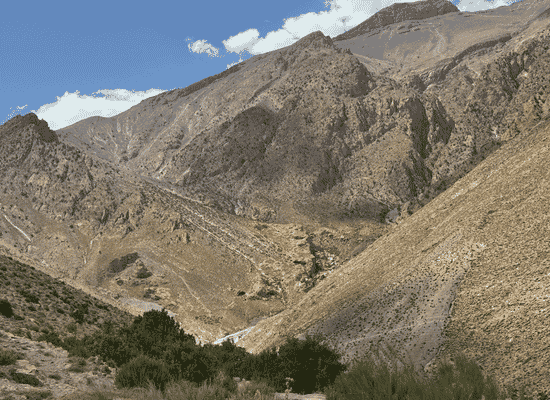
THE MOUNTAIN SUSTENANCE PROTOCOL: THREE REGIONAL ESSENTIALS
1. THE TAFARNOUT STONE-BAKED BREAD (Village hearths)
- Detail: A flat, rustic leavened bread made from locally milled mountain wheat.
- Experience: Slapped directly onto a bed of super-heated river pebbles inside a clay dome oven. The bread emerges smoking hot, blistered, and deeply textured, perfect for tearing apart by hand.
2. THE HAND-EXTRACTED PINK SALT (Ounila salt mines)
- Detail: Pure gem salt, hand-mined from underground veins running through the valley’s canyons.
- Experience: Coarsely ground over fresh dishes, it carries a clean, mineral sharpness completely different from processed sea salt.
3. THE WOOD-FIRED JUNIPER TAGINE (High valleys)
- Detail: Free-range mountain chicken slow-cooked for hours in a heavy clay vessel over wild juniper wood charcoal.
- Experience: Packed with wild thyme, preserved lemons, and the intensely rich olive oil pressed in stone mills down in the valley floor.
The gastronomic geography of Ben Seghir’s ancestral lands is anchored by the maâsra the traditional stone olive presses that have operated in these valleys for over a thousand years. Driven by mules walking in slow, meditative circles, these massive stone wheels crush the mountain olives into a thick, peppery green oil that forms the foundation of every meal.
When you sit on a woven wool rug inside a mountain home, dipping hot tafarnout bread into cold-pressed olive oil, you are participating in a ritual of hospitality that hasn’t changed since the time of the caravans. The Amazigh culture values stamina and authenticity above all else.
This grounded reality is a powerful psychological shield for a young player navigating the fleeting, multi-million dollar hype of modern European football contracts. It is a reminder that no matter how high the branches grow, the strength of the tree depends entirely on the depth of its roots in the rock.
4. The High-Altitude Track: Route Logistics for the Mountain Walker
Navigating the spine of the High Atlas requires leaving behind the expectations of modern highway travel and embracing the rugged, seasonal realities of mountain logistics.
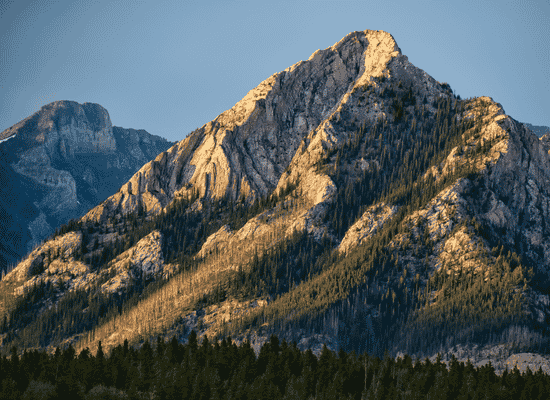
LOGISTIQUE: THE ALTERNATIVE OUNILA CORRIDOR
- Base Hub : Marrakech (Menara International Airport)
- Departure Route : Route Nationale 9 (RN9) climbing toward Tizi n’Tichka
- The Pivot : Route Régionale 1506 (P1506) branching left at Telouet
- Tactical Warning : Sudden alpine ice formations; flash flood risks in low riverbed crossings
While private 4×4 vehicles are common, the ultimate slow travel immersion is achieved by utilizing the local fourgonnettes the sturdy, white transit vans that connect remote mountain villages to the valley markets.
[MARRAKECH BASE]
│
▼ (Route Nationale 9)
[TIZNIT / TICHKA FORK]
│
┌────────────────────────┴────────────────────────┐
▼ (Route Régionale 1506) ▼ (Route Nationale 9)
[THE OUNILA SECRET CORRIDOR] [MAIN HIGHWAY TO OUARZAZATE]
│ │
├────────────────────────┐ │
▼ ▼ ▼
[Telouet Kasbah] [Aït Ben Haddou] [Cinema Studio Districts]
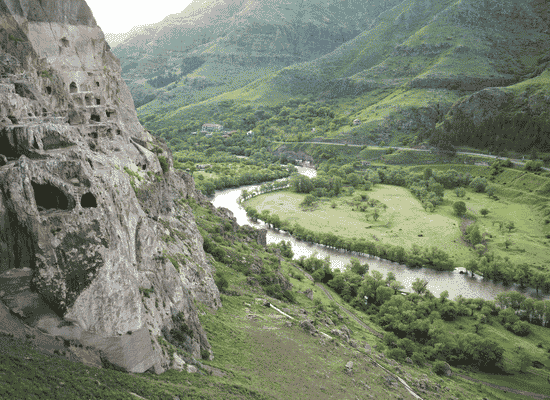
Riding in a shared transit van as it maneuvers along the narrow, unbarricaded edges of the P1506 mountain road is a lesson in profound trust and community focus. The road hugs the sheer cliff faces, with the sparkling emerald ribbon of the Ounila oasis winding through the canyon floor hundreds of feet below.
Your traveling companions are mountain farmers carrying woven baskets of fresh almonds, weavers traveling between cooperatives, and families returning home from the weekly souks. The rhythm of the journey is dictated entirely by the terrain you slow down to let a herd of sheep pass, you stop to check the water levels at a river crossing, and you move forward with a collective patience that is completely lost in modern urban environments.
The Symphony of the Clay and the Star
As the global spotlight continues to tracking every step Eliesse Ben Seghir takes under the stadium lights of the World Cup, the deep canyons of the High Atlas remain beautifully unmoved. The wind continues to sweep through the towers of Telouet, and the stars still burn with a brilliant clarity over the ancient red clay of the valleys.
Ben Seghir’s choice to play for Morocco is a celebration of this unbreakable connection. By bringing his electric, unpredictable talent back to his ancestral homeland, he has infused the modern game with the creative spirit of the mountain labyrinth. He plays with the unyielding strength of the clay and the dazzling brightness of the alpine sky.
For the traveler who steps off the beaten track to follow his lineage into the hidden valleys of the Atlas, the reward is an encounter with a Morocco of timeless majesty. It is a landscape that reminds us that true genius is never a solo creation it is a beautiful symphony played out between the individual, their family history, and the very rock from which they came.