

For decades, the global traveler’s map of Morocco has been anchored by the terracotta walls of Marrakech, the blue-washed steps of Chefchaouen, and the golden dunes of Merzouga. But as we move through the spring of 2026, a new current is pulling the most discerning explorers northward. While the southern hubs grapple with the weight of their own popularity, the Mediterranean Coast the rugged, azure rim of the Rif Mountains remains a frontier of raw beauty and profound authenticity.
This is the « Other Morocco. » It is a land where the Atlantic Ocean and the Mediterranean Sea engage in a perpetual, turbulent embrace at the Cap Spartel. It is a 500 kilometer odyssey along the Rocade Méditerranéenne, a coastal highway that rivals the Amalfi Coast or the Pacific Coast Highway in its sheer vertical drama, yet lacks their commercial gloss. Here, the mountains don’t just meet the sea; they plunge into it, creating hidden turquoise calas, scarlet cliffs, and white-washed fishing villages that have remained unchanged since the days of the Andalusian exiles.
For the traveler seeking a 2026 hidden gem and the explorer looking for an alternative to the crowded Algarve or Costa del Sol, the North offers a rare synthesis: the sophisticated, international spirit of Tangier, the UNESCO protected silence of Tetouan, and the wild, lunar landscapes of the Cap des Trois Fourches. This is not a journey for those who want a curated resort experience. This is for the one who understands that the true luxury of travel is the sound of a morning prayer echoing over a misty lagoon, the taste of a sun-warmed clementine in Berkane, and the sight of a border where the road simply ends at the edge of the desert.
In this guide, we will navigate every curve of the Rif, from the cosmopolitan cafes of the « White City » to the ancient gates of Oujda. We will uncover the secret pottery villages, the prehistoric caves, and the salt-crusted stories of a coast that is finally ready to tell them.
- 1. Tangier & Cap Spartel: The Gateway where Oceans Collide
- 2. Tetouan: The Soul of Al-Andalus and the Silent Medina
- 3. Oued Laou: The Scarlet Cliffs and the Women of the Earth
- 4. Al Hoceima: Turquoise Bays and the Whispers of the Spanish Era
- 5. The Cap des Trois Fourches: A Lunar Wilderness at the Edge of the Map
- 6. Nador & Marchica Lagoon: The Rebirth of the Azure Coast
- 7. Berkane & the Zegzel Gorges: The Emerald Garden of the Oriental
- 8. Saïdia: The Golden Shore and the Invisible Border
- 9. Oujda: The Thousand-Year-Old Gateway to the Desert
- 10. Logistics & Budget 2026: Mastering the Mediterranean Loop
1. Tangier & Cap Spartel: The Gateway where Oceans Collide
To begin a journey in Tangier in 2026 is to step into a city that has finally reclaimed its crown as the Mediterranean’s most enigmatic muse. For nearly a century, Tangier was the « International Zone » a lawless, glamorous, and gritty liminal space where spies, smugglers, and the giants of the Beat Generation (Ginsberg, Burroughs, Bowles) came to lose themselves. Today, the city has undergone a magnificent renaissance, yet it has managed to keep its edge. It is a city of two faces: the sleek, high-speed rail hub and the ancient, winding Medina that still smells of charcoal and sea salt.
1. The Pulse of the Kasbah and the Ghost of Paul Bowles
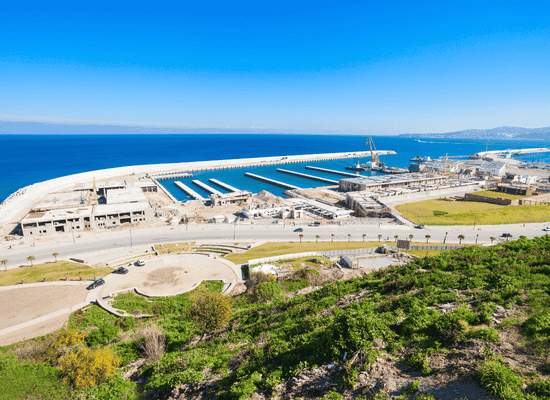
Your exploration must start at the highest point of the city: the Kasbah. Entering through the massive stone arches, you leave the roar of the modern port behind. The light here is different a soft, pearlescent glow that has drawn painters like Matisse for over a century.
Walk the narrow lanes toward the Café Baba. This is not a luxury establishment; it is a room with wooden benches and walls yellowed by decades of kif smoke and conversation. It is where Keith Richards and the King of Spain have sat, and where the traveler of 2026 still finds the true spirit of Tangier. Order a « thé à la menthe, » let the sugar hit your bloodstream, and watch the shadows lengthen over the Strait of Gibraltar. This is where the world’s most important shipping lane feels like a quiet pond.
2. Cap Spartel: Where the Compass Spins
Follow the coastal road westward, past the luxurious villas of the Marshan, to reach Cap Spartel. In March and April, the hills are a vibrant, electric green, carpeted in wildflowers. The lighthouse here, built in 1864, marks the exact point where the Atlantic’s cold, grey rollers meet the Mediterranean’s warm, turquoise stillness.
The real secret of Spartel is found just below the lighthouse. While the crowds gather for the sunset, descend the hidden stone steps toward the smaller, unnamed coves. Here, the rock formations are prehistoric, and the sound of the two oceans clashing creates a unique acoustic resonance. It is a place of profound geological power. The nearby Caves of Hercules have been subtly renovated to preserve their « Map of Africa » opening, but for the true explorer, the caves are best visited at 7:30 AM. When the first rays of the sun hit the sea through the cavern’s mouth, the interior turns into a cathedral of blue light.
3. The Grand Socco and the Modern Renaissance
Descending back into the city, the Grand Socco acts as the bridge between the old and the new. In April 2026, the square is a riot of color mountain women from the Rif in their striped mendils sell wild asparagus and baskets of strawberries.
But look toward the Cinéma Rif. This cultural hub is the heartbeat of the modern Tangerine scene. Here, the local youth discuss cinema and philosophy over espresso. This is the Tangier that travelers find most intoxicating: a city that is fiercely proud of its past but refuses to be a museum. To walk from the 1930s glamour of the Hotel El Minzah to a contemporary art gallery in the « Ville Nouvelle » is to understand that in Tangier, time is not a line, but a labyrinth.
4. The Sensory Landscape: Salt, Mint, and Diesel
The air in Tangier is a complex perfume. It is the salt spray from the ferry terminal, the pungent aroma of fresh mint bunches, and the faint, nostalgic scent of diesel from the ships in the harbor. It is an Industrial-Bohemian aesthetic. To eat at a small stall in the fish market where the sardines were in the ocean three hours ago is to experience the luxury of the immediate. In 2026, as food systems become increasingly globalized, this hyper-localism is the ultimate travel gold.
2. Tetouan: The Soul of Al-Andalus and the Silent Medina
Leaving the international clamor of Tangier, the road curves inland, carving through the rising spine of the Rif. As the limestone peaks of Jebel Dersa and Jebel Gorgiz sharpen against the horizon, a shimmering, monochromatic vision emerges. This is Tetouan, the « White Dove. »
If Tangier is a conversation, Tetouan is a prayer. In the spring of 2026, while the global travel industry leans into the « Insta-famous » blue of its neighbor Chefchaouen, Tetouan remains a sanctuary for the purist. It is perhaps the most sophisticated city in Morocco, a place where the air carries a refined, silent dignity that dates back to the 15th century. To walk into the Medina of Tetouan is to step through a portal into a lost world: the vanished splendor of Al-Andalus.
1. The Geometry of Exile: An Andalusian Masterpiece
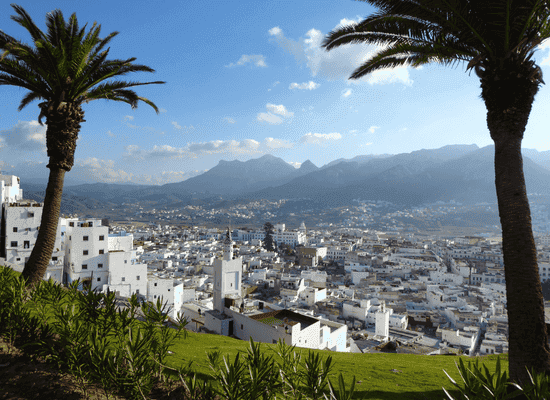
Tetouan was rebuilt by refugees Moors and Jews fleeing the Reconquista in Spain. They didn’t just build houses; they reconstructed a memory. This is why the Medina (a UNESCO World Heritage site) feels fundamentally different from the chaotic spirals of Fes or Marrakech. It is a masterpiece of urban planning, characterized by wide, straight arteries that suddenly fracture into secret, sun-dappled squares.
The Royal Palace at the edge of the Place Hassan II serves as the ceremonial heart, but the true Bohemian seeker looks toward the Ensanche. This is the Spanish colonial « New City, » built during the Protectorate. Its white-and-green facades, wrought-iron balconies, and wide boulevards create a surreal, cinematic atmosphere a slice of Madrid or Seville transplanted onto the African coast.
Walking here in the late afternoon, as the call to prayer harmonizes with the clinking of glasses in the Spanish style cafes, you feel the unique « Third Space » that Tetouan occupies: neither fully African nor fully European, but something entirely its own.
2. The Seven Gates and the Secret of the Tanneries
The Medina is guarded by seven historic gates. To enter through Bab el-Okla is to begin a sensory journey into the medieval heart of the Rif. Unlike the tanneries of Fes, which are a major tourist spectacle, the Tetouan Tanneries are a hidden, working-class reality. There are no viewing platforms here, no sprigs of mint to mask the smell.
Standing on the edge of the circular stone vats, you see the ancient alchemy of leather-making: pigeon droppings, lime, and natural dyes creating the supple hides that define Moroccan craftsmanship. As « Slow Fashion » becomes the ultimate luxury for the traveler, seeing the raw, grueling labor behind a leather bag is a grounding, humanizing experience. It is the antithesis of the digital world visceral, pungent, and profoundly real.
3. The Arts of the Hand: The School of Traditional Crafts
One of the most vital « Hidden Gems » of Tetouan is the Dar El Hanna, the School of Traditional Arts and Crafts. Located near Bab el-Okla, this institution is the guardian of the city’s soul. In the spring of 2026, the courtyard is filled with the scent of freshly cut cedar and the rhythmic « tap-tap » of chisels on Zellige tiles.
Here, young artisans learn the 13 traditional arts (the Zorig Chusum of Morocco, if you will). They master the « Zouaq » (painted wood), the delicate embroidery that uses gold thread, and the complex geometric plaster carving. This is not a tourist trap; it is a fortress of cultural preservation. To spend an hour watching a master weaver at a hand-loom is to understand that in Tetouan, beauty is a form of discipline. The traveler doesn’t just buy a souvenir here; they witness the transmission of a 500-year-old lineage.
4. The Silent Mellah and the Jewish Heritage
Tetouan was once home to one of the most vibrant Jewish communities in the Maghreb, known as the « Little Jerusalem. » The Mellah (Jewish Quarter) is a labyrinth within a labyrinth. Its streets are narrower, its houses taller, and its atmosphere more intimate.
In 2026, many of the old synagogues are undergoing subtle restoration. To find the Bengualid Synagogue is to find a jewel of blue and white tilework and silver lamps. It is a silent witness to a time when Tetouan was a melting pot of faiths. This Interfaith Bohemianism is what makes Northern Morocco so relevant to the modern traveler: the historical proof that different worlds can not only coexist but create a collective masterpiece.
5. The Taste of the Dove: Pastilla and Mint Tea
You cannot leave Tetouan without experiencing its culinary refinement. The Tetouan Pastilla is legendary a flaky, savory sweet pie filled with pigeon or chicken, dusted with cinnamon and sugar, but with a lighter, more citrus-heavy profile than the version found in Fes.
In the small, family-run « Mahlaba » (milk bars) near the Grand Mosque, order a glass of « Zaaza » a layered avocado shake with dried fruits and honey or a simple, perfectly balanced mint tea. In Tetouan, the tea isn’t just a drink; it’s a ceremony. The mint is fresher here, the tea stronger, reflecting the ruggedness of the nearby mountains.
3. Oued Laou: The Scarlet Cliffs and the Women of the Earth
As we leave the white-washed elegance of Tetouan, the Rocade Méditerranéenne begins to show its true, wild teeth. The road clings to the limestone ribs of the Rif, twisting through cork oak forests and over bridges that span dry riverbeds waiting for the spring rains. Then, the earth changes color. The pale limestone gives way to a deep, iron-rich ochre the « Scarlet Cliffs. »
Below, nestled in a wide, alluvial fan where the river meets the sea, lies Oued Laou. For the traveler, Oued Laou is the ultimate « unplugged » destination. It is a town of salt, clay, and wind, where the rhythm of life is dictated not by the clock, but by the Saturday souk and the tides of the Alboran Sea.
1. The Alchemy of Red Clay: The Potières of the Rif
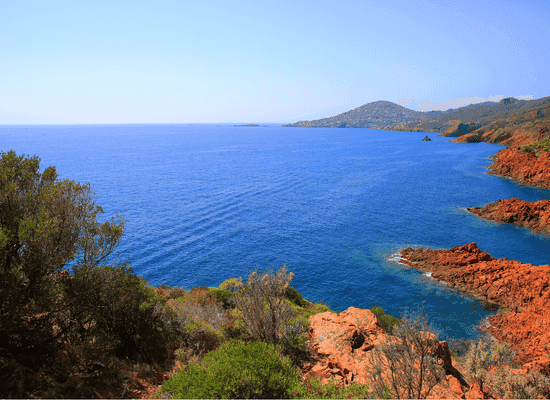
The most profound secret of Oued Laou isn’t on the beach; it’s in the hands of the women in the surrounding hills. This is the land of the Beni Saïd potters. Unlike the urban, male-dominated ceramic workshops of Safi or Fes, the pottery here is a female lineage, an ancient Berber tradition that predates the Islamic era.
In the small hamlets like Amsa or M’tioua, you can find women working without a wheel. They build their vessels large water jars, bowls, and bread ovens using the coiling technique, their fingers dancing over the raw red clay. They don’t use electric kilns; they fire their pieces in open pits filled with brushwood and dried dung. The result is a primitive, powerful aesthetic: smoky, terracotta-red vessels decorated with simple geometric lines in manganese black.
In 2026, as the « Wabi-Sabi » and « Primitive Art » movements dominate interior design, these pieces are not just kitchenware; they are functional sculptures. To sit on a dirt floor with a master potter, sharing a piece of harcha (semolina bread) while she smooths the lip of a jar, is to touch the very bedrock of human creativity.
2. The Saturday Souk: The Rural Heartbeat
If your journey coincides with a Saturday, you will witness the Souk of Oued Laou, one of the most vibrant rural markets in Northern Morocco. From dawn, the mountain paths are filled with donkeys laden with produce. This is the Bohemian grocery store: no plastic wrap, no barcodes, just the raw abundance of the Rif.
Walk through the « Spice Lane, » where the air is thick with the scent of wild cumin, dried chili, and the pungent, medicinal aroma of mountain honey. Look for the « Jbala » women in their iconic wide-brimmed straw hats adorned with colorful wool pom-poms (the Taraza). They sell bundles of wild herbs thyme, rosemary, and « Loussa » (verbena) harvested from the cliffs that morning. The market is a riot of green: fresh broad beans, artichokes, and the first strawberries of the season. This is the « Zero-Mile » diet in its most honest form. For the traveler, buying a handful of sun-dried figs or a bottle of hand-pressed olive oil here is an act of direct support for a disappearing way of life.
3. The Scarlet Cliffs: A Geological Drama
The geography of Oued Laou is defined by the Wadi (river) that shares its name. The river has carved a deep canyon through the red sandstone, creating a dramatic backdrop for the town. In the spring, the river is a turquoise ribbon cutting through the scarlet rock.
For the adventurous, the trek up the Oued Laou Gorges is a must. The path follows the river upstream, passing through pomegranate orchards and small clusters of mud-brick houses. There are no signposts, no rangers; you navigate by the sound of the water and the goat paths. Here, the silence is absolute, broken only by the occasional clinking of a bell around a goat’s neck or the call of a peregrine falcon. It is a cathedral of stone and sky, a place where the ego dissolves into the vastness of the Rifian landscape.
4. The Beach: Where the River Meets the Sea
The beach of Oued Laou is a vast, crescent moon of dark sand and smooth pebbles. The « Front de Mer » (seafront) has seen some development a few seafood restaurants and cafes but the beach remains a working space.
Watch the blue wooden fishing boats (floukas) being hauled onto the sand by teams of men. The catch is sold right there on the beach: silver sardines, sea bream, and the occasional octopus. To eat at a small stall where the fish is grilled over charcoal with nothing but a squeeze of lemon and a sprinkle of sea salt is the ultimate Mediterranean luxury. As the sun sets behind the scarlet cliffs, turning the sea into a sheet of hammered copper, you realize that Oued Laou is the antidote to the modern world. It is a place of salt, earth, and profound, unhurried peace.
4. Al Hoceima: Turquoise Bays and the Whispers of the Spanish Era
As the Rocade pushes further east, the red earth of Oued Laou gives way to a dramatic, jagged coastline of limestone and schist. The road climbs higher, clinging to the edge of the Bokkoyas massif, where the Mediterranean isn’t just a view it is a dizzying, sapphire abyss. Then, like a Mediterranean mirage, Al Hoceima appears, draped over the cliffs like a white linen cloth.
Al Hoceima (known to the locals as Biya) stands as the proud, beating heart of the central Rif. For the traveler, it is a fascinating paradox: it has the crystalline waters of a Greek island, the architectural echoes of a Spanish coastal town, and a fierce, independent spirit that belongs only to the Amazigh (Berber) people.
1. The Turquoise Sanctuary: Quemado and the Bay of Perles
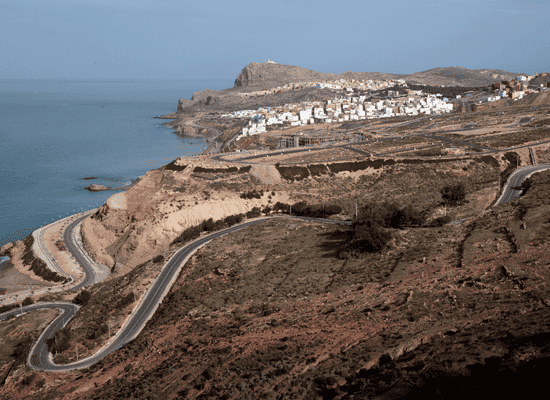
Al Hoceima is defined by its bays. Quemado Beach, nestled at the foot of a sheer cliff, is the city’s crown jewel. In April, before the summer crowds arrive, the water is a staggering, translucent turquoise so clear that you can count the pebbles on the sea floor from the clifftop.
For the 2026 traveler looking for an alternative to the overcrowded French Riviera, the « Corniche » of Al Hoceima offers a sophisticated, breezy promenade. But the true secret lies in the Bades and Cala Iris beaches to the west. Here, the sand is white, the water is emerald, and the only sounds are the wind in the Aleppo pines and the rhythmic « shush » of the tide. This is « Wild Luxury » no beach clubs, no loud music, just the raw, unadulterated beauty of the Mediterranean.
2. The National Park of Al Hoceima: The Osprey’s Kingdom
Stretching along the coast is the Al Hoceima National Park, a 470 square kilometer sanctuary that is a masterpiece of conservation. This is where the Rif Mountains make their most violent descent into the sea, creating some of the highest and most spectacular cliffs in North Africa (some reaching 600 meters).
The park is the last refuge of the Osprey (balbuzard pêcheur) in the Mediterranean. Hiking the coastal trails of the park is a sensory overload. The air is thick with the scent of wild mastic, rosemary, and the salt spray of the Atlantic Med currents. This is the trek par excellence. You won’t find marked « tourist paths » here; you follow the old goat tracks used by the Bokkoyas tribes. Hidden within these folds are the « Marabouts » small, white-domed shrines of local saints that overlook the ocean, serving as silent guardians of the coast.
3. The Rifian Resistance and the Soul of the People
You cannot visit Al Hoceima without acknowledging its soul. This is the land of Abdelkrim El Khattabi, the leader of the Rifian resistance against colonial rule in the 1920s. His legacy is felt in the pride of the people, the « Riffians, » who speak Tarifit with a melodic, guttural resonance.
In 2026, the city has seen a cultural resurgence. Small cafes and libraries are becoming hubs for young poets and musicians who fuse traditional Rifian Izran (rhyming couplets) with modern rhythms. Sitting in a café overlooking the port, drinking a panaché (fruit shake) and listening to the local dialect, you realize that Al Hoceima isn’t just a « resort. » It is a fortress of identity. The people here are welcoming but dignified, offering a hospitality that is deeply rooted in their mountain traditions.
4. The Taste of the Deep: Blue Fish and Olive Oil
The cuisine of Al Hoceima is a celebration of the sea and the mountain. The port is famous for its sardines and anchovies the « Blue Fish » of the Mediterranean. In April, the fish are at their peak, fat and flavorful.
The local secret is the Rifian Olive Oil. Unlike the lighter oils of the south, the oil from the Al Hoceima region is dark, peppery, and robust. It is often served for breakfast, poured over fresh aghroum (Berber bread) with a side of wild honey and goat cheese. It is a meal that tastes of the sun and the stone. For the traveler, this is the « Mediterranean Diet » in its most potent, medicinal form.
5. The Cap des Trois Fourches: A Lunar Wilderness at the Edge of the Map
As we cross the invisible line into the Rif Oriental, the landscape undergoes a violent, almost cosmic transformation. The lush pine forests of Al Hoceima fade into a stark, volcanic drama. We are approaching the Cap des Trois Fourches (the Cape of Three Forks), a massive promontory of igneous rock that stabs into the Mediterranean like a trident.
The traveler weary of the « curated » world, the Cap des Trois Fourches is a revelation. It is a place of absolute geological honesty a lunar wilderness where the wind is the only architect and the horizon is a 270 degree curve of sapphire. There are no luxury resorts here, no paved boardwalks. There is only the rock, the lighthouse, and the infinite.
1. The Volcanic Spine: A Landscape of Fire and Water
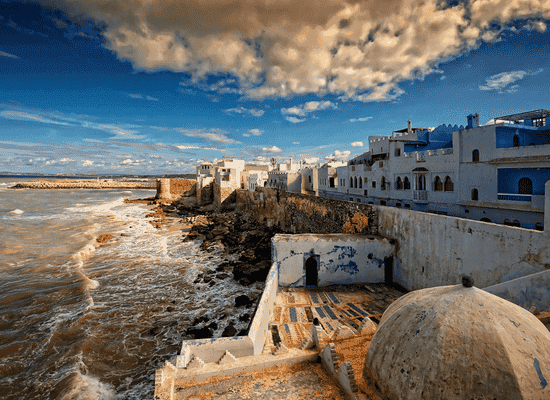
The geology of the « Three Forks » is a story of ancient fire. The dark, jagged cliffs are the remains of a volcanic complex that cooled millions of years ago, creating a labyrinth of deep grottoes and basalt pillars.
As you drive the narrow, gravel-dusted road toward the tip of the Cape, the scale of the silence is overwhelming. The « Lunar » grey of the rock is interrupted by brief, defiant bursts of wild purple lavender and yellow broom. This is the « Crazy Frontier » a terrain that demands respect. You don’t tour the Cap des Trois Fourches; you endure its beauty. The light here has a metallic, silver quality, reflecting off the dark stone and the deep water in a way that creates a constant, shimmering mirage.
2. The Lighthouse at the World’s End
At the very tip of the central fork »stands the Phare du Cap des Trois Fourches. Built in the early 20th century, this lonely sentinel marks one of the most treacherous navigation points in the Mediterranean. In 2026, it remains a working lighthouse, its beam cutting through the Mediterranean mist every night.
Standing at the foot of the lighthouse, you are at a crossroads of empires and oceans. To the west lies the Kingdom of Morocco; to the south, the invisible, fortified border of Melilla; and to the north, the vast, empty expanse of the Alboran Sea. There is a specific psychological weight to being at a « Point Zero. » It is a place for the traveler to recalibrate, to leave the digital noise behind and listen to the rhythmic thrum of the wind against the lighthouse walls.
3. Tibouda: The Village that Time Forgot
Tucked into a hidden, turquoise cove on the eastern flank of the Cape lies the fishing village of Tibouda. Accessible only by a steep, rocky path or by boat, Tibouda is perhaps the most isolated community on the Moroccan Mediterranean.
The houses are small, white-washed cubes clinging to the volcanic rock, their blue doors matching the water below. Tibouda exists in a different century. There are no cars, no shops, no « amenities. » The men spend their days in small wooden floukas, and the women harvest sea salt from the natural pans in the rocks. For the traveler, reaching Tibouda is a pilgrimage. To sit on the rocks with a local fisherman, sharing a glass of tea while he mends his nets, is to experience the Luxury of Essentialism. It is the realization that life, at its core, requires very little more than what Tibouda offers: water, sun, and community.
4. The Crystal Grottoes: A Diver’s Cathedral
The waters surrounding the Cap des Trois Fourches are among the clearest and most biologically diverse in the Mediterranean. Because of the volcanic nature of the coast, the underwater landscape is a maze of arches, chimneys, and deep-sea caves.
The water is crisp and visibility is extraordinary often exceeding 30 meters. This is a secret world of red coral, giant groupers, and sea fans. For the diver, this is the antithesis of the commercial dive sites of the Red Sea or the Caribbean. There are no dive centers on the Cape; you bring your own gear or hire a local fisherman to take you to the « Grotte de l’Amirante. » Floating in the silent, blue darkness of a volcanic cave, with shafts of sunlight piercing the water like stained glass, is a spiritual experience.
6. Nador & Marchica Lagoon: The Rebirth of the Azure Coast
Descending from the volcanic heights of the Cape, the landscape softens into a sprawling, salt-rimmed basin. We have reached Nador, a city represents the most ambitious ecological and urban experiment in North Africa. For the traveler accustomed to the « over-developed » coastlines of the Mediterranean, Nador offers a refreshing, green-forward alternative.
The city is defined by the Marchica Lagoon (the Sebkha Bou Areq), a 115 square kilometer body of water separated from the Alboran Sea by a 25 kilometer sandbar. Once a neglected industrial backwater, Marchica has been transformed into a Ecological sanctuary, a place where the luxury of tomorrow is defined by biodiversity, not concrete.
1. The Marchica Miracle: A Masterclass in Restoration
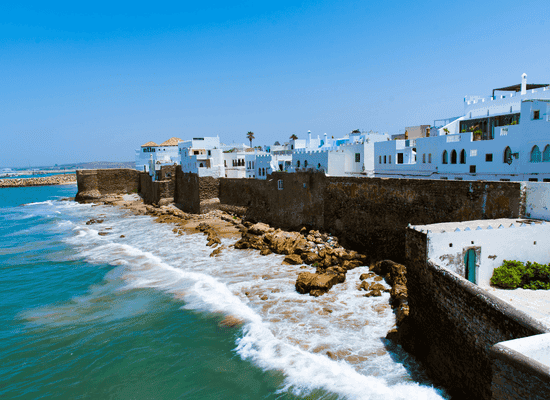
The Marchica Lagoon is a shimmering mirror of restoration. The massive cleanup projects of the early 2020s have birthed a thriving ecosystem. This is the « New Moroccan Riviera, » but one built on the principles of sustainability.
Walking along the Corniche of Nador at sunrise, the air is remarkably clean. The city has embraced a « Blue Economy » approach, integrating pedestrian walkways, cycling paths, and solar-powered lighting. For solo traveler seeking sustainable luxury, the hotels rising along the lagoon built with local stone and low-impact designs offer a sophisticated, conscious retreat. It is a place where you can watch the sunset over the water while knowing that the seagrasses below are being actively protected.
2. The Kingdom of the Wings: Birdwatching at the Edge
The Marchica Lagoon is a vital stopover for migratory birds traveling between Europe and Africa. In the spring, it becomes a literal « Airport of the Skies. »
Take a flat-bottomed boat into the shallower reaches of the lagoon. Here, you will find the Greater Flamingo, their pink plumage striking against the turquoise water. You’ll see Grey Herons, Spoonbills, and the rare Audouin’s Gull. This is the Bohemian safari. There are no roaring engines or crowds; there is only the rhythmic slap of the water against the hull and the cacophony of thousands of wings. In 2026, this level of intimacy with nature is the ultimate digital detox. It reminds us that the Mediterranean is not just a playground for humans, but a lifeblood for the planet.
3. Mount Gourougou: The Forest in the Sky
Rising abruptly to the west of Nador is Mount Gourougou, an ancient volcanic massif covered in a dense mantle of Atlas cedar, thuya, and Aleppo pine. The drive to the summit is a journey through different climate zones in just twenty minutes.
At the top, you are rewarded with a 360 degree panoramic view that is, quite literally, breathtaking. To the east, the vast expanse of the Marchica Lagoon and the Mediterranean; and to the south, the beginning of the great plains of the Oriental.
Mount Gourougou is also home to a thriving population of Barbary Macaques (singes magots). These intelligent primates are the only macaques found outside of Asia. In the spring, the young are often visible, playing in the branches of the ancient trees. Watching them interact in this high altitude forest, while the Mediterranean shimmers below, is a incrideble moment of pure, unscripted wonder.
4. The Taste of the Lagoon: Salt-Crusted Sea Bream
The culinary signature of Nador is, unsurprisingly, its seafood. But because of the lagoon’s unique salinity, the fish here have a distinct, delicate flavor.
Seek out a small restaurant in the Beni Ensar district. Ask for the Daurade (Sea Bream) in a salt crust, harvested directly from the lagoon’s salt pans. The fish is baked inside a thick shell of sea salt, which seals in all the moisture and minerals. When the crust is cracked open at your table, the aroma that emerges is the very essence of the Mediterranean spring. Paired with a glass of local white wine (from the nearby vineyards of the Oriental), it is a meal that perfectly encapsulates the « Rebirth of Nador » refined, natural, and deeply rooted in the earth and sea.
7. Berkane & the Zegzel Gorges: The Emerald Garden of the Oriental
As the Rocade Méditerranéenne veers slightly inland to skirt the massive salt marshes of the Moulouya, the landscape undergoes its final, most lush transformation. We enter the Triffa Plain, a vast, alluvial basin that glows with an almost unnatural shade of green. This is the realm of Berkane, the agricultural heartbeat of the Oriental, and the hidden, limestone sanctuary of the Zegzel Gorges.
For the solo traveler, Berkane is often a surprise. It is not the arid, dusty Morocco of the postcards. It is a land of abundance, of water, and of deep, prehistoric memory. It is where the ruggedness of the Rif finally surrenders to the fertile generosity of the plains.
1. The Capital of the Orange Sun: Berkane’s Citrus Legacy
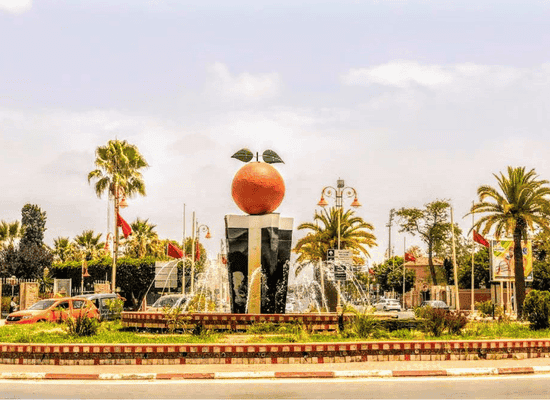
Berkane is defined by the scent of orange blossoms. In March and April, the entire city is enveloped in a heavy, floral perfume that is almost intoxicating. This is the world capital of the Clementine, a fruit that in 2026 has become a global symbol of Moroccan agricultural excellence.
Walking through the central markets, you see mountains of bright orange fruit, still cool from the morning dew. But the experience here is found in the orchards of the Sidi Slimane district. Walking through rows of ancient trees, their branches heavy with fruit and white blossoms simultaneously, is a sensory masterclass. It reminds us that luxury in the Mediterranean is often found in the simplest of things: a piece of fruit plucked directly from the branch, its juice tasting of the spring sun and the mountain water of the Beni Znassen range.
2. The Zegzel Gorges: A Limestone Sanctuary
Just a few kilometers south of Berkane, the earth splits open to reveal the Zegzel Gorges. This is a vertical world of grey limestone and emerald vegetation. The road winds along the floor of the canyon, flanked by towering cliffs that reach hundreds of meters toward the sky.
In the spring, the Zegzel River is a clear, cold torrent fed by the snowmelt of the Beni Znassen mountains. The air inside the gorge is significantly cooler than on the plain, creating a microclimate where pomegranate, fig, and walnut trees thrive. This is a favorite Hidden Gem for local families, but for the international traveler, it remains a vast, silent cathedral. Hiking here is a matter of following the water; there are small, hidden waterfalls and deep pools where the light filters through the leaves in shafts of liquid gold. It is a place of profound « Hesychia » the divine silence we sought in the Météores.
3. The Grotte des Pigeons: A 100,000-Year-Old Dialogue
Deep within the Zegzel Gorges lies one of the most important archaeological sites in the world: the Grotte des Pigeons (Taforalt). This cave is a pilgrimage site for those interested in the deep history of humanity.
Archaeologists have discovered evidence here of the world’s oldest known surgery a successful trepanation (skull operation) performed over 14,000 years ago. But the site’s history goes back even further, to over 100,000 years. Standing at the mouth of the cave, looking out over the lush gorge, you realize that humans have been finding sanctuary in this specific fold of the earth since the dawn of our species. It is a humbling, realization: we are merely the latest guests in a very old house. The cave has a specific, cool stillness, a weight of time that silences even the most talkative traveler.
4. The Grotte du Chameau: The Stalactite Cathedral
Further into the mountains lies the Grotte du Chameau (Camel Cave), so named because of a rock formation near the entrance that resembles the silhouette of a dromedary. This is a subterranean wonderland of stalactites and stalagmites, carved by water over millions of years.
The cave’s internal river is often active, creating a subterranean soundtrack of dripping water and rushing streams. Exploring the cave with a local guide (essential for safety and context) is like descending into the subconscious of the Earth. The thermal springs nearby, which feed the cave’s ecosystem, have been used for centuries for their medicinal properties. For the traveler, a dip in the warm, mineral-rich waters after a day of hiking in the gorges is the ultimate natural spa experience far removed from the sterile luxury of a city hotel.
5. The Taste of the Mountain: Honey and Almonds
The cuisine of the Berkane and Zegzel region reflects its dual identity: the richness of the plain and the wildness of the mountain. The Beni Znassen Honey is famous across Morocco; it is a dark, potent nectar made by bees that forage on wild thyme, lavender, and orange blossoms.
Pair this honey with the local almonds, which are smaller and more flavorful than the industrial varieties found in supermarkets. In the small roadside stalls of the village of Taforalt, you can find « Amlou » made with these mountain ingredients a rich, nutty paste that provides the perfect fuel for mountain exploration. This is the « Fuel of the Ancestors, » a food that is as much a medicine as it is a delicacy.
8. Saïdia: The Golden Shore and the Invisible Border
As the road levels out, the rugged limestone of the Beni Znassen range recedes into a shimmering coastal plain. We have reached Saïdia, the « Blue Pearl » of the Oriental. In the spring of 2026, Saïdia stands as a fascinating study in contrast: a sprawling, modern Mediterranean resort town that is pinned against one of the most poignant and silent borders in the world.
For the British traveler accustomed to the expansive sands of Norfolk or the American used to the long stretches of the Carolinas, Saïdia’s beach is a revelation. It is a 14-kilometer ribbon of fine, golden sand that feels infinite. But for the Bohemian traveler, the true allure of Saïdia isn’t the five-star marinas; it is the Moulouya Delta and the ghost-like tension of the Oued Kiss.
1. The Moulouya Delta: A Wilderness of Salt and Reeds
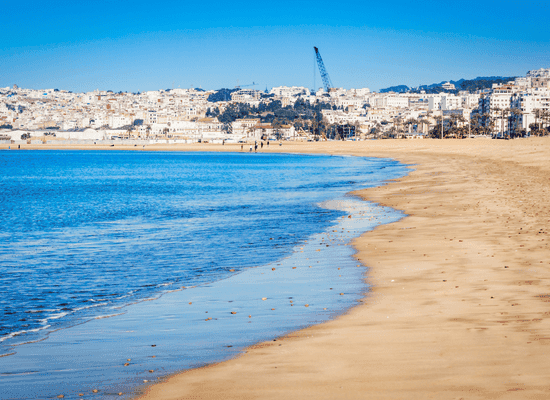
Before entering the town, the Rocade crosses the Moulouya River, the longest river in Morocco to flow into the Mediterranean. Its mouth is a biological masterpiece a Ramsar-protected wetland where the fresh mountain water meets the salt of the sea.
In April, the delta is a lush, chaotic garden of reeds, tamarisks, and dunes. This is the Anti-Resort. While the jet skis buzz in the distance near the marina, here the only sound is the wind whistling through the rushes and the splashing of a Great Crested Grebe. Walking the sandy tracks of the delta, you might find the tracks of a wild boar or the nesting site of a Marbled Teal. It is a place that reminds the traveler that even in a region designated for tourism, nature remains the ultimate sovereign. To sit on a driftwood log where the river finally loses itself in the Mediterranean is to witness a quiet, ancient alchemy.
2. The 14-Kilometer Solitude
Saïdia’s beach is famous for its length, but in the spring, it is famous for its space. While the summer months bring a frantic energy, April offers a solitude. The water is crisp, the air is salt-heavy and bracing, and the beach belongs to the walkers and the dreamers.
The « Corniche » of Saïdia, with its Mediterranean architecture and palm-lined avenues, provides a sophisticated backdrop. But the secret is to walk East, away from the hotels. As the buildings thin out, the dunes take over. This is where the local Ecological Spirit is most visible community-led beach cleanups and dune restoration projects have kept this stretch of the coast remarkably pristine. For the traveler, this is a place for a Long Walk a meditative journey where the only boundary is the horizon.
3. The Oued Kiss: Walking the Invisible Line
At the easternmost edge of Saïdia, the beach simply stops. A small, narrow river the Oued Kiss cuts through the sand. On the other side, just thirty meters away, lies Algeria.
The border remains closed, a geopolitical scar across a shared landscape. Standing on the Moroccan bank of the Oued Kiss is one of the most intense experiences in North Africa. You can see the Algerian flags, the watchtowers, and sometimes, you can see people on the other side doing exactly what you are doing: looking across. There is a profound, heavy silence here. It is a place that challenges the traveler’s concept of « Nation » and « Border. » It reminds us that while the birds of the Moulouya fly back and forth without a passport, we are bound by the lines we draw in the sand.
4. The Marina and the Modern Mediterranean
For a change of pace, the Marina Saïdia offers a glimpse into the kingdom’s future. It has matured into a vibrant hub of international sailing and gastronomy. But even here, the Bohemian touch survives. Seek out the smaller, locally-owned bistros that specialize in Friture de Saïdia a platter of tiny, silver fish, fried to a crunch and served with nothing but lemon and a spicy tomato sauce.
The architecture of the Marina, with its ochre walls and blue shutters, is a nod to the traditional ksars of the south, but adapted for the sea. It is a place to watch the yachts from across the Mediterranean dock for the night, their crews sharing stories of the crossing. It is the modern face of the Gateway we saw in Tangier, but with a softer, more relaxed Oriental rhythm.
5. The Taste of the Border: Grilled Sardines and Mint
The quintessential Saïdia meal is found at the Souk el-Khadim. Here, under the shade of eucalyptus trees, the local fishermen grill sardines over open charcoal pits. The scent of the fat dripping onto the coals is the olfactory signature of the town.
This Street Food Luxury is what the savvy traveler seeks. Forget the white-tablecloth restaurants; the real soul of Saïdia is found in a plastic chair, with a pile of grilled fish, a loaf of warm khobz, and a glass of mint tea that has been brewed with « Louissa » (lemon verbena). It is a meal that costs less than a coffee in London but offers a richness of flavor and a sense of place that is priceless. As the sun sets over the Moulouya, painting the Algerian mountains in shades of violet, you realize that Saïdia is a place of profound, quiet beauty a pearl that shines brightest in its most hidden corners.
9. Oujda: The Thousand-Year-Old Gateway to the Desert
Leaving the Mediterranean breeze behind, the road turns south for the final leg of our odyssey. The air becomes drier, carrying the scent of dust, wild thyme, and history. We have reached Oujda, the capital of the Oriental. Oujda stands as a monumental bookend to our journey a city that doesn’t just face the sea, but looks deep into the soul of the Maghreb and the vast Saharan interior.
Oujda is a revelation of « Authentic Urbanism. » It is a city of gates (Bab), of ancient scholars, and of a musical heartbeat that defines the entire region. Here, you find the ultimate reward: a city that has refused to polish itself for tourism, remaining raw, hospitable, and profoundly Moroccan.
1. The Medina of the East: A Labyrinth of Survival
Oujda’s Medina, founded in 994 AD, is a fortress of memory. Unlike the sprawling, commercialized souks of Marrakech, the Medina of Oujda feels like a living neighborhood. Its walls are thick, sun-baked clay, and its alleys are narrow enough to provide permanent shade even in the height of April.
Enter through Bab El Gharbi (The Western Gate). Immediately, you seeker is enveloped in the scent of Karan a local chickpea flour cake spiced with cumin that is the culinary DNA of the city. Walking through the Souk El Maoukoof, you won’t find mass-produced trinkets. Instead, you see the « Attarine » (perfumers) mixing oils, the traditional weavers creating the heavy, striped djellabas of the Oriental, and the blacksmiths hammering iron into intricate window grilles. In this level of « Unfiltered Commerce » is a rare luxury a chance to see a medieval economy functioning with 21st-century dignity.
2. The Park Lalla Aicha: An Oasis of Civilized Silence
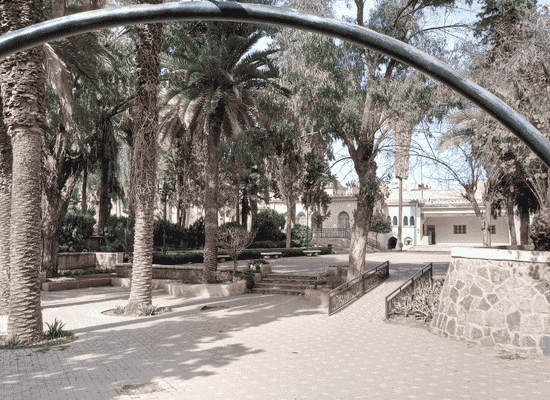
Every great desert city needs a lung, and for Oujda, it is the Parc Lalla Aicha. Spanning nearly 20 hectares, this is a masterclass in Andalusian-inspired landscaping. The park is a riot of blooming roses, ancient ficus trees, and orange groves.
For the traveler, the park offers a Intermission. It is where the elderly men of the city gather to play chess under the shade of massive palms, and where the youth discuss the latest « Reggada » hits. There is a specific, slow-motion grace to life here. The sound of the fountains and the distant call to prayer from the Great Mosque create a sonic landscape that is the antithesis of modern Noise Pollution. It is a place to sit, breathe, and realize that the destination of a road trip isn’t just a place it’s a pace.
3. The Reggada: The Rhythm of the Earth
You cannot understand Oujda without hearing its music. The Reggada is more than a genre; it is a war dance turned into a celebration. Originally a victory dance of the Rifian and Oriental tribes, it is characterized by the rhythmic tapping of feet against the ground symbolizing the bond between the people and their land.
The cultural centers of Oujda host impromptu Reggada sessions. The instruments the Adjoun (frame drum), the Gaita (flute), and the Zamar (a double-horned flute unique to the region) create a hypnotic, earthy trance. This is the soundtrack of the East. It is raw, percussive, and intensely physical. To watch a group of men perform the Reggada, their shoulders shaking in unison to the beat of the earth, is to see the Spirit of the Borderland in its most potent form.
4. The Palace Jamai: A Mirror of Elegance
Hidden within the city’s folds is the Palais Jamai, a stunning example of 19th-century Moroccan architecture. While often quieter than its counterparts in Fes, the palace in Oujda offers an intimate look at the refinement of the Oriental elite.
The Zellige tilework here is exceptional, featuring patterns and color palettes (more greens and ochres) that reflect the local landscape. Parts of the palace serve as a cultural museum, showcasing the history of the « Sidi Maafa » forest and the ancient trade routes that linked Oujda to Timbuktu. It is a reminder that Oujda was never an isolated outpost; it was a « Global Hub » long before the term existed.
5. The Taste of the Gateway: Karan and Barania
The gastronomy of Oujda is its most accessible secret. The Karan is the king of the street served hot on a piece of bread, dusted with salt and cumin, and washed down with a cold « Barida » (lemon drink). It is the meal of the people: humble, warm, and deeply satisfying.
But for a sit-down feast, seek out the Barania. This is a rich, slow-cooked lamb stew served with fried eggplant and chickpeas. The spices used here saffron, ginger, and a specific local cinnamon give it a depth of flavor that is unique to the Oriental. Eating Barania in a small family-run restaurant near Bab Sidi Abdelwahab is the perfect way to conclude the culinary portion of our journey. It is a dish that tastes of the mountains we’ve crossed and the desert that lies just beyond the city walls.
10. Logistics & Budget 2026: Mastering the Mediterranean Loop
To conquer the Rocade Méditerranéenne is to dance with the topography of the Rif. In April 2026, the infrastructure has reached a « Golden Era » the roads are smooth ribbons of asphalt, yet the traffic remains whisper-quiet compared to the Atlantic axis. However, this is a journey that rewards the prepared and humbles the rushed.
For the traveler, renting a car is non-negotiable for the exceptional experience.
- Vehicle Choice: A compact SUV is ideal. While the Rocade is paved, the Hidden Gems like Tibouda or the Zegzel Gorges involve gravel tracks.
- The Electric Shift: In 2026, Morocco has installed « Green Way » fast-chargers in Tangier, Al Hoceima, and Nador. If you rent a Tesla or an Audi e-tron, plan your stops via the « i-Morocco Charge » app.
- Driving Culture: The Rif is mountainous. Expect sharp hairpins and the occasional goat herd. Drive with « Nyamcha » the calm presence we learned in Bhutan.
2. The 2026 Mediterranean Budget (14-Day Trip)
The North remains significantly more affordable than Marrakech or Casablanca. Prices are listed in MAD (Moroccan Dirham) and USD ($) based on 2026 exchange rates.
| Category | The Backpacker (Hostels/Street Food) | The Boho-Chic (Riad/Boutique/Car) | The Modern Sultan (Luxury/Private Guide) |
| Lodging (Per Night) | 250 MAD ($25) | 1,200 MAD ($120) | 4,500 MAD+ ($450+) |
| Meals (Per Day) | 150 MAD ($15) | 450 MAD ($45) | 1,200 MAD ($120) |
| Transport (Daily) | 100 MAD ($10) (Bus/Taxi) | 600 MAD ($60) (Rental + Gas) | 2,500 MAD ($250) (Private Driver) |
| Daily Total | ~500 MAD ($50) | ~2,250 MAD ($225) | ~8,200 MAD ($820) |
* Pro Tip: In April, « Mid-Season » rates apply. Booking 3 months in advance via local Riad websites often saves 20% compared to global platforms.
3. Connectivity & Digital Nomadism
- 5G Coverage: Tangier and Nador are fully 5G. In the middle of the Al Hoceima National Park, expect 3G or « Digital Silence. »
- SIM Cards: Pick up an Inwi or Maroc Telecom « E-SIM » at Tangier airport. 20GB of data costs roughly 200 MAD ($20).
From the Blue Coast to the Golden Sands
Our odyssey has taken us from the Atlantic salt of Tangier to the chickpea-scented gates of Oujda. We have touched the red clay of the women of Oued Laou, stood in the prehistoric silence of the Grotte des Pigeons, and looked across the invisible line of the Oued Kiss.
The Mediterranean coast of Morocco in 2026 is not just a destination; it is a philosophy of travel. It is the realization that the most profound discoveries happen when you stop following the crowd and start following the horizon. You have mastered the « Vertical Silence » of the Rif, but the journey doesn’t have to end here.
If the blue of the Mediterranean has filled your soul, perhaps it is time for the gold of the Sahara to ignite it. From the train station in Oujda, a legendary iron vein stretches southward.
Discover our next deep-dive article: [The Desert Express: A Cinematic Rail Journey into the Saharan Void]. Step aboard the « Orient Express of the Sands » as we traverse the high plateaus, pass through the ghost stations of the Oriental, and arrive at the gateway of the great dunes. The dragon has woken; now, the desert calls.