

The Architecture of Absence
In an era where light pollution has erased the celestial heritage of 80% of humanity, the act of looking up has become a revolutionary gesture. For the intentional traveler, the quest is no longer for the sun-drenched dunes of postcards, but for the Great Void the rare pockets of our planet where the terrestrial world completely surrenders to the cosmic. This is the realm of Noctourism, a philosophy of travel where the itinerary is dictated by the lunar calendar and the quality of the atmosphere.
While the world flocks to the orange sands of Merzouga, the true seeker of the Invisible Data turns their gaze toward the « Maïder Plateau ». Located in the silent corridors between Zagora and Errachidia, this is the Black Sahara (the Hamada). Here, the landscape is not made of shifting dust, but of ancient, fossilized stone a dark, mineral mirror designed to reflect the Milky Way with a clarity that defies digital sensors.
At Morocco Walker, we believe that Sahara astrophotography is more than a technical pursuit of focal lengths and exposure times; it is a spiritual homecoming. In this deep dive, we are bypassing the tourist circuits to explore a territory where the Bortle Scale the measure of night sky brightness reaches its absolute floor (Class 1). We are entering a landscape of fossilized sea beds and iron-rich plateaus, where you can capture the Great Rift of our galaxy while standing on creatures that lived 360 million years ago.
This is your definitive field guide to the Maïder. From the precise GPS coordinates of secret lunar-like craters to the complex physics of long-exposure photography in the desert heat, we are decoding the silence. Whether you are a solo female explorer seeking the safety of the deep desert or a professional photographer chasing the Deep Space secrets of the Morocco, this odyssey is designed to transform your perspective of the night.
Prepare your sensors, calibrate your trackers, and leave the artificial world behind. We are going where the light doesn’t reach.
- I. The Ethics of the Void: Why Darkness is the New Luxury
- II. The Geometry of the Hamada: A Photographer’s Mineral Laboratory
- III. The Celestial Calendar: Mapping the Saharan Seasons
- IV. The Technical Arsenal: High-Precision Gear for the Extreme Sahara
- V. The Art of the Deep Frame: Compositional Secrets of the Maïder
- VI. The Solo Female Frontier: Safety, Sovereignty, and the Void
- VII. The Weight of the Void: A Symphony of Absolute Silence
- VIII. The Nomad’s Wisdom: Ancient Navigation and the Spirit of the Aït Atta
- IX. The Afterglow: Processing the Invisible
- X. The Road to the Void: A Logistics Masterclass for the Maïder Expedition
I. The Ethics of the Void: Why Darkness is the New Luxury
In the hyper-connected landscape of 2026, silence and darkness have become the world’s most endangered resources. We live in an age of Skyglow, a persistent haze of artificial light that has severed our biological connection to the stars. To practice Noctourism in the Moroccan Sahara is not merely a hobby; it is an ethical choice to preserve and witness the unpolluted night.
The Sovereignty of the Bortle 1 Sky
Most travelers are accustomed to a Bortle 4 or Bortle 5 sky where the Milky Way is a faint, ghostly smudge. On the « Maïder Plateau », we operate in Bortle 1. This is the gold standard of darkness. Here, the sky doesn’t just hold stars; it possesses a three-dimensional depth. The stars cast shadows on the ground.
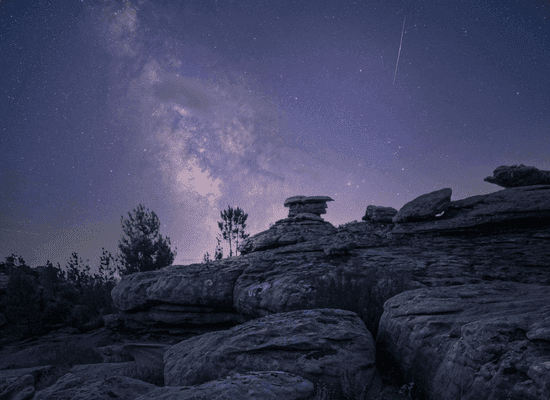
For the photographer, this level of purity is a technical gift. It means a lower noise floor in your images, the ability to capture the subtle greens and reds of Airglow, and the chance to document the Zodiacal Light that elusive pyramid of dust-scattered sunlight visible only in the world’s most pristine environments. But with this gift comes a responsibility: the Leave No Trace principle applied to photons.
The Light-Fast Philosophy
As a Morocco Walker, your presence in the desert must be ghost-like. The ethics of the dark demand a rigorous control of artificial light.
- Preserving Night Vision: It takes 20 to 40 minutes for our eye to fully adapt to total darkness. A single second of a white smartphone screen can reset that clock.
- Red Light Discipline: We use dimmable red headlamps, not out of aesthetic choice, but to respect the local ecosystem and the integrity of our own biological sensors.
- The Digital Detox: Astrophotography in the Maïder forces a slower pace. While your camera sensor integrates light over a 30-second or 4-minute exposure, you are forced to stand in the stillness. You are not consuming a view; you are co-existing with it.
Beyond the Lens: Protecting the Invisible
The Maïder is a fragile library of time. The fossils you walk upon and the meteorites that occasionally flash across the sky are part of a delicate balance. The ethics of the dark also encompass the protection of the Nomadic Peace. The Aït Atta tribes who move through these hammadas have navigated by these same constellations for centuries. By choosing the Invisible Sahara over the neon-lit camps of Merzouga, you are supporting a form of Low-Impact Tourism that values the preservation of heritage over the volume of visitors.
For the traveler, this ethics of the dark also translates into a profound sense of empowerment through solitude. There is a specific strength found in navigating the void, relying on one’s own preparations, and finding safety in the very vastness that intimidates the unprepared.
II. The Geometry of the Hamada: A Photographer’s Mineral Laboratory
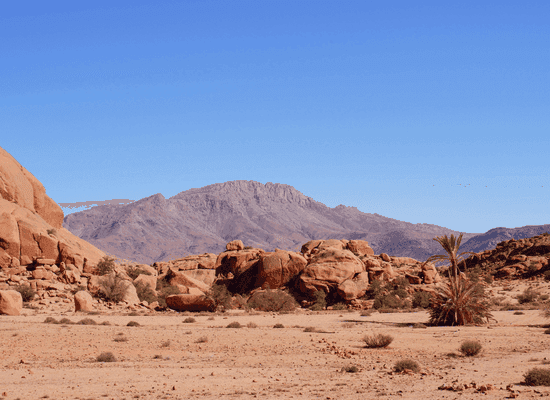
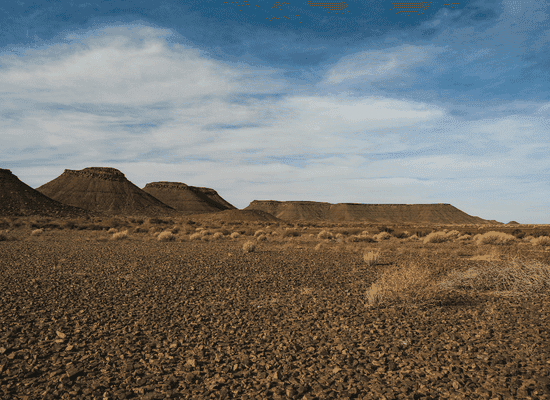
The Sahara is often misperceived as a sea of endless sand. But for the master of landscape astrophotography, the dunes of the Erg Chebbi are often too soft they lack the structural drama needed to ground a cosmic composition. The Maïder Plateau offers the opposite: a hard, black, volcanic and sedimentary crust that acts as a perfect visual anchor for the ethereal gas clouds of the Milky Way.
This is a world of tabular mesas (Garas) and fossilized horizons. The stone here is rich in iron and manganese, creating a dark patina that absorbs light rather than reflecting it. This Black Mirror effect ensures that your foreground remains a silhouette of pure, ink black geometry, allowing the stars to take center stage without the interference of ground level refraction.
The Coordinates of the Invisible: Three Secret Frames
To achieve the 1depth of a true archive, we provide the exact digital signatures of the Maïder’s most silent cathedrals. These are not marked on Google Maps; they are found through the dust of the track.
1. The Fossilized Altar (The Orthoceras Slab)
- GPS Coords: 30°39’58.4″N / 4°42’12.3″W
- Imagine a vast, ink-black stage of polished limestone that stretches toward the horizon like a frozen sea. This is not sand; it is a solid, mineral crust. Embedded within this dark pavement are millions of ivory-white, needle-like shapes the Orthoceras. These are the calcified remains of prehistoric cephalopods that ruled the Devonian seas long before the first dinosaur walked the earth.
- As you walk, the fossils catch the starlight, appearing like ghostly arrows. Because an ancient current once swept through this « ocean, » all the fossils point in the same direction, creating a natural, geological perspective that leads the eye toward the infinite.
- To stand here is to stand between two infinities. Beneath your boots lies the biological evidence of a world from 360 million years ago; above your head, the light from the Great Rift of the Milky Way that has traveled 30,000 years to reach your eyes. It is a portal where deep time and deep space meet in perfect, silent alignment.
- Technique: Position your tripod at a low angle. Use a wide-angle lens (14mm to 20mm) to align the white fossils on the ground with the Great Rift of the Milky Way. It creates a visual bridge between the biological life of 360 million years ago and the galactic light of 30,000 years ago.
2. The Amphitheater of Shadows (Gara Medouar South-East Edge)
- GPS Coords: 31°17’18″N / 4°11’34″W
- Known to the world as the « crater » in the James Bond film « Spectre » and the hidden city in « The Mummy », Gara Medouar is a geological masterpiece. It is a massive, horseshoe-shaped limestone mesa that rises abruptly from the desert floor like a natural fortress. Its walls are jagged, orange-gold by day and a deep, bruised purple by night.
- You are standing in a location that Hollywood chose to represent the ultimate secret lair. But away from the film crews, the South-East ridge offers a vertiginous drop into a silent void. The scale is titanic; the high walls act as a natural acoustic and light shield, creating a pocket of absolute zero noise and light.
- **The Experience:** As you set up your tripod on the rim, the jagged silhouette of the crater cuts a fierce line against the sky. In the autumn, the Andromeda Galaxy our nearest galactic neighbor hangs suspended exactly within the notch of the crater’s rim. It feels as though the Earth itself has built a telescope out of stone to view the heavens.
- Technique: The high walls of the Gara act as a natural shield against any residual glow from distant Rissani. This is the place for Ultra-Long Exposures (3 minutes+) using a star tracker, as the rock stays perfectly still while the sky rotates behind the jagged rim.
3. The Sentinel of Taffert ( The Ridge of the Lone Acacia )
- GPS Coords: 30°42’15.2″N / 4°38’02.1″W
- Perched high on a ridge overlooking the lush, hidden greenery of the Oasis of Taffert, stands a single, weather-beaten Acacia tree. Its trunk is twisted by decades of Saharan winds, and its thorns are as hard as iron. Around it, the landscape is a minimalist desert of dark stones and pale dust.
- This tree is a living fossil. It stands as a guardian of the oasis below, a symbol of life’s stubborn refusal to vanish in the face of the void. For the Walker, this is the ultimate sanctuary. From this elevation, the 360 degree view allows you to see the Invisible Sahara unfolding in every direction a tapestry of mesas, dry oueds, and nomadic paths.
- There is a profound sense of security here. You are high above the world, anchored by a living entity that has seen a thousand moons rise. As the stars wheel overhead, the tree’s silhouette becomes a skeletal hand reaching for the cosmos. It turns a landscape of nothingness into a story of everything reminding the solo traveler that even in the vastest solitude, one can remain standing, rooted, and luminous.
- The Walker Insight: For the solo photographer, this spot is a sanctuary. The elevation provides a clear view of the surrounding plains, offering a sense of security and 360 degree situational awareness, all while placing a singular, resilient living entity against the backdrop of the infinite.
The Physics of the Foreground
In the Maïder, the foreground is as much a part of the story as the stars. We are dealing with sedimentary layers that tell the story of a Sahara that was once an ocean. When you set your focus to infinity, remember that these stones are the bones of the earth. The contrast between the Deep Space targets (like the Rho Ophiuchi cloud complex) and the jagged, ancient limestone creates a tension that defines the Morocco Walker aesthetic: Raw, Ancient, and Unfiltered.
III. The Celestial Calendar: Mapping the Saharan Seasons
Astrophotography is a dance with the Earth’s orbit. In the Maïder, the sky is a rotating gallery, and each season brings a different masterpiece to the foreground. To master the Sahara night sky, one must understand that the best time depends entirely on your cosmic target.
1. The Season of the Galactic Core (March to August)
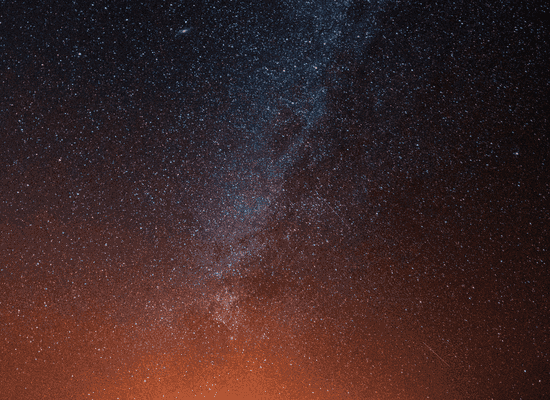
This is the High Season for Milky Way hunters. During these months, the brightest and most complex part of our galaxy the Galactic Center rises high above the southern horizon of the Maïder.
- The Target: The Sagittarius and Scorpius regions.
- Between April and June, the Milky Way forms a majestic arch early in the night, connecting two horizons. This is the ideal time for 360-degree astrophotography panoramas.
- The Walker’s Note: Be prepared for the heat. Even at midnight, the plateau can retain the day’s thermal energy, which can increase sensor noise. Use Long Exposure Noise Reduction settings and plan for shorter bursts of images to allow your camera to cool.
2. The Season of the Great Spiral (September to November)
As the galactic core begins to set earlier, the autumn sky reveals the deep-space jewels of the northern hemisphere. The air becomes crisper and the transparency of the atmosphere over the Hamada reaches its peak.
- The Target: The Andromeda Galaxy (M31) and the Triangulum Galaxy.
- At 30°N latitude, Andromeda passes almost directly overhead (the zenith). This reduces atmospheric distortion, allowing for incredibly sharp Deep Space portraits even with a standard 200mm lens.
- GPS Connection: Revisit the Amphitheater of Shadows (31°17’18″N) during this window. The vertical rock walls provide a perfect framing for Andromeda as it climbs the celestial ladder.
3. The Season of the Orion Giants (December to February)
Winter in the Sahara is harsh, cold, and breathtakingly clear. The Winter Hexagon dominates the sky, and the dust of the atmosphere is settled by the cool air, providing the best seeing conditions (atmospheric stability) of the year.
- The Target: The Orion Nebula (M42) and the Barnard’s Loop.
- The constellation of Orion rises over the jagged mesas of the Maïder like a celestial hunter. The contrast between the brilliant blue-white stars of the winter sky and the pitch-black limestone of the plateau is staggering.
- The Essential Gear: This is the season for extra batteries. Cold weather drains lithium-ion cells at double the normal rate. For solo travelers, this is also the season for high-altitude thermal layers; the desert floor can drop to -5°C while you wait for your 4-minute exposures.
The Lunar Cycle: The Rule of the New Moon
Regardless of the season, your itinerary must be anchored to the New Moon.
- The 7-Day Window: Plan your arrival 4 days before the New Moon and leave 2 days after.
- The Blue Hour Trick: If you want to capture the texture of the fossils The Fossilized Altar with the stars, wait for the brief window when the Moon is at a 10% crescent. It provides just enough natural light-painting to illuminate the ground fossils without washing out the Milky Way.
IV. The Technical Arsenal: High-Precision Gear for the Extreme Sahara
In the Maïder, your gear is more than just a tool; it is your life-support system for capturing the invisible. The combination of fine mineral dust, extreme dry heat, and nocturnal frost requires a kit that prioritizes ruggedization and optical purity.
1. The Optical Core: Sensors and Glass
To capture the Bortle 1 depth of the Black Sahara, you need a sensor that breathes.
- The Camera: Full-frame is the standard here. Look for bodies with high ISO performance and a tilt-screen (essential for low-angle fossil shots at The Fossilized Altar.
- The Lenses: The Wide-Angle (14mm to 24mm): Must be fast (f/1.8 or f/2.8). In the Sahara, you want to capture the full arch of the Milky Way without star-trailing.
- The Nifty Fifty (50mm f/1.4): Often overlooked for astro, but on the Maïder, a 50mm allows you to stitch massive, high-resolution panoramas of the Galactic Center with incredible detail.
2. Stabilization: Fighting the Saharan Wind
The plateau is often subject to thermal winds gusts that occur as the rock cools.
- The Tripod: Forget lightweight travel tripods. You need carbon fiber with a high load capacity. The Pro Trick: Hang your camera bag (or a bag of local stones) from the center column hook to lower the center of gravity against the wind.
- The Star Tracker: If you want to move from snapshots to Deep Space Art, a portable star tracker (like the Sky-Watcher Star Adventurer) is mandatory. It counteracts the Earth’s rotation, allowing for 4-minute exposures where the stars remain sharp points of light while the nebula’s colors (H-alpha reds) begin to pop.
3. The « Invisible » Essentials (The Walker’s Kit)
- Lens Heaters: Even in the desert, dew can form on your front element as the temperature drops rapidly. A USB-powered heating strip prevents a ruined session.
- Power Solutions: Long exposures and cold nights eat batteries. Use a high-capacity power bank with a dummy battery to keep your camera running for 8 hours straight.
- Dust Management: The Maïder’s dust is microscopic. Rule of Thumb: Never change lenses in the open air. Use a sensor loupe and a rocket blower every morning.
### 4. The Female Explorer’s Tactical Gear
Safety and comfort are the silent partners of creativity.
- Illumination: A high-quality red-light headlamp is your best friend. It preserves your rhodopsin (night vision) while you adjust your settings.
- Thermal Layering: In the Sahara, we dress like onions. A base layer of merino wool (which doesn’t retain odors), a technical fleece, and a windproof outer shell.
- The Communication Link: In the Maïder, cell service is a ghost. A satellite messenger (like Garmin inReach) is the ultimate peace of mind for solo female photographers, allowing you to check in with the world while you are light-years away.
V. The Art of the Deep Frame: Compositional Secrets of the Maïder
Photography in the Black Sahara is a challenge of scale. How do you capture the infinite void of the cosmos while grounded on a 360-million-year-old seabed? In the Maïder, composition is not about following the Rule of Thirds; it is about creating a visual dialogue between the deep time of the earth and the deep space of the stars.
1. Leading Lines of the Paleozoic
At our primary coordinates The Fossilized Altar, the ground is your most powerful compositional tool. The Orthoceras fossils act as natural vector lines.
- The Strategy: Align your lens so these fossilized needles point toward the Galactic North Pole or the core of the Milky Way. This creates a powerful narrative: the ancient life of the Sahara literally pointing toward its cosmic origins.
- The Walker Aesthetic: Avoid placing the horizon in the center. Give 70% of the frame to the sky to emphasize the overwhelming scale of the universe, but ensure the 30% of the ground is tack-sharp and rich in texture.
2. The Power of the Silhouette (Gara Landscapes)
The tabular mesas (Garas) of the Maïder are perfect for Negative Space compositions.
- The Frame: Use the jagged edge of a plateau as a dark silhouette against the Zodiacal Light (the faint glow seen after sunset or before sunrise).
- Deep Space Context: When the constellation of Orion or the Pleiades sits just above the rim of a Gara, it creates a sense of Celestial Architecture. The rock looks like a pedestal for the stars.
3. Light Painting with Intent (The Subtle Glow)
In a Bortle 1 environment, aggressive artificial light is a sin. However, a Walker knows how to use light with pro-level discretion.
- The Technique: Instead of a bright flashlight, use your smartphone screen at 5% brightness or a dim red light to whisper light onto a foreground fossil during a long exposure.
- This reveals the ivory-white texture of the fossils against the black limestone without destroying the natural shadows or the clarity of the stars. It creates a Fine Art look that separates your work from the over-processed shots found in mass tourism blogs.
4. The Human Element: Scale and Solitude
Including yourself in the frame can transform the image from a landscape into a story of empowerment.
- Set a 10-second timer and stand on the edge of the plateau at The Sentinel of Taffert. Remain perfectly still. Your silhouette against the vastness of the Andromeda Galaxy or the Milky Way provides a human anchor that allows the viewer to feel the scale of the Sahara.
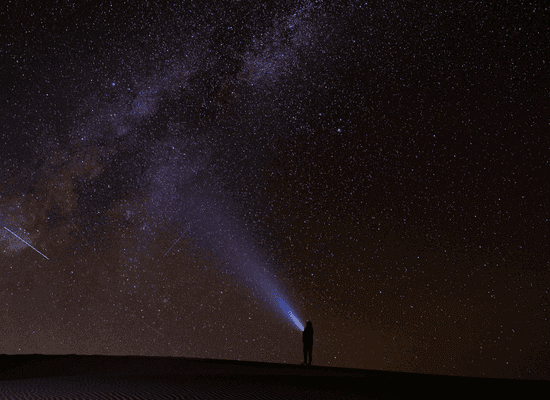
- Pro Tip: Use a headlamp to beam a thin line of light directly toward a specific star or planet. This Connection Line is a classic but effective way to symbolize the bridge between humanity and the the cosmos.
5. Managing the « Airglow » Palette
One of the secrets of the Maïder is Airglow the faint emission of light by the Earth’s atmosphere that appears as green or reddish waves in long exposures.
- Don’t try to correct this in post-processing. Use it as a natural color gradient. When the sky is filled with green airglow, it creates a surreal, underwater feel that complements the fossilized ocean floor you are standing on.
VI. The Solo Female Frontier: Safety, Sovereignty, and the Void
The Sahara is often portrayed through a masculine lens one of conquest and survival. But for the female astrophotographer, the Maïder Plateau offers a different narrative: one of sovereignty. In the deep silence of the Hamada, away from the unsolicited attention of tourist hubs, there is a profound sense of peace. However, navigating a Bortle 1 wilderness requires a specific protocol of Safety.
1. The Logistics of Trust
In the desert, your safety net is woven long before you reach The Sentinel of Taffert.
- The Guardian Network: Always employ a local licensed guide or driver from the region. At Morocco Walker, we recommend building a relationship with the families of the Maïder. A trusted local guide doesn’t just provide security; he acts as a cultural bridge, ensuring your presence is respected by the nomadic communities.
- Communication in the Dead Zone: The Maïder is a Cellular Desert. A satellite communication device (InReach or Zoleo) is non-negotiable. Program it with Check-in messages for your contacts in Marrakech or abroad. Knowing you can call for a 4×4 recovery or medical advice at the touch of a button allows you to focus entirely on the stars.
2. The Bivouac of the Mind: Overnight Protocols
Setting up a solo camp for a night of shooting is an exercise in organization.
- The Stealth Bivouac: Unlike the bright white tents of luxury camps, choose gear in earth tones (olive, sand, or charcoal). This makes your camp invisible from a distance, preserving your privacy and the visual integrity of the landscape.
- Situational Awareness: Arrive at your chosen coordinates at least three hours before sunset. Map the terrain in daylight. Identify any loose scree or sharp drops. In the dark, the desert floor becomes a different world; knowing your Safe Zone is vital.
3. Physiology of the High Desert Night
For women, managing body temperature is often the biggest challenge in astrophotography.
- The Metabolic Drop: When you stand still for a 3-hour star-trail session, your core temperature drops rapidly. Invest in professional-grade base layers (Merino 250gsm) and a high-calorie Nocturnal Nutrition plan. Hot ginger tea and complex carbohydrates keep your internal furnace burning.
- The Female Gear Detail: In a landscape of fossils and stone, comfort is a technical requirement. A high-quality, insulated sleeping pad (R-value of 4 or higher) is essential, not just for sleeping, but for lying on the ground to frame those low-angle fossil shots without losing heat to the mineral floor.
4. The Sovereignty of Solitude
There is a psychological threshold that occurs after midnight in the Maïder. The fear of the unknown is replaced by a crystalline clarity. For the explorer, this is the Walker’s Meditative State. You are the only witness to a galactic dance that has been unfolding for eons.
This solitude isn’t a lack of company; it is a presence of self. By mastering the technicality of your camera and the logistics of your safety, you claim your right to the wilderness. You are not a visitor in the Sahara; you are a conscious observer of the universe.
VII. The Weight of the Void: A Symphony of Absolute Silence
In the heart of the Maïder Plateau, the first thing you notice isn’t what you see, but what you hear. Or rather, the absence of everything you’ve ever known as sound. In our modern lives, silence is a vacuum, a hollow space. But here, in the depths of the Black Sahara, silence has a density. It is a physical presence that wraps around you like a heavy, velvet cloak.
The Dissolution of Time
When you stand at the Fossilized Altar, surrounded by the silent, stone needles of the Orthoceras, time begins to lose its linear grip. You are standing on a seabed that died hundreds of millions of years ago, looking at light from stars that may no longer exist.
This is the Walker’s Vertigo. It is the moment when the scale of the Sahara and the scale of the Cosmos collide. Your breath slows down to match the rhythm of the rotating sky. There is no before, no after, and certainly no « Work. » There is only the crystalline present. You realize that you aren’t just observing the universe; you are a temporary extension of it. The mineral cold of the black limestone beneath your boots and the searing heat of a distant nebula in your viewfinder become one and the same.
The Sovereignty of the Dark
There is a specific type of courage that blooms in the dark of the Amphitheater of Shadows. For a woman exploring these voids alone or in the intimacy of a small circle, the initial instinct of protection gradually dissolves into a feeling of immense sovereignty.
In the city, the night is often a place of caution. In the Maïder, the night is a sanctuary. As your eyes adapt to the Bortle 1 darkness, the landscape reveals itself in shades of charcoal and silver. You begin to see by the light of the Milky Way alone. It is a primal, empowering experience to realize that the world is not hidden in the dark it is merely waiting for you to listen with your eyes.
The Sentinel’s Lesson
Looking out from the ridge of the Sentinel of Taffert, watching the shadows of the acacia trees stretch across the valley in the starlight, you feel a profound sense of connection. This isn’t the adventure promised by brochures; it is a quiet, internal homecoming.
The Sahara doesn’t demand your attention with loud colors or dramatic gestures. It invites you into a state of active witness. You feel the pulse of the earth the slow cooling of the rocks, the subtle shift of the desert wind, the distant, lonely call of a desert fox. These are the Invisible Data points of the soul. They cannot be captured in a spreadsheet or a marketing report. They can only be felt in the marrow of your bones as you wait for your sensor to drink in the light of Orion.
The Return: Carrying the Silence
The hardest part of the Maïder experience is not the ascent of the plateaus or the cold of the bivouac; it is the return. When you eventually drive back toward the flickering lights of civilization, you carry a piece of that absolute silence within you.
You find that you speak a little softer. You move a little slower. You have witnessed the Great Archive of the sky and the Stone Library of the Hamada. You have been a Morocco Walker in the truest sense someone who doesn’t just pass through a landscape, but who allows the landscape to rewrite their internal map.
While we arrive in the Maïder with our GPS coordinates and our star trackers, we are merely students in a classroom where the Aït Atta have been the masters for centuries. For the nomadic tribes of the Sahara Noir, the stars are not just objects of beauty or photographic subjects; they are the Great Map, a living, pulsing grid that dictates survival, migration, and destiny.
The Celestial Compass
Long before the first satellite was launched into orbit, the nomads of the Hamada developed a relationship with the night sky that was purely functional and deeply spiritual. They don’t see the constellations through the lens of Greek mythology, but through the lens of the desert.
The movement of the Pleiades (known locally as Thora) or the position of the Pole Star (Tagant) aren’t just data points; they are instructions. They tell the traveler when the rains are coming, when to move the herds to higher ground, and how to find an oasis hidden in the pitch-black folds of the plateau. When you sit near the Amphitheater of Shadows and watch the sky, you are looking at the same clock that has guided thousands of years of human resilience.
The Language of the Wind and the Stars
To walk with a member of the Aït Atta is to realize that the invisible is a language they speak fluently. They notice the slight shift in the air temperature that precedes a change in the star’s clarity. They can hear the voice of the plateau as it contracts under the nocturnal frost.
There is a profound humility in sharing a glass of tea under the Sentinel of Taffert with someone whose ancestors navigated this void using nothing but the internal GPS of their cultural heritage. In their eyes, our cameras are curious toys, but our shared silence under the Milky Way is a universal bridge. They understand the Morocco Walker philosophy because they are the original walkers those who know that the fastest way to get lost is to stop listening to the earth.
The Ethics of the Encounter
For the explorer, the nomad’s presence in the Maïder is a source of immense security and wisdom. The Aït Atta code of hospitality Tamazight is as solid as the limestone of the Garas.
When you encounter a nomadic camp near the Fossilized Altar, it is not a moment for tourist photography, but for a genuine exchange of presence. It is about the « Invisible Gesture »: a shared nod, a respectful distance, and the understanding that we are both guests of the desert. Their wisdom teaches us that the night is not something to be feared or conquered, but a space to be shared with the spirits of the ancestors and the light of the stars.
Carrying the Ancient Map
As you prepare to leave the plateau, the nomad’s wisdom leaves a lasting mark on your soul. You realize that your Technical Arsenal is secondary to your Intuitive Awareness. You begin to understand that the true Pocket Guide to the Sahara is written in the stars and whispered in the desert wind.
You don’t just leave with a memory card full of RAW files; you leave with a recalibrated sense of direction. You have learned that to truly find yourself in the vastness of the Sahara, you must first be willing to be guided by the invisible.
IX. The Afterglow: Processing the Invisible
The journey back from the Maïder Plateau is a slow decompression. As the asphalt begins to replace the crunch of the black hamada and the first artificial lights of the Draa Valley flicker on the horizon, a strange sensation takes hold. It is the Afterglow a psychological residue of the absolute dark.
For the Morocco Walker, the expedition doesn’t end when the camera is packed or the sensors are cleaned. It ends when the lessons of the Sahara begin to rewrite your daily reality.
The Metadata of the Soul
We often return from travels with gigabytes of RAW files, capturing every nebula and every fossilized curve of the Amphitheater of Shadows. But the most important data we carry back isn’t digital. It’s the recalibration of our internal clock.
After nights spent under the Sentinel of Taffert, the frantic pace of the modern world feels artificial. You realize that the Data you went searching for the silence, the deep time, the celestial alignment is actually a fundamental human need. You have learned that clarity doesn’t come from more light, but from a better quality of darkness.
The Enduring Perspective
Standing once more in the real world, you carry a secret sovereignty. You know that while the city around you sleeps under a veil of orange smog, the Fossilized Altar is currently bathed in the unfiltered light of the Andromeda Galaxy. This perspective is a shield. It reminds you that the problems of the day are microscopic when measured against the lifespan of a star or the patience of a Saharan mesa.
For the women who have navigated this void, there is a new-found Command of Space. You have proven to yourself that you can stand alone in the heart of the world’s most profound silence and not only survive but thrive. You have transitioned from a spectator of the landscape to a participant in its ancient, nocturnal rhythm.
X. The Road to the Void: A Logistics Masterclass for the Maïder Expedition
Reaching the Black Sahara is not a matter of distance, but of transition. The Maïder Plateau does not reveal itself to the casual driver; it requires a deliberate approach, a reliable vehicle, and a deep respect for the Tracks that crisscross the Hamada. To reach the locations like the Amphitheater of Shadows or the Fossilized Altar, you must leave the safety of the asphalt and enter the world of off-road navigation.
1. The Gateway: Choosing Your Approach
There are two primary veins that lead into the heart of the Maïder:
- The Northern Route (via Alnif): This is the most direct access for those coming from the Todra Gorges or Errachidia. From Alnif, you head south toward the village of Fezzou. The transition from the Green Morocco to the Mineral Morocco happens here. Once you pass Fezzou, the tracks become technical and require a high-clearance vehicle.
- The Southern Route (via Zagora/Taghbalt): This is the Walker’s Choice. Starting from Zagora, you traverse the rugged Jbel Bani range. This route is longer and more demanding, but it offers a slow immersion into the silence that prepares your mind for the scale of the plateau.
2. The Vessel: 4×4 or Nothing
Let us be clear: the Maïder is a graveyard for standard cars. The Hamada is composed of sharp volcanic rocks and hidden fesh-fesh (sand as fine as flour).
- The Vehicle: A true 4×4 with a low-range gearbox is mandatory. Ensure you have two full-sized spare tires. The flint-like stones of the plateau are notorious for sidewall punctures.
- The Fuel Strategy: There are no gas stations once you leave the main axis of Alnif or Zagora. Calculate your consumption for at least 300km of low-gear driving and carry an extra 20L jerrycan. In the desert, fuel is time.
In the deep Maïder, Google Maps is a liability, not an asset. It lacks the resolution for the multi-layered tracks of the plateau.
- The Tool: Use a dedicated GPS (Garmin) or a specialized mapping app like Gaia GPS or Ounav with pre-downloaded topographic layers.
- The « Invisible » Signs: Learn to read the Cairns (small piles of stones). In many parts of the Maïder, these are the only permanent markers of a safe passage through a dry riverbed (Oued).
4. The Human Connection: Local Guides and Bureaucracy
For the female solo explorer, the most important piece of logistics is a trusted local partner.
- The Bureau des Guides: We recommend hiring a guide specifically from the Alnif or Zagora region. They know the current state of the tracks (which can change after a rare flash flood).
- The Gendarmerie Protocol: It is standard practice (and a sign of respect) to register your itinerary with the local Gendarmerie in Alnif or Zagora before heading into the deep desert. It ensures that if your satellite check-in fails, someone knows where to look.
5. Supply Chain: The Autonomy Kit
You are heading into a zone with zero infrastructure.
- Water: 5 Liters per person per day is the minimum. For a 3-night astrophotography mission, carry an extra 20L for technical use (cleaning lenses, cooling sensors, emergency).
- The Oasis Hubs: Use the Oasis of Taffert as your psychological anchor. It is one of the few places where you might find a well or a nomad camp. Treat it as a sanctuary, not a gas station.
The Walker’s Checklist:
- Tire Pressure: Lower your pressure to 1.8 bar when entering the rocky hamada to avoid punctures, and even lower if you hit a sandy patch.
- Satellite Link: Test your Garmin inReach before you lose cell signal at the Fezzou exit.
- The Golden Rule: Never drive at night. The very darkness we seek for our photos makes the tracks invisible and dangerous. Arrive at your bivouac 3 hours before sunset.
The Invitation to the Deep
This odyssey has been more than a guide; it has been a manifesto for the Noctourist. We didn’t come to the Maïder to take photos, but to allow the desert to take our breath away, our ego away, and our noise away.
The Black Sahara remains there, a silent mineral library waiting for the next seeker who is brave enough to turn off the lights. It is a place that doesn’t ask to be conquered, only to be witnessed.
As you close this archive and plan your own trek into the invisible, remember the nomad’s unspoken rule: « The desert is not a place you go to escape life, but to find it in its most raw, celestial form. »
Morocco Walker